

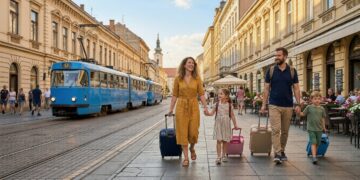








The short version: Croatia is one of the easiest and safest countries in Europe to travel with kids. Crime is low, the Adriatic is calm and clear, and Croatians are genuinely, unselfconsciously fond of children. A toddler having a meltdown in a restaurant gets sympathy and a free scoop of ice cream, not glares. For most of your trip the honest advice is “stop worrying.” There are really only two things worth planning for in advance: the child car-seat law (sort your seat before you drive, not at the rental desk) and the sea and sun for little ones. Everything else you handle the way you would at home.
This guide walks through both, plus the small stuff: jellyfish and sea urchins, pharmacies, ferries with a stroller, and who to call if something actually goes wrong. It’s written for a family arriving from abroad, especially US travellers, who need slightly different advice on insurance than European families do.
Is Croatia safe for families traveling with children?
Yes — reassuringly so. Croatia consistently ranks among the safer countries in Europe, violent crime is rare, and the petty theft that does happen is the ordinary tourist-town kind (crowded old-town alleys, packed ferries, beach bags left unwatched), not anything aimed at families. Tap water is safe to drink everywhere. The food is simple and kid-friendly (pizza, pasta, grilled fish, ćevapi, endless ice cream), so even picky eaters cope. Restaurants welcome children rather than tolerate them, and high chairs, while not universal, turn up often enough.
Compared with other Mediterranean family destinations, Croatia’s particular advantages are calm, crystal-clear, jellyfish-light water and short driving distances. Its particular quirks are pebble (not sand) beaches, a lot of un-lifeguarded coastline, and old towns built on polished stone and steps that fight a stroller at every turn. None of those is a safety emergency. They’re just things to know so the trip runs smoothly. The rest of this guide is the “one real thing to know” for each.
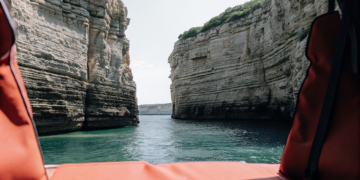
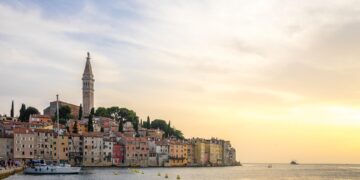
A quick word on where and when, because both affect how relaxed the trip is. The most family-friendly bases tend to be the calmer, flatter spots: Istria (Poreč, Rovinj, Pula) and the Kvarner islands for gentle beaches, Zadar and its region for a good mix of city and coast, and any of the Dalmatian islands (Brač, Korčula, Hvar) for slow days, with Dubrovnik and Split spectacular but steep, hot and crowded in high summer. On timing, the shoulder season (May–June and September) is the family sweet spot: warm enough for beach days, gentler heat for little ones, fewer crowds, and easier accommodation. Whatever the base, most families rent an apartment or villa and treat the coast as a series of short day trips rather than a race around the whole country, which keeps tired, overheated kids to a minimum.
Croatia’s child car-seat law (and how to get a seat for a rental)
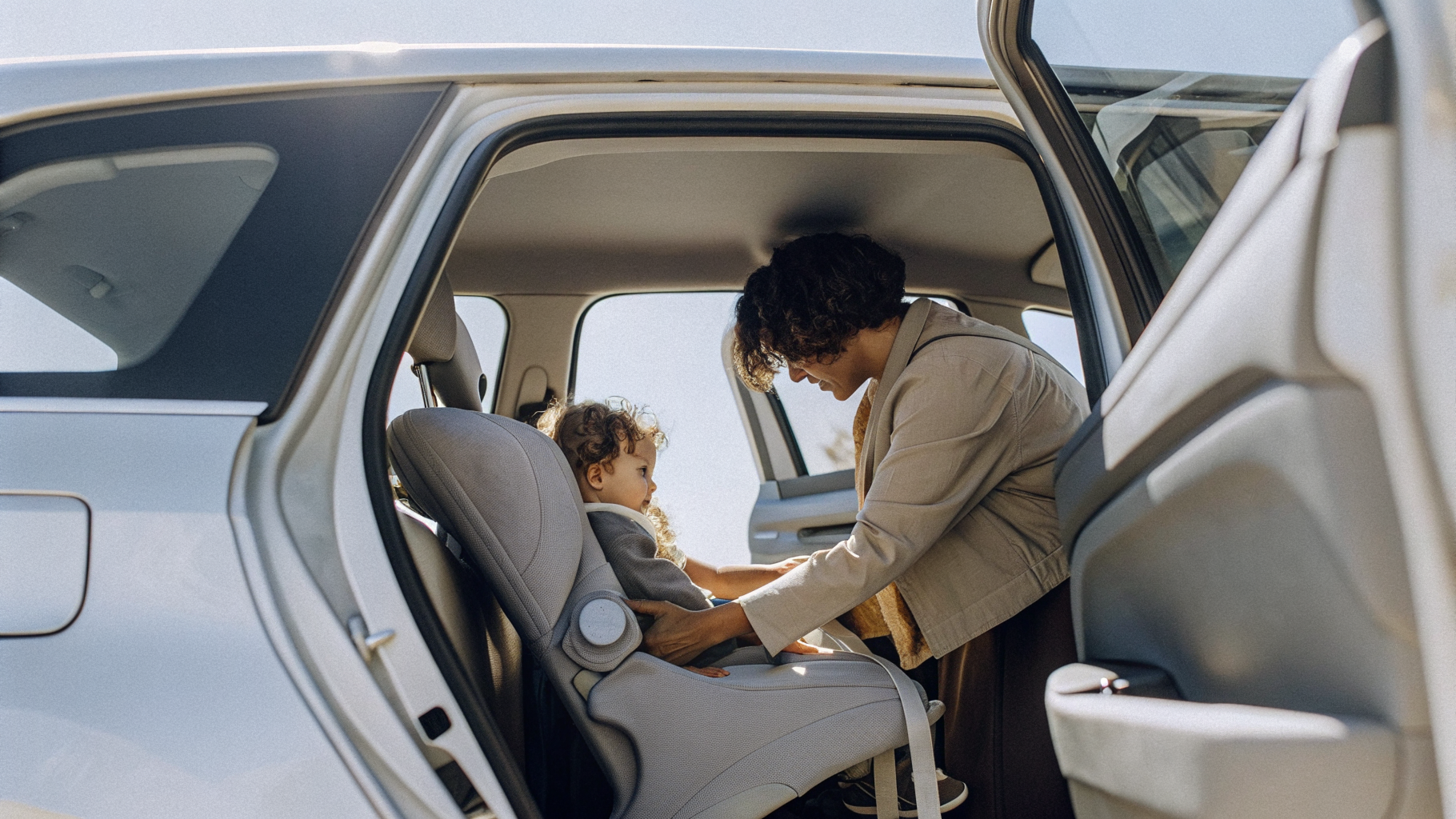
If you’re driving, this is the rule that actually matters, because it’s a real law with real fines and rental agencies won’t hand you a seat unless you booked one. Croatia’s requirements sit in Article 163 of the Road Traffic Safety Act (Zakon o sigurnosti prometa na cestama), and they go by height, not just age (checked August 2026):
- Shorter than 135 cm: must ride in a child seat or booster appropriate to their height and weight, properly secured.
- 135–150 cm: may use the car’s adult seatbelt, but in the rear seat.
- Taller than 150 cm (roughly age 12): treated as an adult (normal seatbelt, front seat allowed).
- Rear-facing infant seat in the front: only if the front passenger airbag is switched off. Never put a rear-facing seat in front of a live airbag — this is the one rule that’s about physics, not paperwork.
Seats sold in the EU (marked R44/04 or the newer R129 / i-Size standard) are all accepted, so a seat you’d use at home in Europe is fine. As of our August 2026 check there was no change to these height thresholds coming for the 2026 season; if you’re reading this later, it’s worth a quick re-check, but the framework has been stable.
Two practical things trip families up. First, rental car seats are limited and go fast in summer. Reserve the seat when you book the car, not on arrival, and reconfirm a few days before. They’re a paid extra, and quality varies, so plenty of families prefer to bring their own familiar seat (most airlines carry one free). Second, taxis and ride-hailing rarely carry seats. Rather than get tangled in whether a taxi is technically exempt, take the safe line: a small child shouldn’t ride unrestrained, so book a taxi company that can supply a seat, bring your own, or use it for walkable-distance trips only. For the wider picture of driving here (tolls, mountain roads, the coastal road), see our guide to staying safe while driving in Croatia.
Beaches with kids: sun, heat and hydration
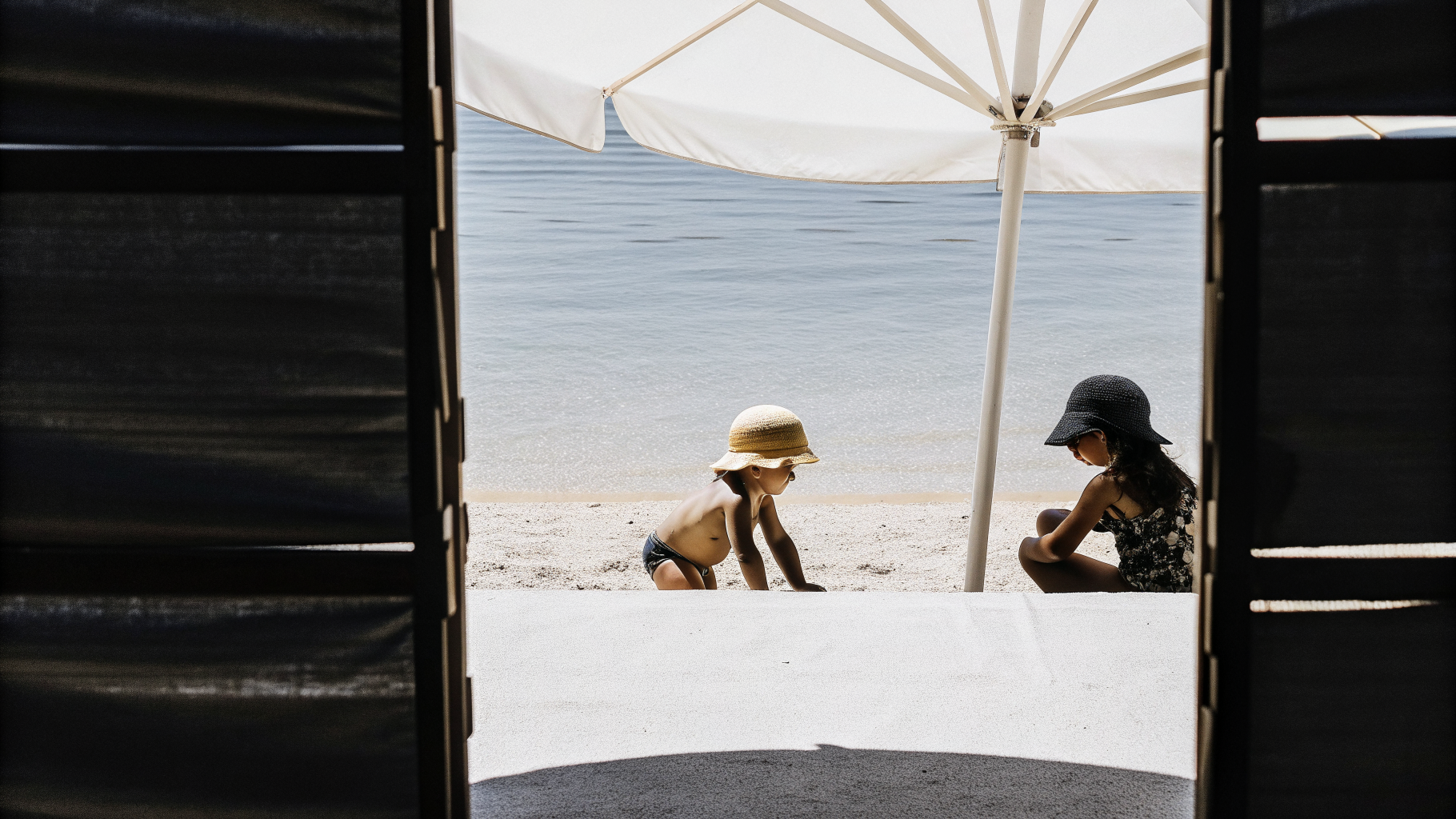
The bigger day-to-day risk in a Croatian summer isn’t the sea — it’s the sun. The Adriatic coast gets fierce midday heat from roughly June to September, and small bodies overheat and dehydrate faster than adults. The fix is boring and effective: stay out of direct sun from about 11am to 4pm, do beach time early and late, and treat shade, hats, high-factor sunscreen and a constant supply of water as non-negotiable rather than optional. A beach umbrella and a shaded break every hour prevent most of the sunburn-and-tears afternoons.
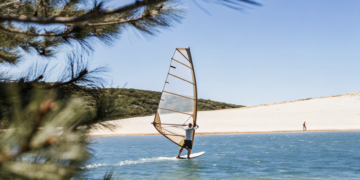
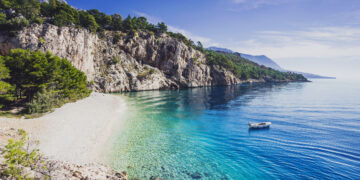
Croatian beaches are mostly pebble or rock, not sand. That’s good news for clean water and clear swimming, less good for bare feet. Hot stones, slippery entries and the occasional sea urchin make water shoes genuinely worth packing for every member of the family. They’re the single most useful thing you can bring for kids here, and cheap to buy locally if you forget. A pebble beach is also harder for toddlers to toddle on, so many families with very young children seek out the few sandy or shallow-shelving bays (Lopar on Rab, Bačvice in Split, parts of the islands) where little ones can splash around in ankle-deep water.
For the full beach-day playbook (valuables, rocky entries, currents, flags where they exist), see staying safe at the beach in Croatia, and for in-the-water questions our guide to swimming safely in Croatia.
Jellyfish, sea urchins and weever fish: first aid for kids
Croatia’s marine life is far more benign than the internet suggests, but three creatures cause the small dramas parents ask about. The official tourist board keeps a Dangerous Marine Species page for exactly this, and the practical first aid is simple.
- Jellyfish. The Adriatic’s usual stinger is the mauve stinger, and stings are painful but rarely serious. Think a bad nettle sting, not an emergency. Rinse the area with seawater, not fresh water (fresh water can make unfired stingers discharge), lift off any tentacle bits with a card or tweezers rather than bare fingers, and don’t rub. Warm water or a warm compress eases the pain afterwards. Watch for any sign of a wider allergic reaction, which is rare but is a 112 call if it happens.
- Sea urchins. These sit on rocks and in crevices; a bare foot pressed onto one leaves black spine tips embedded. Soak the foot in warm-to-hot water, ease out the visible spines with tweezers, and keep it clean. Most small fragments work their way out on their own over days. See a pharmacist or doctor if the area gets red, hot or swollen. Water shoes prevent almost all of these.
- Weever fish (pauk). The one genuinely nasty sting: a small fish that buries itself in the sand in shallow water, with venomous spines on its back. Stepping on one is intensely painful. The treatment that works is hot water: immerse the foot in water as hot as the child can comfortably tolerate (around 40°C) for 30–90 minutes, which breaks down the venom. It’s dramatic but not dangerous; if pain is severe or the child is very young, have a doctor look at it.
None of this should keep anyone out of the water. Water shoes, a glance before you sit on a rock, and shuffling rather than stamping your feet in shallow sand handle almost everything. (First-aid guidance current as of August 2026.)
Supervising at non-lifeguarded beaches and pools
Here’s the honest one, because it’s the risk that actually matters and gets the least attention: most Croatian beaches have no lifeguard. A handful of large resort and Blue Flag beaches are staffed in peak season, but the typical cove, town beach or island swimming spot is not. That doesn’t make the water dangerous; it’s usually calm and clear, but it means supervision is entirely on you, all the time, for every child.
The same goes for the pool at your villa or apartment, which is where quiet accidents are most likely. Private pools rarely have fencing or alarms, young children drown silently and in seconds, and a phone or a glass of wine is all it takes to look away too long. Treat any un-fenced pool as an open hazard: agree who’s “on watch” at all times, keep non-swimmers in arm’s reach, and put toys away when swimming’s over so nothing tempts a child back to the edge. Bring or buy properly fitted flotation for weak swimmers, but never let it replace an adult’s eyes. This one precaution matters more than every jellyfish and car-seat rule combined.
Pharmacies and pediatric care in Croatia
Getting minor illnesses sorted here is easy. Pharmacies (ljekarna) are everywhere, including small towns, and Croatian pharmacists are well trained and can advise on and dispense a lot without a prescription. Children’s paracetamol and ibuprofen, rehydration salts, antihistamines, plasters and antiseptic are all readily available over the counter. In cities and larger tourist centres there’s usually a 24-hour or on-call (dežurna) pharmacy; any pharmacy posts the nearest on-call one on its door. English is common in tourist areas and patchier in small inland towns, so a translation app or writing the symptom down helps (checked August 2026).
For anything bigger, Croatia’s public hospitals have emergency departments (hitna), and the major cities (Zagreb, Split, Rijeka, Osijek) have full pediatric care; coastal tourist towns have hospitals or clinics geared up for a busy summer population. Bring your child’s regular medicines in their original packaging with a copy of the prescription, since brand names differ.
Save these before you need them:
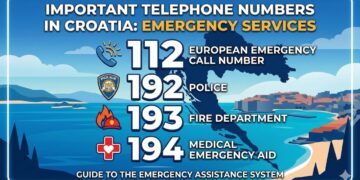
- 112, the single European emergency number for police, fire, ambulance and sea rescue, with English-speaking operators. This is the one to save on every phone.
- 194, direct line for an ambulance / emergency medical service.
- Others, for completeness: 192 police · 193 fire · 195 national sea search & rescue.
If in any doubt with a sick or injured child, call 112. The operators speak English and will route you to the right help.
Ferries, strollers and getting around with little ones
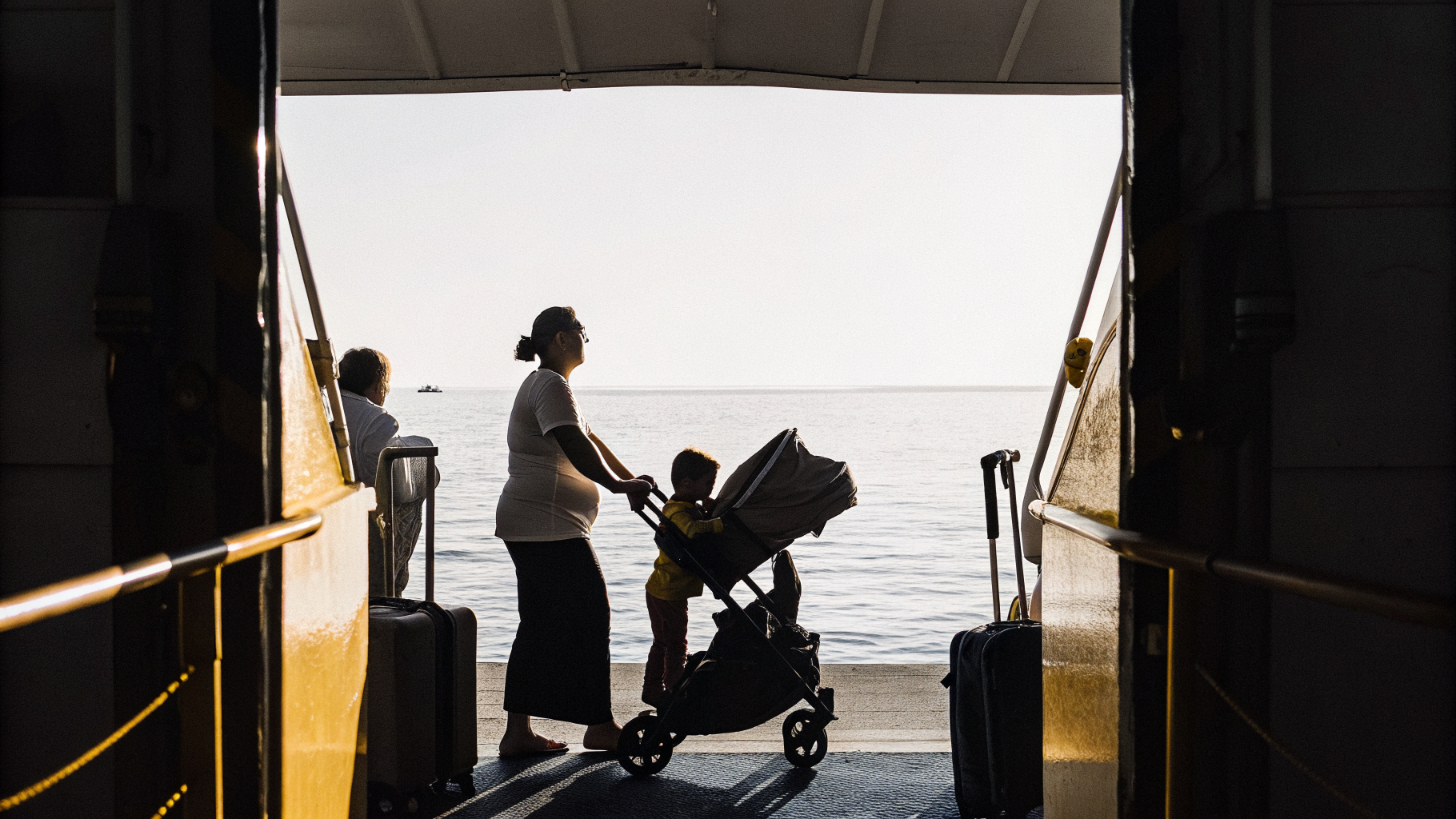
Island-hopping is half the fun of a Croatia trip with kids, and it’s straightforward, but strollers and luggage shape which boat you want. There are two kinds. Car ferries (Jadrolinija’s roll-on/roll-off ships) are roomy, have deck space and seating, and take a stroller, a pram and a mountain of luggage without a fuss, the relaxed option with young children. Fast catamarans (the passenger-only boats that hop between islands quickly) are the opposite: reserved airline-style seating, limited luggage racks, and no room to park a pushchair, so a folded umbrella stroller and light bags are far easier than a big travel system. Book ahead in summer, board early to claim space, and hold small children’s hands on the gangway and open decks.
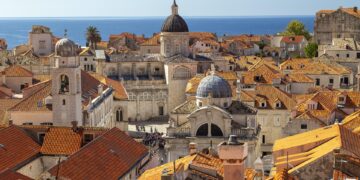
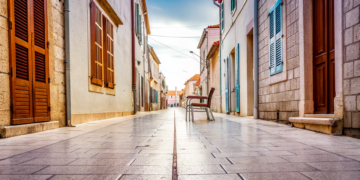
On land, the thing to prepare for is the stone. Croatia’s beautiful old towns (Dubrovnik, Split’s Diocletian’s Palace, Trogir, Korčula) are built on polished marble and steps, which a stroller hates and which get slippery in rain. A sturdy small stroller or, for younger children, a soft carrier saves a lot of struggle, and flat, grippy shoes beat sandals on the cobbles. For the ferry-cancellation and rough-crossing side of things, our guide to safe island hopping in Croatia covers the bura wind and seasickness.
National parks with kids
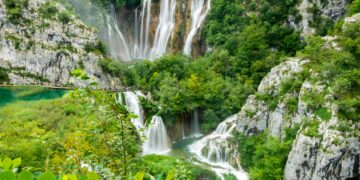
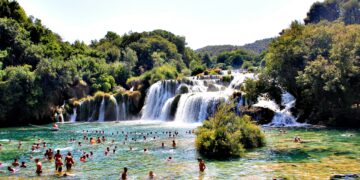
Croatia’s national parks are wonderful with children and completely doable, with two caveats. At Plitvice Lakes and Krka, the walkways are wooden boardwalks with long drops straight into water and, crucially, no railings for much of the route. Hold small children’s hands the whole way and keep them off the edges. Both parks involve a lot of walking in full sun with limited shade, so the beach-day heat rules apply: go early, carry water, cap and sunscreen, and pace it. Strollers don’t work on the boardwalks and steep sections, so a carrier is the tool for toddlers.
Swimming is only allowed in designated spots (and banned outright inside Plitvice), so don’t let children paddle where it isn’t signposted. The water is colder and deeper than it looks. For tickets, timing and the quieter entrances, see our Plitvice Lakes ticket guide and Krka swimming guide, and for the wider park-safety picture, staying safe in Croatia’s national parks.
Travel insurance: EHIC/GHIC vs US cover
One line that saves real money and worry: get proper travel insurance with medical cover and emergency evacuation, and make sure it covers the specific things your family will do (boat trips, hiking, any watersports). For EU and UK families, the EHIC or GHIC card gives you access to Croatia’s state healthcare on the same terms as locals. That’s useful, but it is not travel insurance and won’t cover repatriation, private clinics or a cancelled trip, so most families carry a policy on top. For US travellers, EHIC/GHIC does not apply at all. Your domestic health insurance almost certainly won’t cover you in Croatia either, so a private travel-medical policy isn’t optional, it’s the thing standing between a child’s broken arm and a large out-of-pocket bill.
Frequently asked questions
Is Croatia safe to travel with kids?
Very. It’s among the safer countries in Europe, with low crime, safe tap water, calm clear seas and a culture that genuinely welcomes children. The two things to actively plan for are the car-seat law if you’re driving and sun/sea supervision for little ones. The rest you can relax about.
Do I need a car seat in Croatia, and can I rent one?
Yes. By law, children shorter than 135 cm need an appropriate child seat or booster, and 135–150 cm means the rear seat with the adult belt. Rental companies offer seats but stock is limited in summer, so reserve one with the car or bring your own; a rear-facing infant seat may only go in the front if the airbag is deactivated (checked August 2026).
Are there jellyfish in Croatia, and do we need water shoes?
Some jellyfish, but nothing like a plague, and stings are painful rather than dangerous. Water shoes are the more useful purchase. They protect against hot pebbles, slippery rocks, sea urchins and the odd weever fish hiding in shallow sand. Pack a pair per person.
Where do I get children’s medicine, and who do I call in an emergency?
Pharmacies (ljekarna) are everywhere and sell children’s paracetamol, ibuprofen and rehydration salts over the counter; cities have 24-hour on-call ones. For an emergency call 112 (English-speaking) or 194 for an ambulance directly.
Is the Adriatic safe for young children to swim in?
Generally yes. It’s calm, clear and mostly gentle. The catch is that most beaches and villa pools have no lifeguard, so supervision is entirely yours. Keep non-swimmers within arm’s reach and treat any un-fenced pool as an open hazard.
Do we need travel insurance if we have an EHIC/GHIC?
EU and UK families get state-healthcare access with an EHIC/GHIC, but it isn’t insurance and won’t cover evacuation or private care, so add a policy. US travellers aren’t covered by EHIC/GHIC at all and should treat private travel-medical insurance as essential.
The short version
Croatia is a soft landing for a family holiday: safe, welcoming, and easy. Sort a car seat before you drive (135 cm and 150 cm are the numbers that matter, and never a rear-facing seat in front of a live airbag). Pack water shoes, respect the midday sun, and remember that most beaches and pools have no lifeguard, so the supervision is on you. Jellyfish and urchins are minor and manageable; pharmacies are excellent; ferries are easy with a folded stroller. Save 112 and 194 on your phone, carry proper travel insurance, and then get on with the ice cream.
The practical bit
Before you go and once you’re there:
- Book the rental car seat when you book the car, or bring your own; don’t count on availability in July and August.
- Pack water shoes for everyone, plus hats, high-factor sunscreen and refillable water bottles.
- Bring regular medicines in original packaging with a copy of any prescription; note that brand names differ.
- Choose your boat by your kit: car ferry for prams and heavy luggage, catamaran only with a folded stroller and light bags, and book summer crossings ahead.
- Save 112 and 194 in every phone, and note your nearest hospital and on-call pharmacy on arrival.
- Buy travel insurance with medical and evacuation cover, checked against the activities you’ll actually do: essential for US travellers, a top-up for EU/UK families with an EHIC/GHIC.
General guidance, not medical or legal advice. Rules, fees and seasonal conditions change. Verify anything critical with the relevant Croatian authority or your operator, and always follow local signage and instructions. Current as of August 2026.