












Reading the wind is what keeps you safe on a board in Croatia. The summer maestral (a reliable thermal northwest breeze that fills in most afternoons at Bol’s Zlatni Rat, at Viganj on the Pelješac peninsula, and over the shallows at Nin) is the wind you came for. The cold, gusty bura is the one you sit out.
Windsurfing conditions in Bol, Viganj and Nin
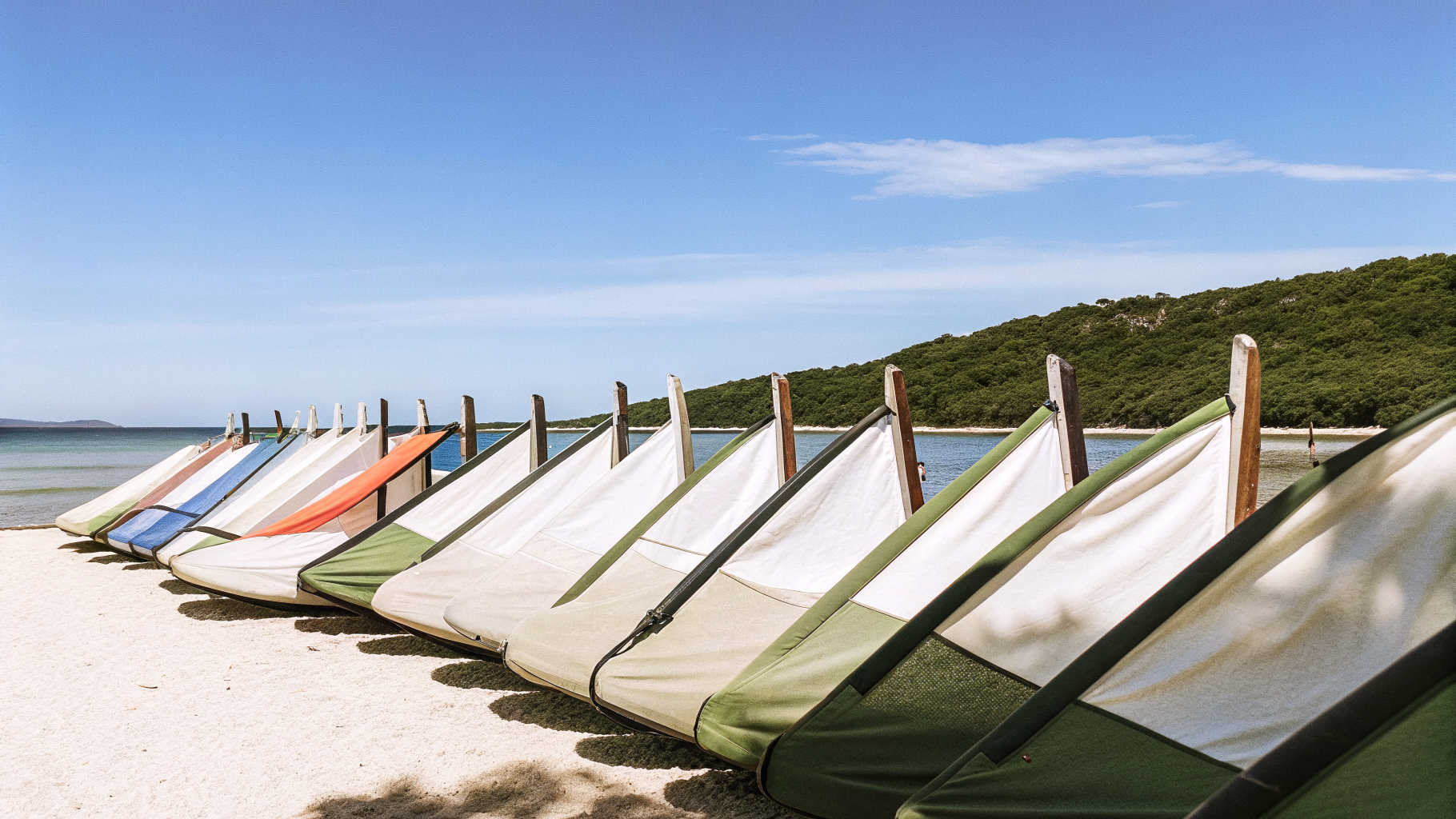
The maestral builds through the early afternoon and blows side-shore at Zlatni Rat, so you launch and land easily; it funnels stronger down the channel at Viganj, and runs cross-shore over Nin’s waist-deep lagoon, which makes Nin the gentlest place to learn. The season runs roughly May to September, calm mornings giving way to afternoon wind. The bura is the opposite: cold, gusty bursts off the mountains, little warning, often blowing offshore, expert-only. Read the same forecasts the sailors do, the DHMZ marine forecast for small craft and Meteoalarm wind warnings, before every session (checked August 2026). A bura or a red wind warning means you stay on the beach. Knowing when not to go out is the whole skill.
Learn and rent through a licensed school
Whether you windsurf or kitesurf, take lessons and hire kit from a registered local school. Bol, Viganj and Nin all have them. A good one matches your board and sail to the day’s wind, briefs you on the spot’s hazards and right-of-way, and keeps a rescue boat on the water. It’s the single honest upgrade to your safety, and a two-hour beginner lesson like this windsurfing course in Istria is how most people start.
On the water: right-of-way, offshore wind and self-rescue
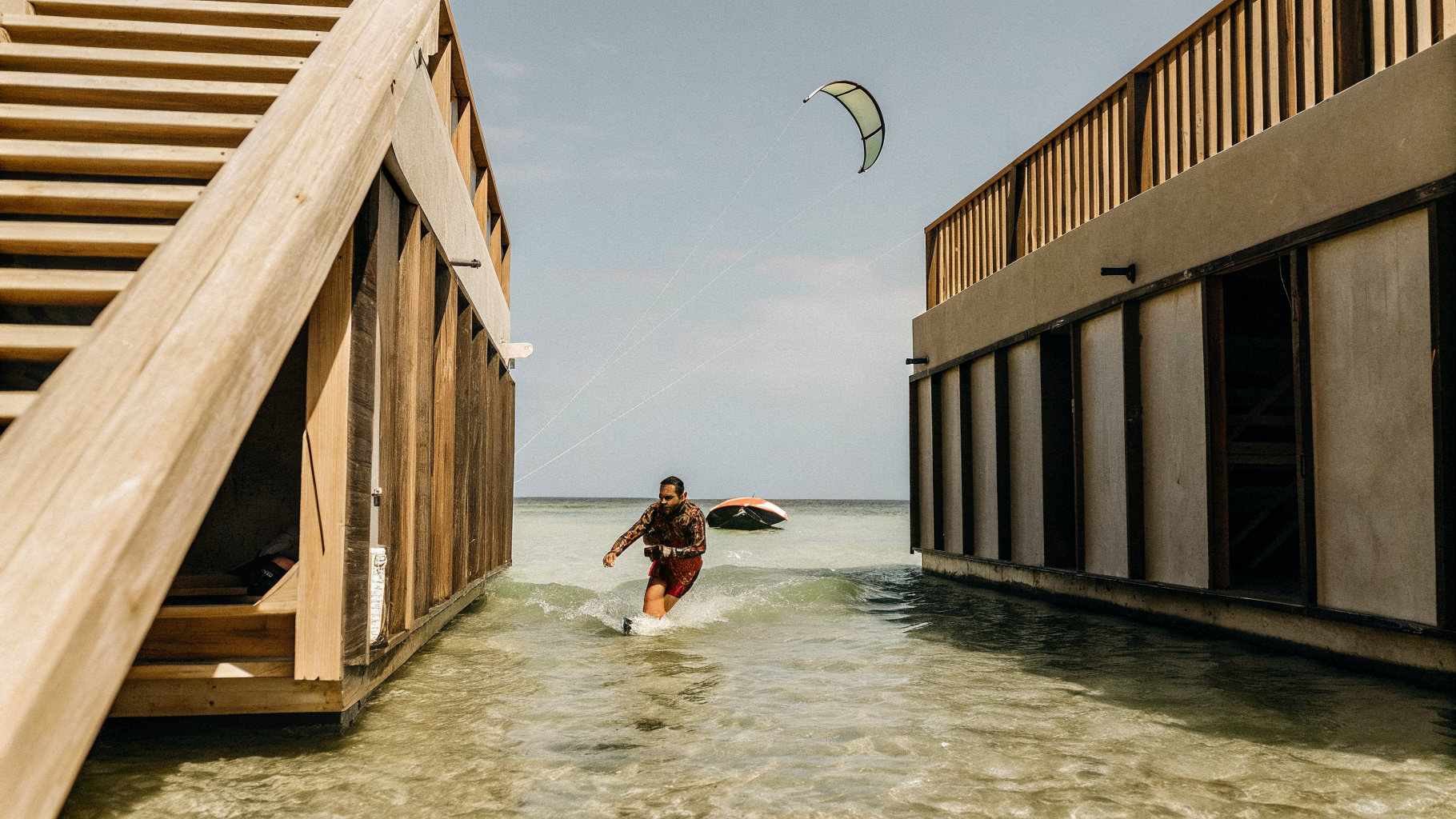
Starboard tack has priority, the upwind rider keeps the kite high while the downwind rider drops it low, and a rider coming in beats one launching: give way to swimmers, and respect the marked kite zone at crowded launches. Wear an impact vest for flotation and a helmet in waves or crowds, and never ride with a broken quick-release or kite leash. Offshore wind carrying you out to sea is the real killer, the same drift danger sea kayakers fear: never kite in pure offshore, and practise your self-rescue — pack the kite down or de-rig, stay with your board because it floats, and paddle in. Where the bottom is rocky or urchin-strewn, wear boots and never dive in head-first, the same water-shoe rule as swimming.
Frequently asked questions
Do I need a licence to windsurf or kitesurf in Croatia?
No licence, but lessons through a registered school are strongly advised, and in practice most spots won’t rent you kit without them.
When is the wind best?
The maestral is most reliable from May to September, filling in through the afternoon; mornings are usually glassy and calm.
Is Bol or Viganj better for beginners?
Nin’s shallow lagoon is the gentlest place to learn; Bol’s Zlatni Rat is easy and scenic; Viganj suits stronger wind and faster progression.
What’s the one wind to avoid?
The bura — cold, gusty and often offshore. If it’s in the forecast, don’t launch.
If something goes wrong
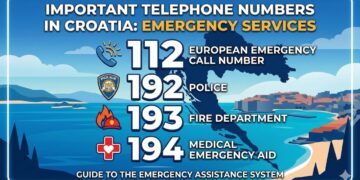
Save 112, the single European emergency number: English-speaking operators, and it reaches sea rescue too. At sea the direct national line is 195 (MRCC Rijeka); on VHF radio use Channel 16. Police 192, fire 193, ambulance 194.
Travel insurance matters here: many policies exclude kitesurfing, windsurfing or “extreme” sports, and the EU’s EHIC/GHIC covers EU visitors only. US travellers need private cover, so check your board sports are named on the policy.
The short version
Ride the reliable afternoon maestral at Bol, Viganj or Nin, learn and rent through a licensed school, respect right-of-way, wear flotation, never ride pure offshore, and sit out the bura. Read DHMZ and Meteoalarm, and if in doubt, don’t go out.
General guidance, not medical or legal advice; conditions change, so verify locally and follow your school’s and the authorities’ instructions. Current as of August 2026.