











Croatia’s national parks are safe to visit, and the single most useful rule fits in one line: stay on the boardwalks and marked trails, and don’t get in the water. Almost every real mishap at Plitvice Lakes, Krka or Paklenica is one of three ordinary things: someone steps off a wet walkway, underestimates the midday heat, or tries to swim where it’s now banned. None involve bad luck, and all are avoidable.
How safe are Croatia’s national parks, really?
Very. Croatia has eight national parks (Plitvice Lakes, Krka, Paklenica, Northern Velebit (Sjeverni Velebit), Risnjak, Mljet, Kornati and Brijuni), plus several protected nature parks. They draw millions of visitors a year with very few serious incidents: no large predators you’ll realistically meet, no crime problem, and well-marked trails. The real hazards are unglamorous. On karst limestone and around waterfalls the ground is slick when wet, so slips and trips are the most common injury by a distance; summer heat is next, especially in the exposed Dalmatian parks. Know those two, plus the water rule below, and you’ve covered almost everything that goes wrong.
Stay on the boardwalks and marked trails
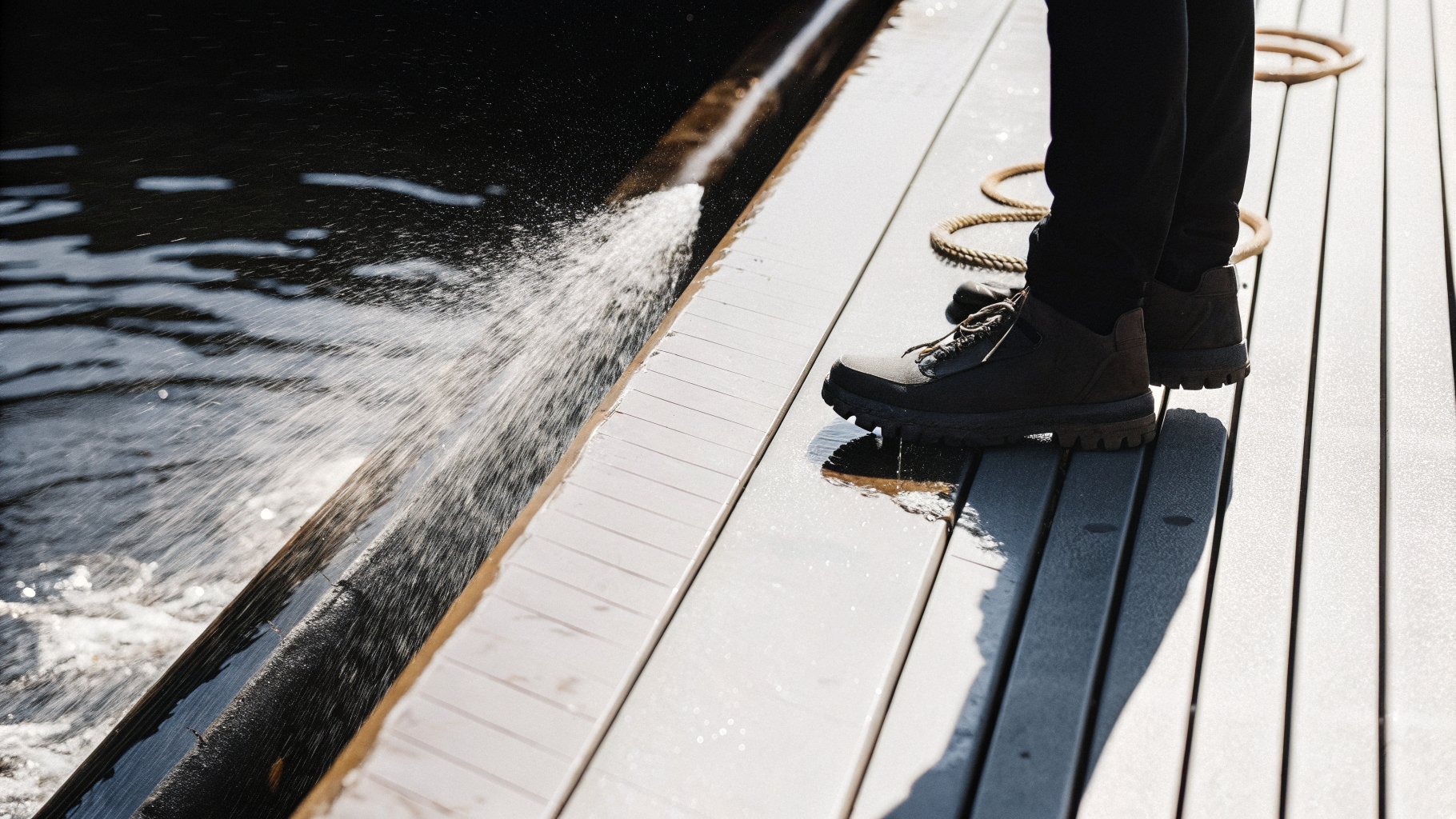
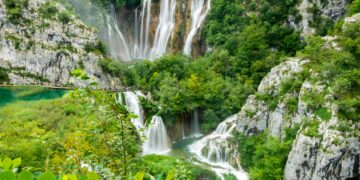
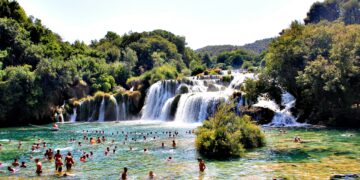
This is the whole game at Plitvice Lakes. The famous wooden walkways run right along the edge of lakes and cascades with no railings — the water beside you can be deep, the drop-offs real, and the timber genuinely slippery when wet. The official park rule is blunt: don’t walk outside the marked footpaths. So watch your feet, keep small children within arm’s reach, and don’t climb onto the edges for a photo. Closed shoes with grip do most of the work, and if a section is roped off after rain, turn around rather than duck under.
Can you swim in Croatia’s national parks?
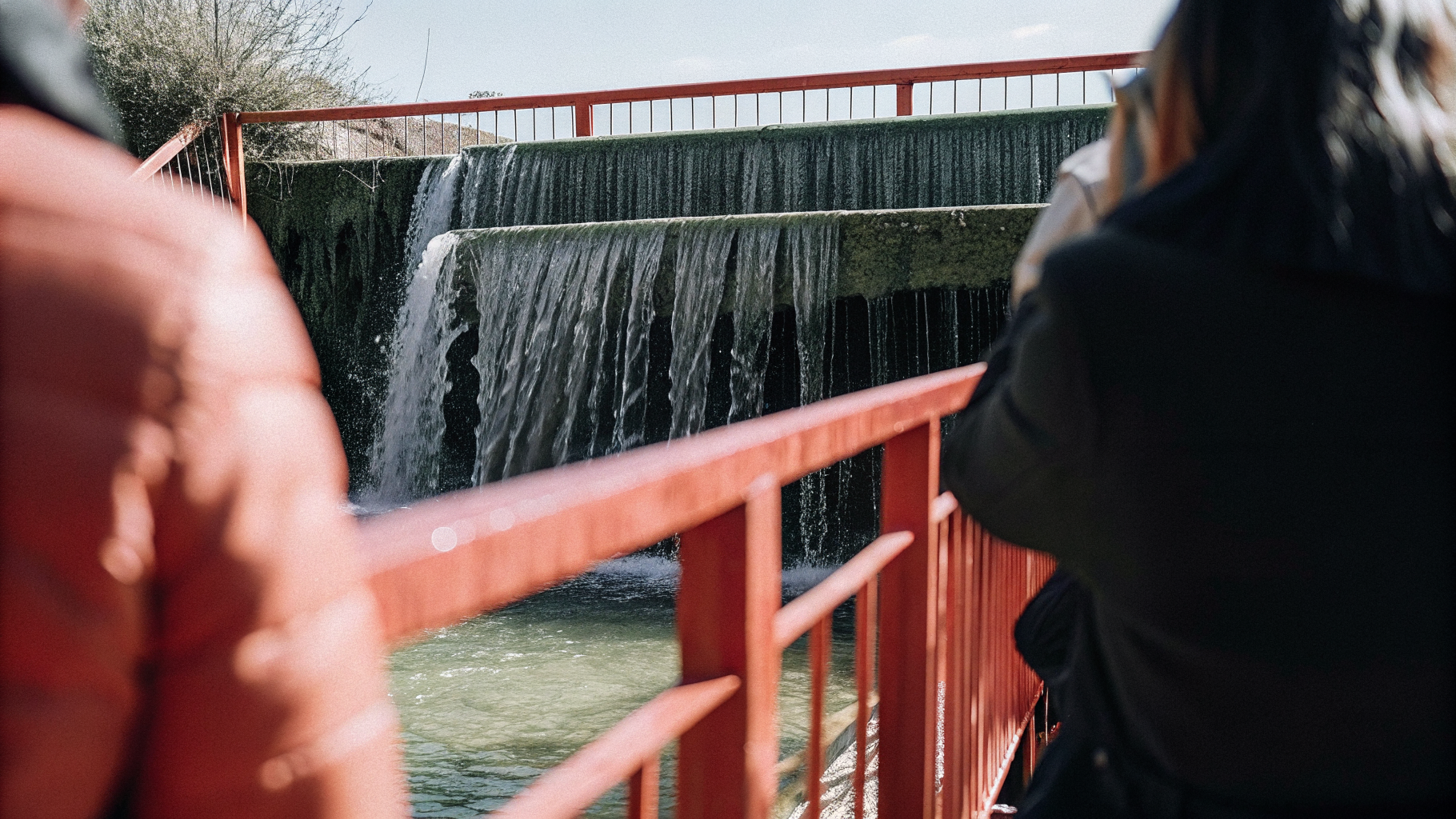
Short answer: no, not at the two most-visited ones. Swimming is banned throughout Plitvice Lakes and always has been: the travertine formations that make the lakes are fragile and protected. Krka is the one people get wrong, because the rules changed: bathing under the Skradinski Buk waterfall was once the signature photo, but swimming has been prohibited for visitors since 1 January 2021 (checked August 2026), a permanent conservation measure, so the postcard shot of tourists below the falls is out of date. Our Krka swimming guide has the current picture. To actually swim on a hot day, save it for a proper beach; our swimming safety guide has where and how.
Heat, sun and wildfire season
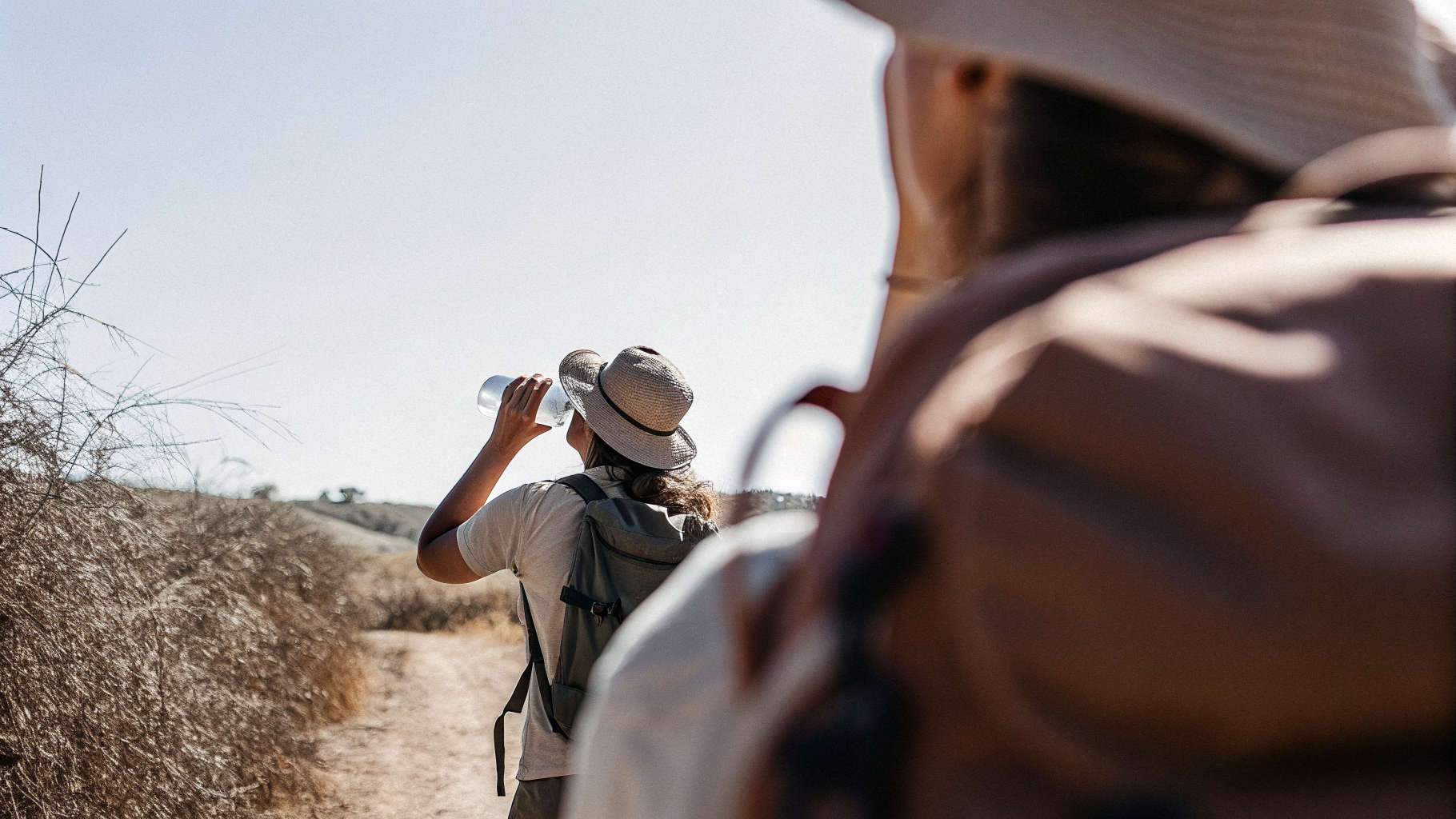
The parks that catch people out in summer are the sun-exposed ones. Krka’s boardwalks and Paklenica’s canyon and climbing routes offer little shade, and July–August midday heat is no joke. Carry more water than you think you need, cover up, and start early. The hours just after opening are cooler, quieter and safer than the 2pm crush, and heat exhaustion spoils far more days than anything dramatic. The coast also has a real wildfire season from June to September; it rarely affects visitors, but it’s why open flames and barbecues are forbidden in the parks (our camping safety guide covers fire bans). In a hot, dry, windy spell, check the DHMZ (meteo.hr) fire-danger index before you go.
Snakes, wildlife and feeding the animals
Paklenica is the one park where snakes come up, and here’s the calm version: it has the nose-horned viper (poskok) and the very rare Orsini’s viper, Croatia’s only venomous species. Bites are genuinely uncommon and the animals want nothing to do with you. Stay on the path, keep hands and feet out of rock crevices you can’t see into, and wear proper footwear; that’s the whole precaution. Our hiking safety guide has the detail on vipers, ticks and first aid. Everywhere else, the rule is simply don’t feed the animals: it’s against the rules, bad for them, and it teaches foxes and bears to link people with food.
Crowds, timed entry, drones and closures
Plitvice runs a timed-entry system: booking online, you choose an entrance and an arrival time slot, and daily numbers are capped (checked August 2026). Peak-summer slots sell out days or weeks ahead, so book in advance: turning up in August without a ticket is the fastest way to ruin a day. Fewer people on the boardwalks also means less jostling near the water. For fees and slots see our Plitvice tickets guide, and our Plitvice day trip from Split if you’re coming from the coast. Two more rules: drones are banned at Plitvice and restricted across Croatian parks (flying one without a permit risks a fine), and parks close sections, or the whole site, for weather (high water, ice or fire risk), so check the park’s website the morning you go.
If something goes wrong
Most incidents are minor, and park staff are your first call: rangers and visitor centres have first-aid kits and know the fastest way out. For anything serious, one number covers everything.
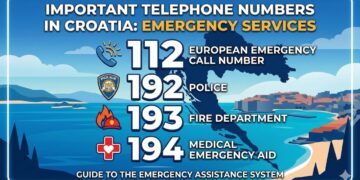
- 112, the single European emergency number (police, fire, ambulance, and dispatcher for mountain and sea rescue). English-speaking operators. Save this one.
- HGSS, the Croatian Mountain Rescue Service, reached through 112; they cover the parks’ hiking and climbing terrain. The official HGSS app can send rescuers your location.
- Direct lines: 192 police · 193 fire · 194 ambulance · 195 sea rescue.
Check that your travel insurance covers hiking and any activity you’ve booked: some policies treat “mountain” activities as paid extras. EHIC/GHIC helps EU visitors with basic state care but is no use to US travellers, who need private cover.
The practical bit
- Shoes: closed, with grip. No flip-flops on wet boardwalks or karst.
- Water and sun: a full bottle, a hat, sunscreen; refill points inside the parks are limited.
- Timing: arrive at opening; book Plitvice’s timed slot ahead in summer.
- Cash: bring a little, as some park kiosks still prefer it, and Croatia is on the euro.
- Check that morning: the park’s site for closures, water levels and fire notices.
Prefer not to juggle timed slots, parking and navigation? A guided day tour bundles the ticket in and keeps you on the right paths. From the Zadar side, the Plitvice Lakes guided day tour with tickets (4.9/5 from over 3,800 reviews) includes the boat and train.
Frequently asked questions
Can you swim in Plitvice Lakes or Krka?
No. Swimming is banned throughout Plitvice Lakes, and prohibited for visitors at Krka since 1 January 2021 (checked August 2026). Both are conservation measures, so save your swim for a beach afterwards.
What should I wear to Plitvice or Krka?
Closed shoes with grip are the single most useful thing — the boardwalks are slippery and have no railings. Add sun protection and water in summer.
Are there dangerous snakes in Paklenica?
It has the nose-horned viper and the rare Orsini’s viper, but bites are very uncommon. Stay on marked trails, keep hands out of rock crevices, and wear proper footwear.
Do I need to book Plitvice tickets in advance?
In peak summer, yes. Plitvice uses timed entry with a daily cap, and slots sell out days or weeks ahead, so book online for a set arrival time.
The short version
Croatia’s national parks are a safe, beautiful day out, and staying that way is mostly common sense: keep to the boardwalks and marked trails, wear shoes with grip, and don’t lean over the unrailed edges for a photo. Don’t try to swim — it’s banned at both Plitvice and Krka now. Bring plenty of water, start early to beat the heat and the crowds, and book Plitvice’s timed slot ahead in summer. If something does go wrong, 112 reaches everyone, including mountain rescue.
This is general guidance, not medical or legal advice. Park rules, fees and seasonal closures change. Verify with each park’s official website before you go, and follow the instructions of park staff and Croatian authorities on the day.