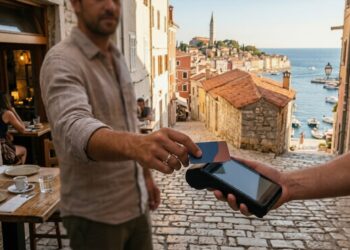













If you’re planning a trip to Croatia and wondering about money, here’s the short answer: you can pay by card almost everywhere now, and a couple needs maybe €50–100 in cash for the exceptions: markets, the odd konoba, parking, tips. Two rules cover the rest: withdraw cash from a bank’s ATM, never a Euronet machine, and whenever a terminal or ATM offers to charge you in your home currency, say no. Always pay in euros. That’s the whole strategy; the rest of this guide is the detail.
What currency does Croatia use?
Croatia uses the euro (€), which joined the eurozone on 1 January 2023, so the kuna is gone, and any guide still quoting it is out of date. You cannot pay in dollars or pounds, and — as below — you shouldn’t want to.
Can you pay by card in Croatia?
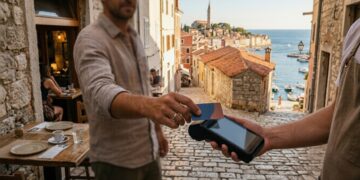
Yes, far more than older guides suggest. Visa and Mastercard are widely accepted: supermarkets, restaurants, cafés, hotels, petrol stations, pharmacies, ticket offices. Contactless is the default, and Apple Pay and Google Pay work anywhere tap-to-pay does.
- A UK or US debit card works fine in Croatian POS terminals and ATMs. Know your 4-digit PIN. American Express is patchy, so carry a Visa or Mastercard too.
- A no-foreign-fee travel card (Wise, Revolut and friends) is the cheapest way to spend here.
- Car rental desks want a credit card for the deposit, bring one even if you spend on debit day-to-day.
- “The card machine is broken” is a Croatian institution, deployed when the owner would rather have cash. No law forces a business to take cards, so a handwritten “CASH ONLY” sign is legal and binding.
Where you still need cash in Croatia
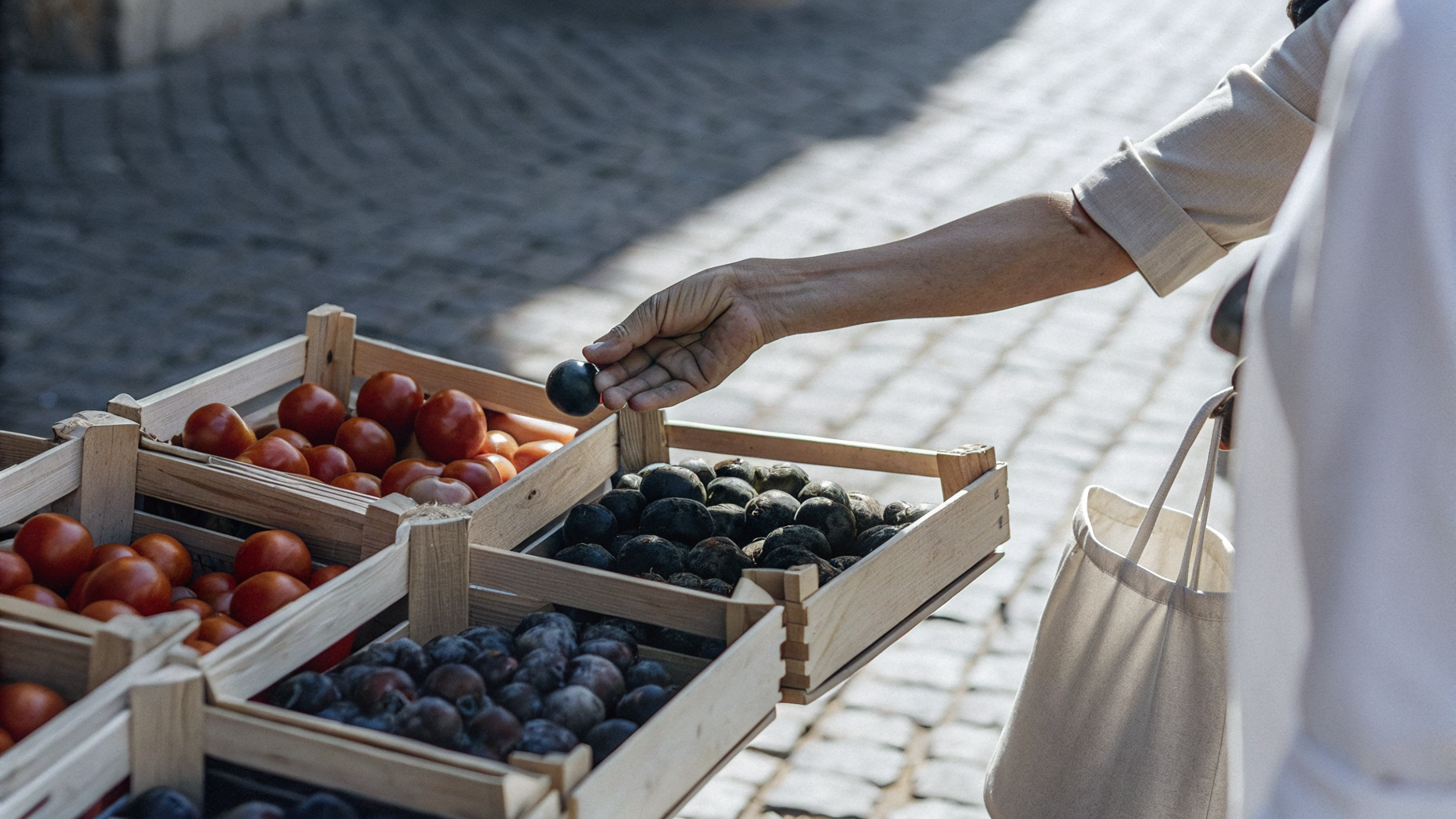
Cards work in tourist areas; cash still runs a short, predictable list:
- Open-air markets: always cash, and preferably not a €50 note for €3 of tomatoes.
- Some konobas and small cafés, especially on the islands and in smaller towns. The sign on the door is the truth.
- Family-run guesthouses and apartments booked directly, plus the local tourist tax.
- Parking. Older machines want coins; SMS parking bills a Croatian mobile number, useless with a foreign SIM.
- Public toilets, cloakrooms, deckchairs, small kiosks: coin territory.
- Tips. Card tipping exists, but cash handed to the person is the norm. Our Tipping in Croatia guide has the amounts.
Taxis are the pleasant surprise: Uber and Bolt charge your card in the app, and licensed taxis are supposed to have card machines. Keep a backup €20 anyway.
How much cash should you take to Croatia?
Less than you think. Skip exchanging cash at home or the airport. You’ll get a better rate withdrawing euros from a Croatian bank ATM after you land. A couple carding everything cardable gets through a normal week on €100–150 in cash, drawn as needed in small notes. Rural trips need a bit more; a Zagreb–Split–Dubrovnik hotel trip needs less.
ATMs in Croatia: use a bank’s, skip Euronet
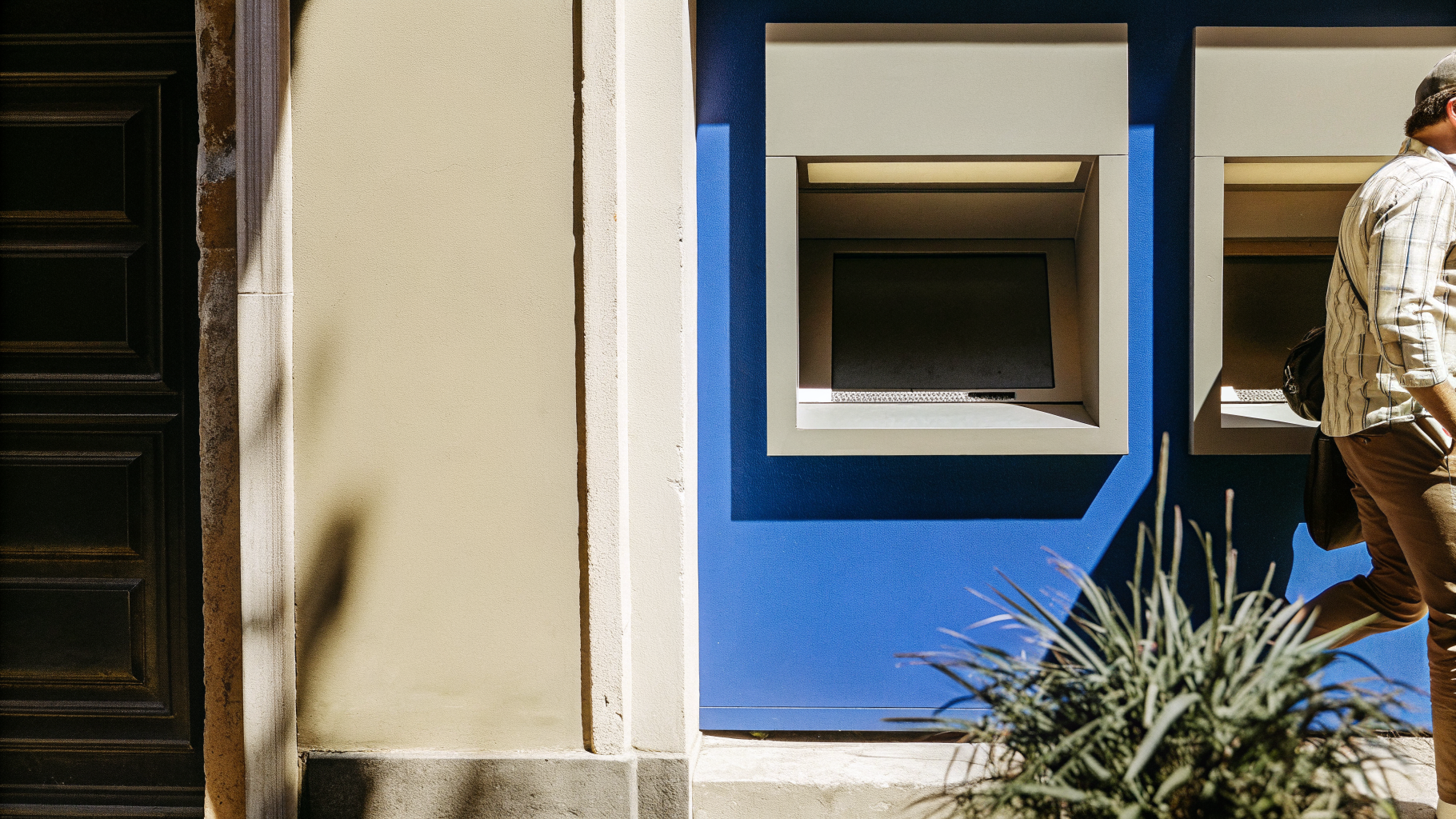
This is where visitors lose real money. Bank ATMs: PBZ, Erste, OTP, Raiffeisen and others, usually attached to a branch, give you the card network’s exchange rate, close to the real one. Any operator fee must show on screen before you confirm; some banks now charge foreign cards an access fee, others don’t. Read the screen and cancel if you don’t like the number. Nothing is charged on a cancelled withdrawal.
The independent machines: Euronet and Auro Domus, are the bright, freestanding ATMs multiplying in old towns, ferry ports and beach strips, placed exactly where you’ll be desperate. They charge their own withdrawal fee and push currency conversion at a markup that can run past 10%. That fee varies machine to machine and isn’t published anywhere central, which is exactly why the on-screen disclosure, not any guide’s number, is the authority to trust. Read it, and if you don’t like it, walk to the nearest bank ATM instead.
The golden rule: always pay in euros
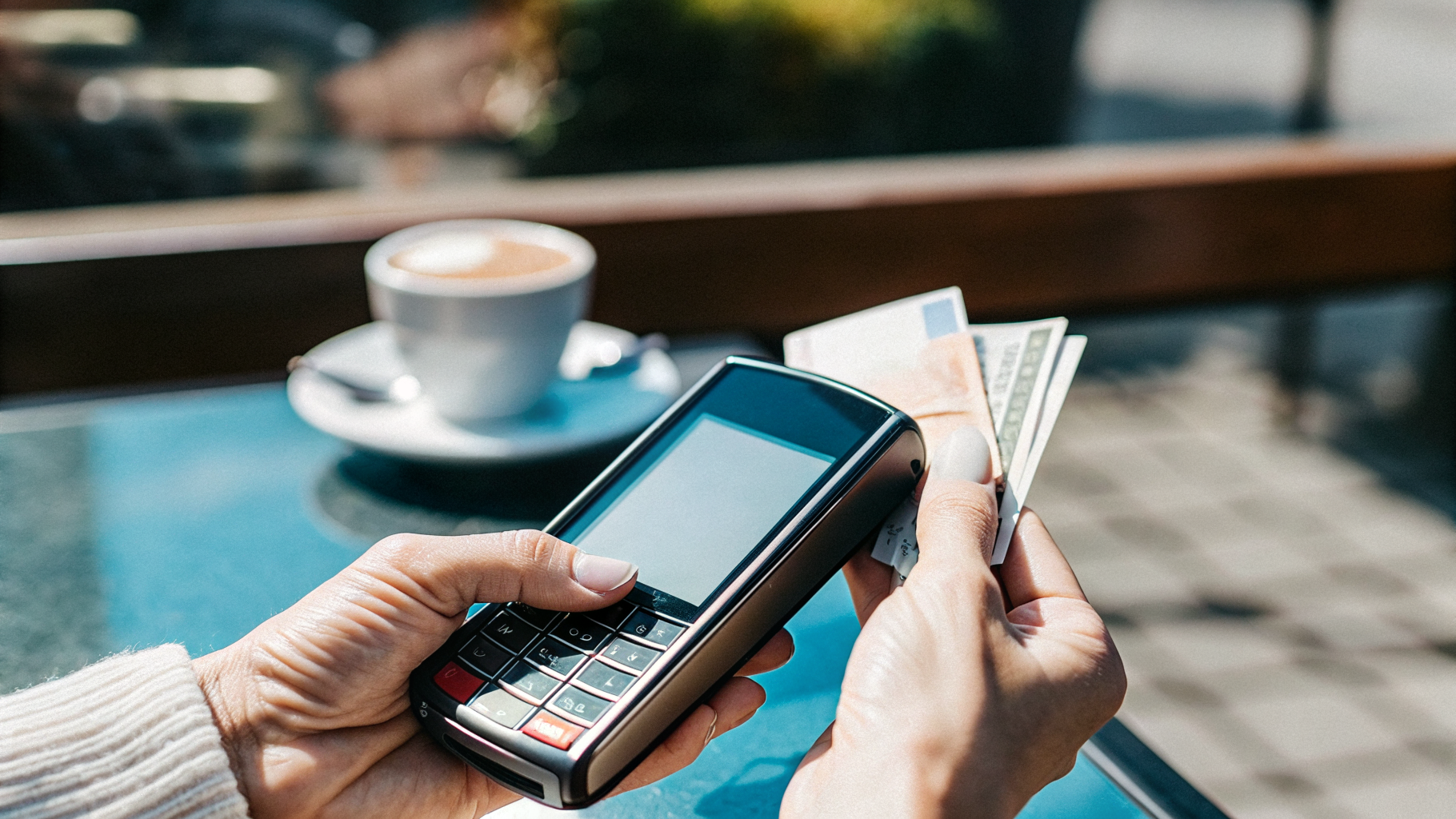
At some point a terminal or ATM will offer to charge you in your home currency. This is dynamic currency conversion (DCC), and it’s always a worse deal, a conversion fee baked into a bad exchange rate, sometimes on top of your own bank’s fee. The wording varies, but the answer never does: choose euros, every time, and let your card’s network do the converting.
A few more mechanics worth knowing
Motorway toll booths still take cash or card through 2026 (the barrier-free Crolibertas system starts March 2027). Ferry and catamaran tickets, Jadrolinija and others, sell online and in-app by card; see our island hopping without sailing guide. Crossing to Bosnia or Montenegro, carry a little local cash. They’re outside the eurozone; see our EES border checks for Americans guide. For cash-only konobas, our konoba customs guide covers the ordering side.
FAQ
Does Dubrovnik prefer cash or card?
Card. Dubrovnik is the most card-friendly city in Croatia. Keep small cash for the market, toilets and tips. Hvar, Split and Zagreb are the same story.
Can I use my UK debit card in Croatia?
Yes, any Visa or Mastercard debit card works in shops and Croatian ATMs. Decline the pound conversion when offered, and check your bank’s foreign-use fees before you fly.
How much cash do I need per day in Croatia?
If you card everything you can, €10–20 a day per couple covers the cash-only bits: market fruit, coffee, parking coins, tips. Rural trips need a little more.
The short version
Croatia in 2026 runs on cards, with a short, stubborn cash list: markets, some konobas, parking, tips. Withdraw €100 from a bank ATM (never Euronet), keep small notes, and when any machine offers your home currency, always choose euros.