

















Hiking in Croatia is safe, and the honest risk list is short: the weather turning on an exposed ridge, running out of water in the heat, wandering off a marked trail, and one venomous snake you’ll almost certainly never see. None of it should keep you off the mountain. Save 112, check the forecast, stay on the marked trail, and carry more water than you think you need — most of it is handled before you’ve laced your boots. The rest is just detail.
Is hiking in Croatia safe?
Yes, genuinely. Croatia is a calm, low-crime country with a well-loved, well-marked trail network. The mountains that draw most visitors — Paklenica National Park on the southern Velebit, the wild interior of Velebit itself, and gentler walks around Plitvice and the Dalmatian coast — suit anyone with reasonable fitness, though the national parks carry their own rules worth a read. The terrain is karst — sharp limestone, loose rock, little shade or water on a ridge — so the real dangers are sun, wind, dehydration and a twisted ankle far from the road, not predators or crime.
Trail marking and not getting lost
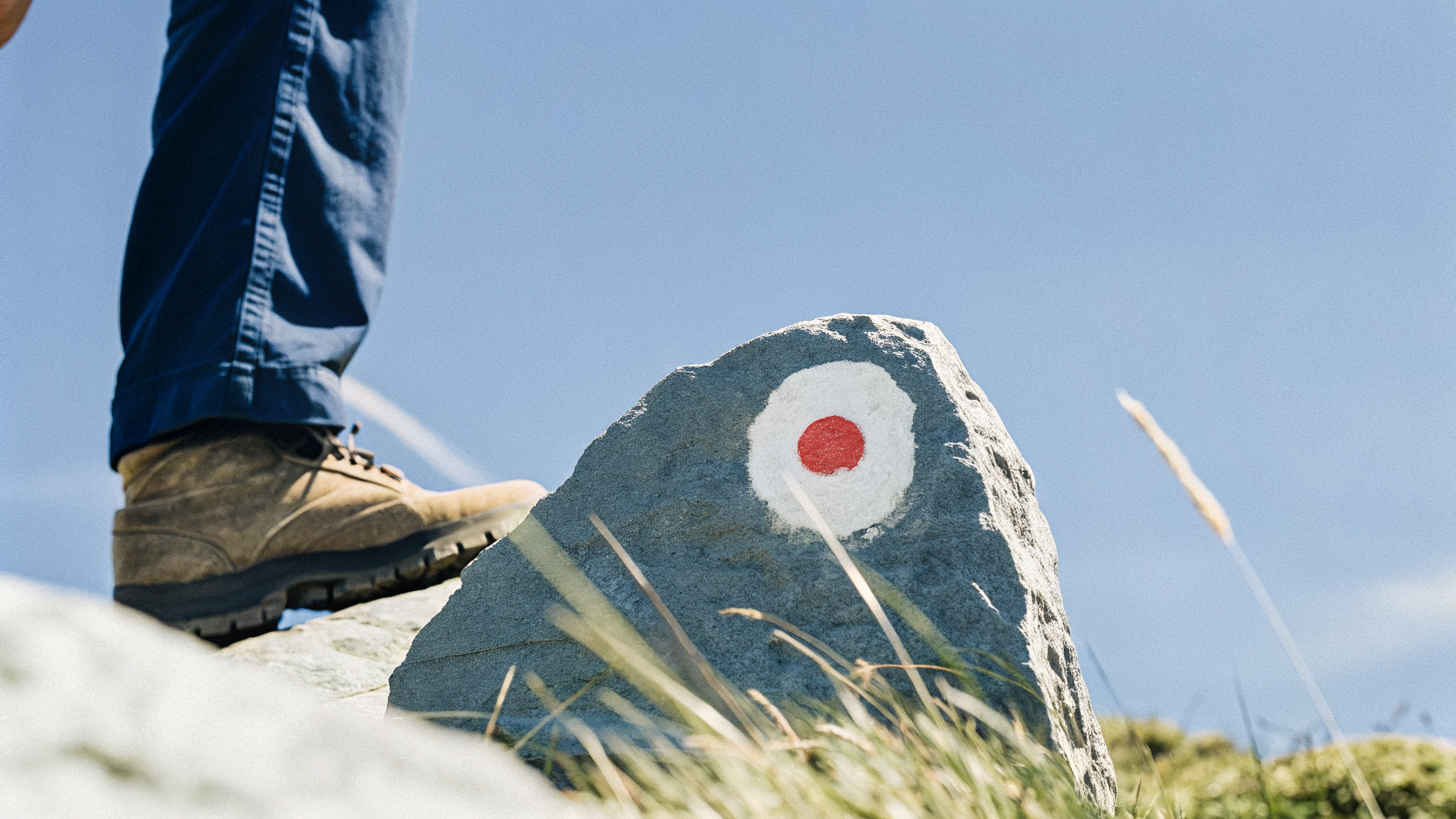
Croatia has an excellent, volunteer-maintained network of hiking trails. The standard waymark, kept up by the Croatian Mountaineering Association (HPS), is a white dot inside a red ring painted on rock and trees — learn to spot it and you can follow it for days, as on the Premužić Trail across northern Velebit, a graded stone path threading gently through savage terrain.
Getting lost happens when people leave the marks — cutting a switchback, chasing a shortcut, pushing on when the paint runs out. If you haven’t seen a waymark in a while, backtrack rather than improvise across karst. Two habits do the heavy lifting: tell someone your route and expected return time and stick to it — the thing HGSS repeats most — and plan ahead using Safe Trails (sigurnestaze.hr), HGSS’s free web map built on the official HPS trail registry (checked August 2026). Carry a charged phone, and don’t lean on a single app where valleys eat your signal. The mountain huts and shelters marked on the map are your bad-weather bailout.
Weather, bura and the ridges
Croatian mountain weather changes fast, and the wind is what flatland hikers underestimate. The bura is a cold, violent wind that pours off the Velebit massif toward the sea, sometimes with little warning, gusting hard enough to knock you off balance on an exposed crest. So check the forecast before every mountain day: the national weather service DHMZ and the pan-European Meteoalarm system publish wind and storm warnings by region, and a red or orange warning is a clear “not today” for a high ridge (checked August 2026). Avoid the mountains right after heavy rain or snow, too, when rock is greasy and streams are up. And don’t let the Mediterranean reputation fool you: the high Velebit holds real snow from late autumn into spring, and above the treeline it’s a serious winter mountain that needs winter kit and skills.
Heat, sun and water on the karst
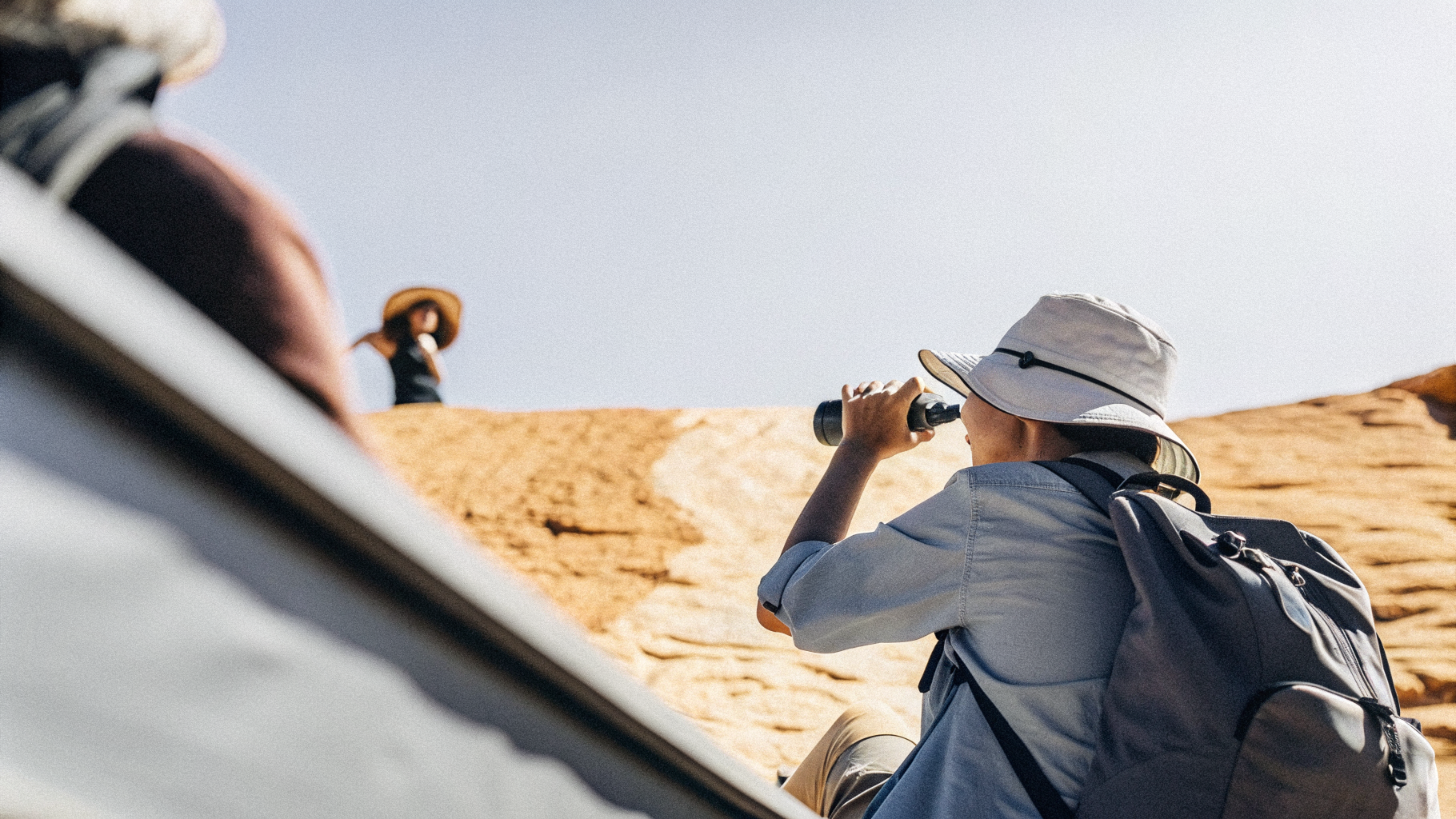
In summer, heat is the risk most likely to catch you out. Dalmatian trails are hot, dry and exposed, with white rock throwing the sun back at you and nowhere to refill; heat exhaustion sends more hikers into trouble here than any animal will.
The fixes are unglamorous. Start early and be off the exposed sections before midday, carry more water than feels necessary (there’s often nowhere to top up), and wear a hat and real sunscreen. And wear proper footwear: sharp karst and loose scree chew through soft soles and roll ankles, so a boot or trail shoe with grip and ankle support earns its place.
Snakes: the nose-horned viper (poskok)
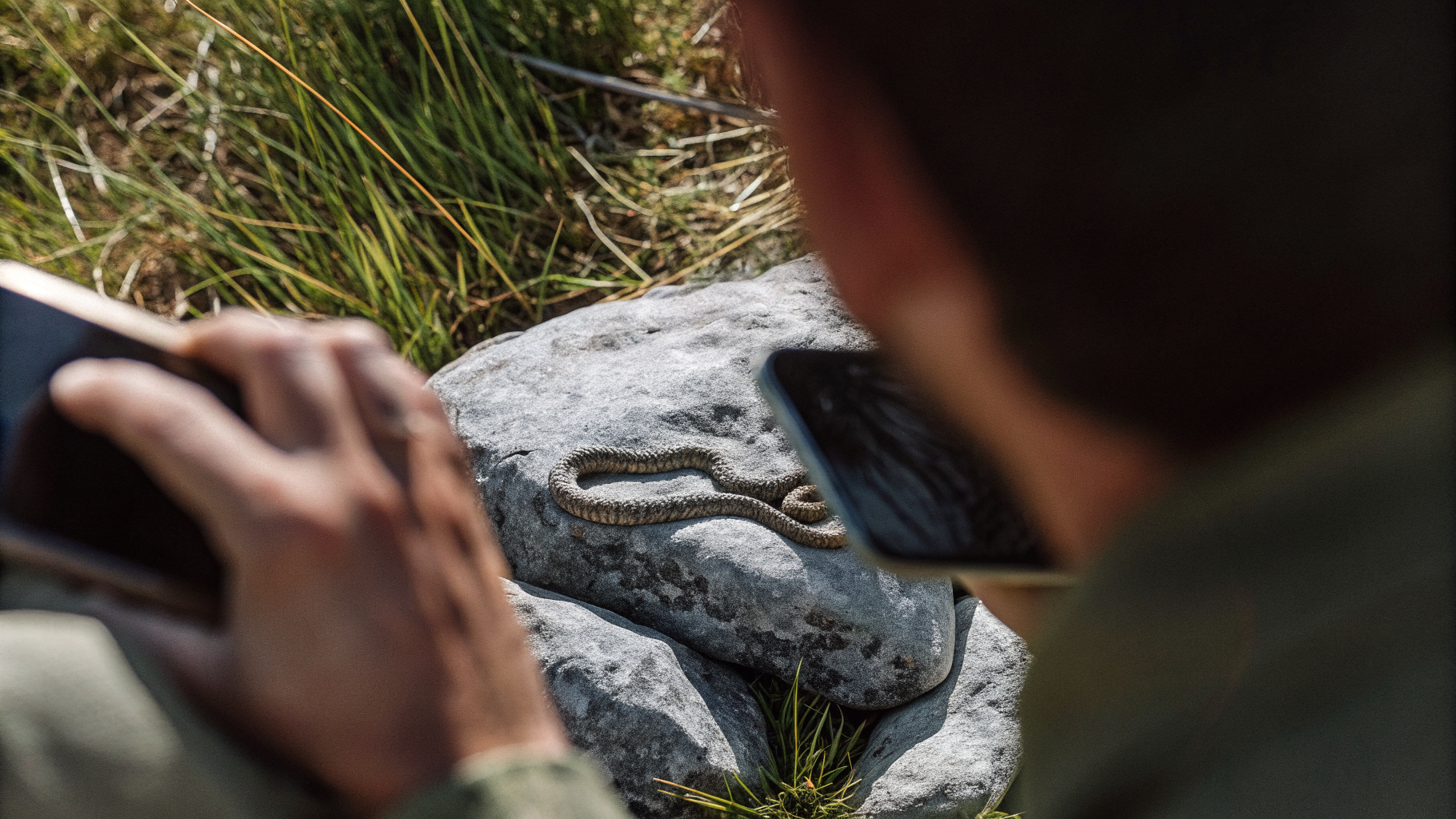
Croatia has venomous snakes, and it pays to be clear-eyed rather than panicked. The one that matters is the nose-horned viper, or poskok (Vipera ammodytes) — the most venomous snake in this part of Europe, found across Dalmatia, Istria and the Lika mountains, and one of only a couple of venomous species inside Paklenica. There’s also the smaller common adder in cooler, higher ground. Both are shy.
The reassuring part, told straight: the viper wants nothing to do with you, and bites are genuinely rare — rescue teams around Zadar report only a handful of viper-bite call-outs across two decades. Avoid the small risk with simple habits: stay on the trail, watch where you put hands and feet, don’t reach blindly onto warm ledges, and make a little noise. If you see one, give it a wide berth — most bites happen when someone tries to handle or kill the snake.
If someone is bitten, the goal is calm and speed, not heroics. Keep the person still, keep the bitten limb roughly at heart level, and remove rings, watches and tight clothing before swelling starts. Then get to a hospital fast — call 112. Do not cut the wound, suck out venom, apply a tourniquet, or pack it in ice; those old tricks do more harm than the bite. Antivenom exists and is given in hospital, not in your backpack, and European viper bites are rarely fatal when treated promptly — which is why the real first aid is a steady, quick trip to care (checked August 2026).
Ticks, TBE and Lyme
The genuinely useful wildlife warning is smaller than a snake. Ticks live in grass and undergrowth, mostly across continental and northern Croatia and wooded inland areas rather than the coastal karst, and they’re active through the warm half of the year, spring into autumn. Two illnesses matter: Lyme disease, which occurs across mainland Croatia, and tick-borne encephalitis (TBE), concentrated in the forested north and interior (checked August 2026).
Prevention is easy: use insect repellent, wear long trousers tucked into socks on grassy or wooded trails, and check your skin at day’s end — especially if you’re also camping inland. If you find one attached, remove it promptly with fine-tipped tweezers, gripping close to the skin and pulling straight out with steady pressure, then clean the spot; don’t burn it or smother it in oil. Watch the bite over the following weeks — a spreading circular “bull’s-eye” rash or flu-like symptoms is a reason to see a doctor. A TBE vaccine is available in Croatia, given by risk; if you’re planning a lot of time in northern forests, that’s a conversation for a travel-health clinic before you go.
Bears, wolves and why you won’t meet one
Croatia really does have brown bears — perhaps 900 to 1,000 — plus wolves and lynx, mostly in the forests of Lika and Gorski kotar. It sounds alarming and almost never is: these animals are shy, go out of their way to avoid people, and are rarely seen at all — hikers spend years here without so much as a track, and attacks are extraordinarily rare. Make normal noise, don’t leave food out, and treat a sighting as the rare privilege it is.
Emergency contacts and getting help
Save these before you go; two matter most.
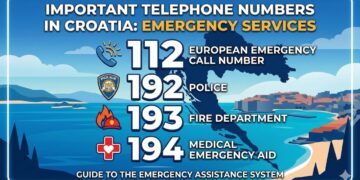
- 112 — the single European emergency number: police, fire, ambulance, and the dispatch line for mountain rescue. English-speaking operators. This is the one everyone should save.
- HGSS — the Croatian Mountain Rescue Service, reached through 112; there’s no separate hiking hotline. Give your location as precisely as you can — the GPS coordinates from your phone are ideal — plus what’s wrong and how many people are involved.
The rest, secondary on a trail: 192 police, 193 fire, 194 ambulance. And check that your travel policy actually covers hiking and mountain rescue — some exclude “mountaineering,” and EHIC/GHIC cover is EU-only and no use to US travellers, who need private cover.
The practical bit
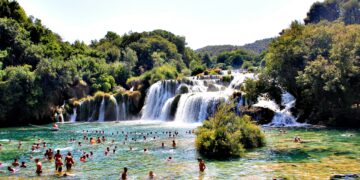
You don’t need expedition kit for a day on a marked trail, just the boring essentials: sturdy footwear with grip; more water than you expect to drink; sun hat, sunscreen and a long-sleeved layer; a charged phone; a small first-aid kit; a headlamp; a wind layer for up high; and enough food. Tell someone your plan, start early to beat the heat, and remember the drive to the trailhead is its own hazard on winding coastal roads. For seasons, late spring (May–June) and early autumn (September–October) are the sweet spot — warm, stable, and far kinder than peak-summer sun on open karst; high summer is fine if you start at dawn, and deep winter on Velebit is for experienced walkers only. On a hot day, pair a walk with a swim at Krka.
If reading the terrain, weather and waymarks yourself feels like a lot the first time, a guided day handles most of what goes wrong for first-timers. Near Zadar, this full-day Velebit guided trip pairs a manageable hike on Tulove Grede with the Zrmanja canyon and caves, and is very well reviewed.
Frequently asked questions
Is hiking in Croatia safe?
Yes — a low-crime country with a well-marked trail network. The real risks are environmental: heat, sudden mountain wind (the bura), and getting lost off-trail, all of which prevention handles. Save 112, check the weather, and stay on the marked route.
Are there dangerous snakes on Croatian hiking trails?
One to know: the nose-horned viper (poskok), the region’s most venomous snake. It’s shy and bites are rare. Stay on the trail, watch where you put hands and feet, never handle a snake, and if bitten, keep calm and still and get to a hospital via 112.
How do I contact mountain rescue in Croatia?
Call 112 and ask for mountain rescue — that connects you to HGSS, the Croatian Mountain Rescue Service. There’s no separate number. Give your GPS coordinates from your phone.
When is the best time to hike in Croatia?
Late spring and early autumn are ideal — warm and stable without the punishing midday heat of July and August. Winter hiking on Velebit needs proper gear and experience.
The short version
Croatia is a safe, rewarding place to hike, and the trouble is nearly always ordinary: too little water, too much sun, a ridge in the wrong wind, or a wrong turn off the marks. Wear real boots, carry water, check DHMZ before a mountain day, stay on the waymarked trail, and tell someone your plan. Watch your hands and feet for the shy viper you probably won’t meet, check for ticks after inland walks, and save 112 for the rare day you need HGSS. Then the mountains of Croatia are yours.