









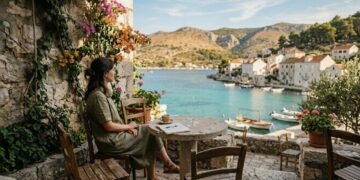


Driving in Croatia is genuinely easy and safe: good motorways, sane drivers, and the same drive-on-the-right EU rules you already know. For most of the country the honest message is: relax, rent the car, enjoy the coast. Two things actually catch tourists out, and both are simple to handle. First, the alcohol limit is zero if you’re under 24 or have held your licence less than two years, not “one small beer is fine,” but zero. Second, the bura, a violent northeasterly wind, periodically shuts coastal roads and bridges; when the police close a road, they mean it. Here’s the version a friend who drives here would give you.
Is it safe to drive in Croatia?
Yes. Croatia is a straightforward place to drive, calmer than Italy or the countries to its east. You drive on the right, and road signs follow standard European conventions. One rental quirk: most cars have a manual transmission, so if you want an automatic transmission, book it early with your car rental company. Automatics sell out. The motorways are modern, and Google Maps handles navigation well; the drama, when there is any, is on the old coastal roads, whether you’re driving from Zagreb to the coast, catching a ferry to Hvar, or heading inland to Plitvice.
Your home licence does most of the work. EU and UK licences are valid as-is. On a US, Canadian, or Australian licence, carry an International Driving Permit (IDP) alongside it. Rental desks and police can ask for one (checked August 2026). Non-EU visitors should also note the EU’s new border entry/exit checks. See our EES guide for US citizens.
Speed limits and the rules that quietly get tourists fined
Croatian speed limits are standard, and the police do enforce them. Current limits (checked August 2026):
- Motorway (autocesta): 130 km/h
- Expressway (brza cesta): 110 km/h
- Open road: 90 km/h
- Built-up area: 50 km/h
Drivers under 24 or with under two years’ licence have lower limits, roughly 120 / 100 / 80 km/h.
Three rules trip up more visitors than speed does. Dipped headlights must be on during the day in the winter half of the year (1 November to 31 March), and driving without them is an easy fine of around €30. Phones must be hands-free and seatbelts are mandatory in every seat. Your rental must also legally carry a warning triangle, a hi-vis reflective vest, and a first-aid kit. Cars come with these, but check the boot, since after a breakdown you’re expected to wear the vest and set the triangle out.
The alcohol limit: 0.05%, and zero for young and new drivers
This is the rule most worth memorising. The general blood-alcohol limit is 0.05% (0.5 g/l), but it drops to 0.00% for anyone under 24, anyone who’s held a licence less than two years, and all professional drivers (checked August 2026). For those groups there’s no “I’ll be fine after one glass”. It’s zero.
Enforcement is real and penalties are steep. Fines climb from the hundreds into the thousands of euros as your reading rises, plus a licence suspension. So for a wine-country day out: don’t drive after tasting. Use a designated driver, a transfer, or a tour with transport included, the same logic in staying safe while wine tasting.
Tolls, the Slovenia trap, and filling up
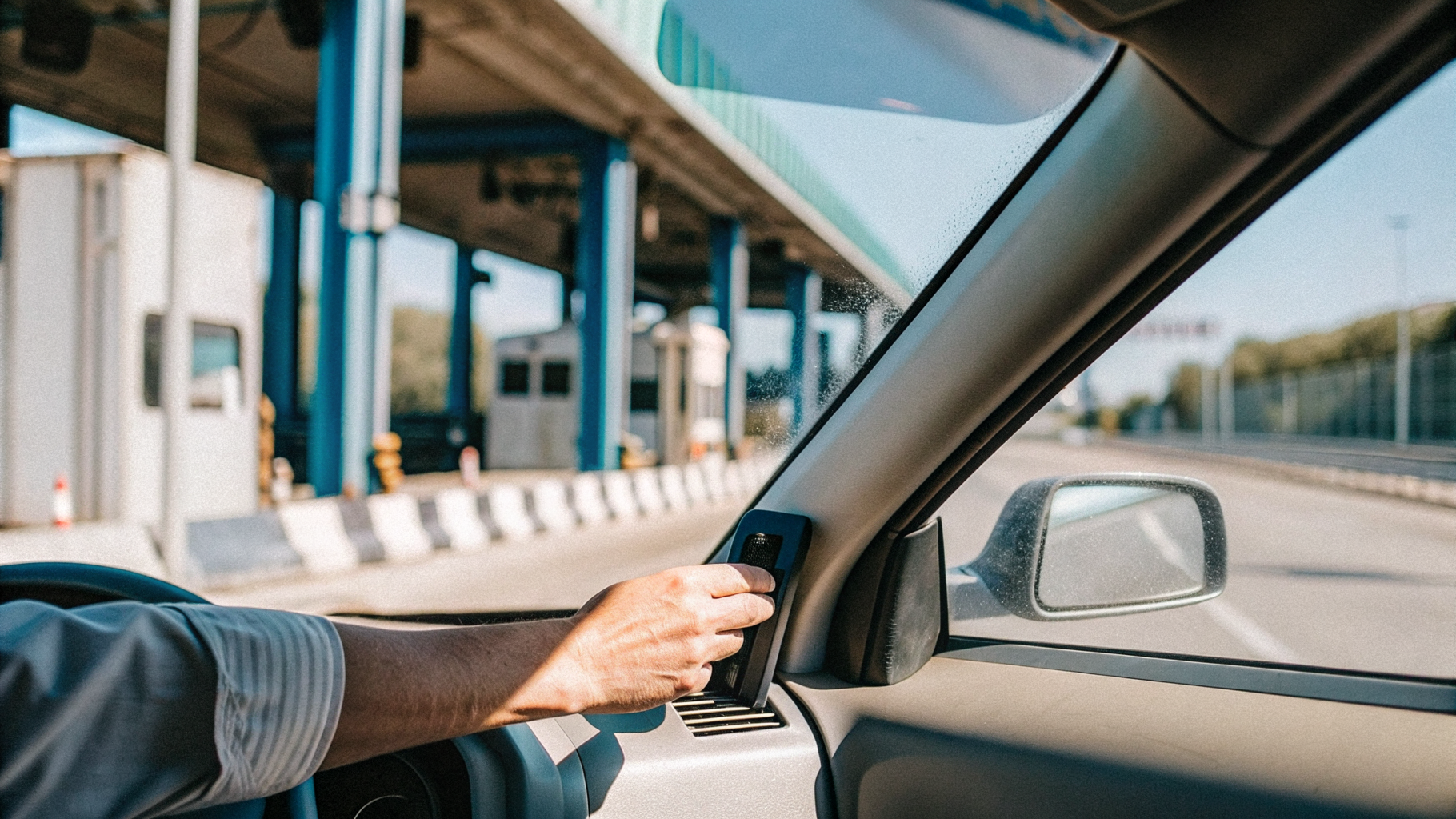
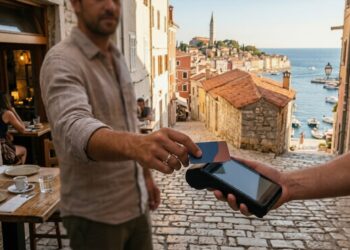
Croatia’s motorways are tolled pay-per-use: you take a ticket entering the motorway and pay on exit, by cash or card, in euros (checked August 2026). There is no vignette, the windscreen sticker some countries require, so don’t buy one.
Here’s the trap: Slovenia is the opposite. If your trip crosses into Slovenia, easily done heading to Italy or Austria, you do need a Slovenian e-vignette, bought online before you drive its motorways, or you risk a fine. Sort it before the border. Fuel is easy: gas stations are frequent on main routes (thinner on islands and remote back roads, so top up before long inland stretches), and cards work everywhere.
The coastal roads: hairpins, overtaking and tunnels
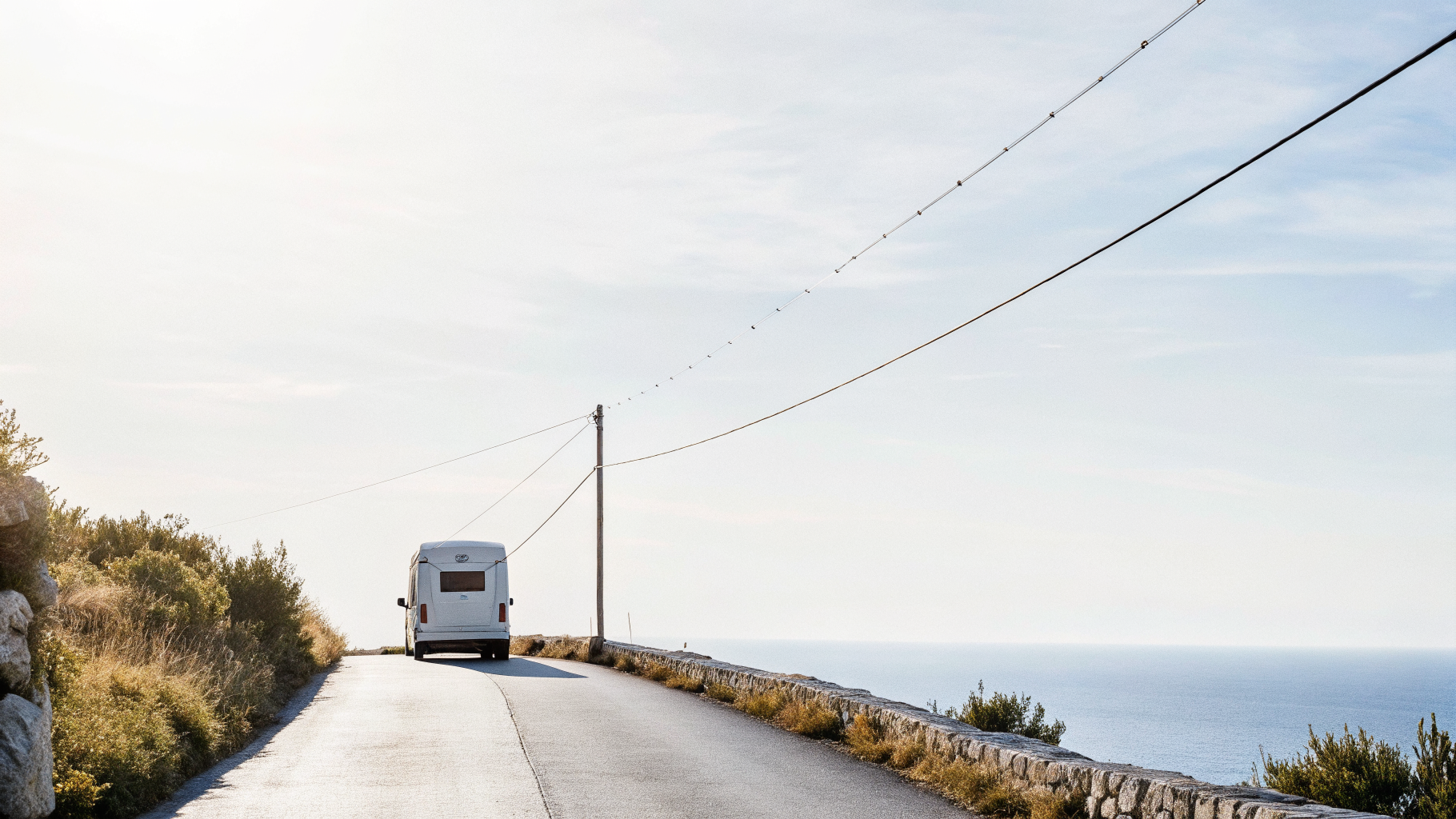
The scenery you came for, the Adriatic Highway (the D8) hugging the coast, is also where you drive most carefully. It’s a two-lane road of bends, blind corners, and slow campervans, with sheer drops on one side. Don’t overtake unless you can see the road is clear well ahead; impatient overtaking on the D8 is the classic way tourists come to grief. Give yourself far more time than the map suggests, and let tailgaters pass. You’ll share these narrow roads with cyclists and scooter riders too. Give them room.
The motorways have long tunnels (Sveti Rok and Mala Kapela on the A1) where the limit drops to 80 km/h. Keep your distance and don’t stop. If the coastal road feels like too much, the fast inland A1 plus the Dubrovnik–Split route is the low-stress alternative.
The bura: when the wind closes the roads
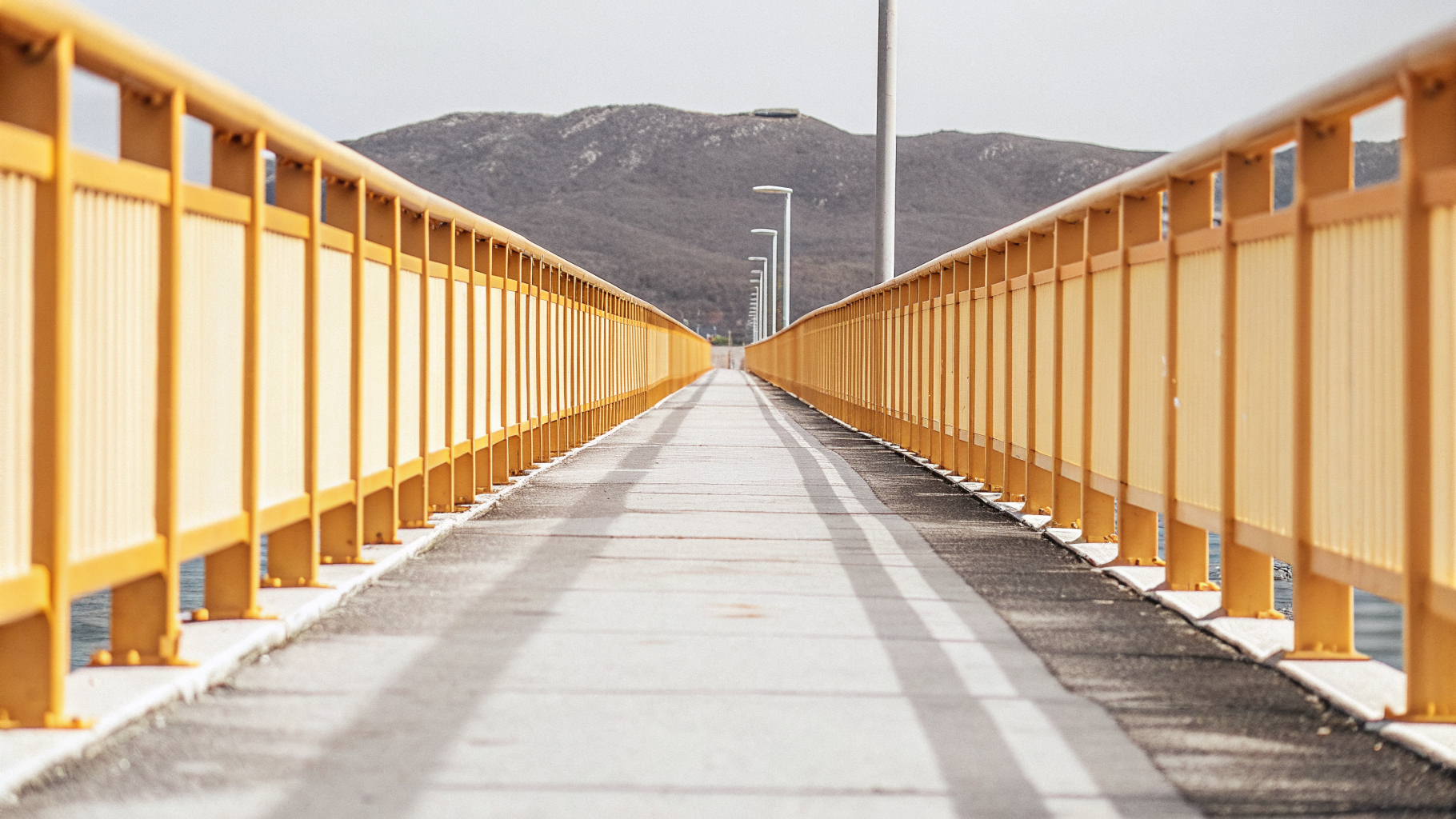
The bura (or bora) is Croatia’s signature hazard, and the one worth respecting. It’s a cold, violent wind that rushes down off the mountains onto the coast, often with little warning, in gusts strong enough to flip a caravan or a high-sided van. When it blows hard, the authorities restrict or close exposed roads and bridges: the Maslenica bridge and the A1 around Sveti Rok–Posedarje, the Pag and Krk bridges, and stretches of the coastal D8 (checked August 2026).
Closures come in stages: first a ban on caravans, motorcycles, and high-sided vehicles, then a total closure. You’ll see electronic wind-warning signs flashing restrictions as you approach exposed spots. Obey them, they’re not advisory. Before setting out in windy weather, check live road conditions with the Croatian Auto Club (HAK) at hak.hr or its app. If a road’s shut, wait it out; the bura usually passes within a day or two, and it’s the same wind that grounds ferries and sailing trips. No view is worth a bridge in a 100 km/h gust.
Winter driving: tyres, chains and short days
If you’re visiting in the colder months, winter equipment is mandatory from 15 November to 15 April on designated winter road sections, inland routes and mountain passes, not the southern Dalmatian coast (checked August 2026). That means either winter tyres (M+S or 3PMSF marked, all four wheels) or summer tyres with at least 4 mm tread plus snow chains in the car. The rule applies whether or not there’s snow on the ground, and the fine is around €130. Renting in winter? Confirm the car is properly equipped. Reputable firms handle it, but ask.
Parking, old towns and the Neum corridor
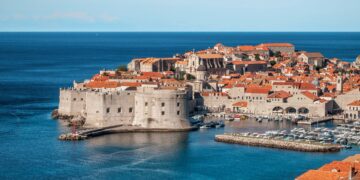
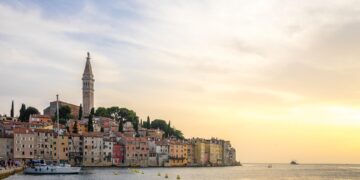
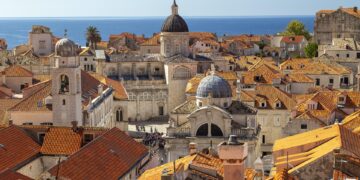
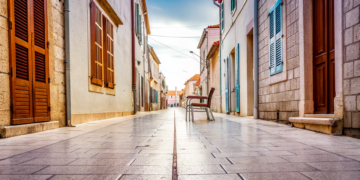
Croatia’s historic centres (Dubrovnik’s Old Town, Split’s Diocletian’s Palace, Rovinj, Trogir) are pedestrianised and closed to cars, often inside a restricted-traffic zone with camera enforcement and real fines for entering unauthorised. Don’t drive to your Old Town apartment door; park in a signed garage or lot outside the walls and walk in. Paid blue-zone street parking is common in summer.
One quirk of the far south: the Neum corridor, a short sliver of Bosnia and Herzegovina that used to interrupt the coastal drive to Dubrovnik. Since the Pelješac Bridge opened in 2022, you can stay on Croatian soil the whole way and skip the border crossings, a real improvement with Schengen checks now in place. The old Neum route still works, but you’ll need your passport and may hit queues.
If something goes wrong: who to call
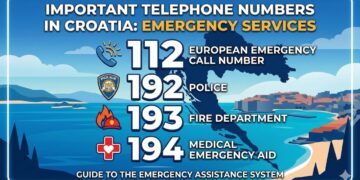
Save two numbers before you drive. For any emergency (accident, injury, fire) dial 112, the single European emergency number, with English-speaking operators who reach police, fire, and ambulance. For a breakdown, flat tyre, or tow, call 1987, the Croatian Auto Club (HAK) roadside assistance (from a foreign phone, +385 1 4693 700). Those two cover almost everything; the direct lines are 192 police, 193 fire, 194 ambulance.
After a crash, Croatian law expects you to stop, put on the hi-vis vest, set out the warning triangle, and (for anything beyond a trivial scrape, or any injury) call it in. Take photos, exchange details, and phone your rental company’s assistance line.
Frequently asked questions
Is it safe to drive in Croatia?
Yes. Roads are good, drivers are reasonable, and the rules are standard EU. Respect the bura wind on the coast (obey road closures) and the zero alcohol limit for young and newly licensed drivers.
Can you drive in Croatia with a US or UK licence?
UK and EU licences are valid as they are. On a US, Canadian, or Australian licence, carry an International Driving Permit alongside your home licence. Rental desks and police may ask for it.
Do I need a vignette to drive in Croatia?
No. Croatia charges tolls per journey, paid by cash or card in euros. Slovenia is different. Cross into it and you’ll need its e-vignette, bought online in advance.
Is the coastal road dangerous?
Not if you drive it patiently. The Adriatic Highway (D8) is a winding two-lane road; the risk comes from overtaking on blind bends, so don’t. Allow more time than the map says.
What’s the alcohol limit for driving in Croatia?
0.05% for most drivers, but 0.00% if you’re under 24, have held your licence under two years, or drive professionally. When in doubt, don’t drive after drinking at all.
The short version
Croatia is an easy, rewarding place to drive: rent the car, drive on the right, enjoy the coast. Keep your headlights on from November to March, and remember the alcohol limit is zero for young and new drivers. Tolls are pay-per-use in euros with no vignette, but Slovenia needs one. Take the coastal D8 slowly and never overtake on a blind bend. Watch the bura and obey road closures, and park outside the old towns and walk in. Do that, and the only thing you’ll remember about driving in Croatia is the view.
Travel insurance: make sure your policy actually covers you to drive, and read the rental insurance and collision-damage terms before you decline the extra cover. An EHIC/GHIC card is EU-only and no use to US travellers, who need private medical and travel cover. A small gap here gets expensive fast after a coastal-road scrape.
Current as of August 2026. Speed limits, the alcohol thresholds, toll methods, winter-equipment dates and the headlight rule were checked against HAK and Croatian traffic-law sources in August 2026. Rules and fines change. Confirm anything critical with HAK (hak.hr) or the police before you rely on it. This is general guidance, not legal or medical advice; follow current signage, police instructions, and your rental company’s terms on the day.