
















How to Handle the Extreme Heatwave in Croatia This August
Safety Tips, Travel Adjustments, and Local Guidance for Every Traveler
RED ALERT: The Croatian Meteorological and Hydrological Service (DHMZ) has issued red weather warnings for most of Croatia. Temperatures are forecast to reach 40 degrees Celsius in inland areas. Avoid direct sun exposure between 10am and 5pm.
August 2025 is shaping up to be one of the most intense on record across southern Europe. A heat dome has settled over the continent, causing temperatures to soar from Portugal and the city of Seville through Italy, Milan, and into the Balkans — with this stretch of the Adriatic coast sitting directly under the hottest part of the system. The coast has always sweltered in summer, but the scale of this year’s heat wave reflects a broader pattern: as the planet continues to warm, extreme weather events in southern Europe are becoming more frequent, more intense, and harder to simply wait out.
July and August are always the hottest months here — coastal towns typically see highs of 33–38 degrees Celsius (91–100 degrees Fahrenheit) — but during an extreme heat event like this one, temperatures expected to reach 40°C (104°F) or above require a different level of preparation. This guide covers everything a traveler needs to stay healthy and active despite the heat.
What to Expect: Temperatures, Forecasts, and the Worst-Affected Areas
Not all of Croatia swelters equally. The hottest conditions during this heat wave are concentrated in two areas: Slavonia in the east — the flat, continental interior around Osijek and the Pannonian plain — and inland Dalmatia. These are the regions where the mercury climbs highest and humidity makes the air feel even hotter than the thermometer reads. Temperatures in Slavonia are forecast to reach 40 degrees and above, with extreme temperatures persisting through the night, meaning no overnight relief.
Along the Adriatic coast and in coastal towns like Split, Dubrovnik, and Zadar, sea breezes provide some moderation — daytime highs typically sit around 35 degrees Celsius during a heat wave, though recent forecasts put coastal peaks higher this month. Zagreb sits somewhere between the two extremes: urban heat island effects make the city particularly unbearable during peak hours, with concrete and asphalt retaining heat through the night. The meteorological forecast from DHMZ is updated daily at meteo.hr — check it before planning any outdoor activity.
Climate change context: Croatia’s average annual temperature has risen by approximately 1.5°C since 1991, according to meteorological records. Summers are getting hotter — 2024 was the hottest meteorological summer on record in Croatia. Southern Europe as a whole is warming faster than the global average, and heatwaves that were once rare are now expected every few years.
Heatwave Safety: Quick Checklist for Tourists Under a Red Alert
A red alert or orange heat alert from DHMZ means dangerous conditions. Treat weather warnings seriously — prolonged heatwaves in Croatia have been linked to increased mortality, particularly among the elderly.
• Stay indoors between 10am and 5pm — this is non-negotiable on red alert days
• Drink water consistently throughout the day — at least 2–3 litres — even if you don’t feel thirsty
• Avoid alcohol, caffeine, sugary drinks, and carbonated beverages — they accelerate dehydration
• Wear light, loose, breathable clothing — linen and cotton, light colours
• Apply sunscreen of at least SPF 30 every two hours if you go outside
• Keep curtains and blinds closed on sun-facing windows — this can reduce indoor temperature significantly
• If using air conditioning or air-conditioning units, keep the temperature difference between indoors and outdoors to no more than 7 degrees
• Check on elderly neighbours, relatives, or travel companions — the over-65s and those with chronic illnesses are at highest risk
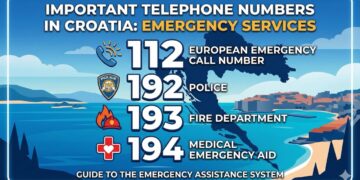
• Save the emergency number 112 in your phone
Practical Travel Tips for Sweltering Days in Croatia
The key to surviving sweltering days as a tourist here is to restructure your day completely. Start early — be at outdoor attractions by 8am and finished by 10am. Use the hottest hours (10am–5pm) to stay cool indoors: visit a museum, a gallery, a shaded konoba, or simply retreat to your air-conditioned accommodation. Resume outdoor activities after 6pm when the heat begins to ease.
Swimming is still safe and genuinely the best way to spend a hot afternoon — sea temperatures in the Adriatic are around 27–29°C in August, which feels refreshing against 38°C air. Hotels with a pool offer an alternative if you prefer still water. Avoid swimming immediately after eating and watch for any official beach closures issued by local authorities during extreme heat periods.
When choosing accommodation or places to eat, prioritise air conditioning — not all older hotels, konobas, and apartments along the coast have it, and on a 40-degree day the difference is significant. Cafes and shopping centres in larger cities like Zagreb and Split are reliably air-conditioned and make good midday refuges. In coastal towns, look for restaurants with stone walls and shaded terraces — the thick limestone used in traditional construction keeps interiors naturally cooler than modern buildings.
Working outdoors or planning any physical activity? DHMZ recommends taking a break in the shade every 15–20 minutes and drinking at least one and a half glasses of water every half hour. This applies to hiking, cycling, watersports, and any other sustained outdoor exertion.
Advice for Vulnerable Groups: Elderly, Children, and Those with Chronic Illnesses
Older travellers over 65 and those with chronic illnesses — particularly cardiovascular conditions, diabetes, kidney disease, or respiratory problems — are at significantly elevated risk during extreme heat. If you or someone in your group is in a vulnerable category, staying healthy and active in this heat requires extra precautions beyond the standard checklist.
• Avoid any outdoor exposure during peak hours — indoors is the only safe place between 10am and 5pm on red alert days
• Monitor for early signs of heat exhaustion: heavy sweating, weakness, dizziness, nausea, or pale clammy skin
• If someone begins to faint, feel confused, or stops sweating despite the heat — these are signs of heat stroke and require immediate medical attention
• Seek shade and cool the person immediately with wet cloths or water while waiting for help
• Dial 112 immediately for heat stroke — do not attempt to drive to a hospital yourself
Children are also particularly vulnerable: they dehydrate faster than adults and may not recognise or communicate their symptoms early enough. Keep children indoors during peak heat, ensure constant hydration, and watch for signs of heat exhaustion proactively rather than reactively.
Wildfire Risk: What Travelers Need to Know This August
Extreme heat, drought conditions, and strong winds create elevated wildfire risk across Dalmatia, Istria, and the coastal hinterland in August. Wildfires can spread rapidly in this landscape — dry vegetation, limestone terrain, and seasonal winds like the bora and jugo accelerate fire movement significantly.
If a wildfire breaks out near your location: follow instructions from local authorities immediately, do not attempt to observe or photograph from close range, and be prepared to evacuate quickly if told to do so. Leave early if authorities issue warnings — do not wait until evacuation becomes mandatory. Keep your car fuelled and your valuables accessible. In the event of a forced evacuation, follow the designated routes indicated by emergency services and do not use unofficial shortcuts through forested areas.
Never light fires, barbecues, or discard cigarettes in forested or dry vegetation areas in August. It is illegal during fire season and the primary cause of human-ignited wildfires along the Adriatic coast.
Recognising and Responding to Heat-Related Illness
Know the difference between heat exhaustion and heatstroke — the second is a medical emergency.
Heat exhaustion symptoms: heavy sweating, weakness, cold or pale skin, weak pulse, nausea, possible fainting. Action: move to a cool place, apply cool wet cloths, sip water slowly. Rest and monitor. Seek medical advice if symptoms don’t improve within an hour.
Heatstroke symptoms: high body temperature (above 39°C), hot and dry skin (no sweating), rapid strong pulse, confusion, loss of consciousness. This is a life-threatening emergency. Call 112 immediately. While waiting: move the person to a cool environment, apply cold water or ice to neck, armpits, and groin, do not give fluids to an unconscious person. Heatstroke caused by extreme heat can be fatal within minutes if not treated — do not delay seeking medical help.
What to Pack for Extreme Hot Weather in Croatia
• Sunscreen SPF 50+ — reapply every two hours; buy locally if you forget (widely available at pharmacies and supermarkets)
• Lightweight, breathable fabrics — linen and cotton in light colours; avoid synthetics that trap sweat
• A wide-brimmed hat — essential for any outdoor time
• A reusable water bottle of at least one litre — refillable at public fountains throughout Croatian coastal towns
• A small portable fan or cooling mist spray — surprisingly effective in dry heat with low humidity
• Electrolyte sachets or tablets — useful if you’ve been sweating heavily and need to rehydrate quickly
• Any prescription medication in its original packaging with a doctor’s note — heat can affect medication storage requirements
Tap water is safe to drink throughout the country — use public fountains freely to refill your bottle and reduce plastic waste.
Croatia’s Heatwave in Context: Southern Europe This Summer
Croatia is not alone in facing soaring temperatures this August. The same heat dome driving extreme weather here is producing record-breaking conditions across large parts of Europe: Portugal and the city of Seville in Spain are already in their third consecutive heatwave of summer; Milan and northern Italy are experiencing conditions that would have been exceptional a decade ago; Greece, Montenegro, Serbia, and Bosnia are all under weather warnings of varying severity.
What makes this a more manageable destination than some others during hot weather is the Adriatic coast itself — the sea moderates temperatures in coastal areas and provides an immediate way to cool down that landlocked destinations cannot offer. Inland — Zagreb, Slavonia, and the continental interior — conditions are more comparable to Serbia or Hungary during a heat wave, and deserve the same level of caution. Travelers heading inland should plan accordingly.
Frequently Asked Questions
How hot does Croatia get in August during a heatwave?
During a standard August, coastal Croatia averages 33–35 degrees Celsius, with inland areas reaching 35–38°C. During an extreme heat event like the current one, temperatures are forecast to reach 40°C (104 degrees Fahrenheit) in inland areas like Slavonia and parts of Dalmatia, with the mercury staying above 25°C overnight. The DHMZ meteorological service issues daily forecasts at meteo.hr.
Can I still go to the beach during a heatwave in Croatia?
Yes, but go early or late. Arrive before 9am or after 6pm. Avoid the beach during peak hours (10am–5pm) on red alert days. Sea swimming is actually one of the safest ways to manage the heat — the Adriatic averages 27–29°C in August. Apply sunscreen before entering the water, reapply after, wear a hat, and drink water before and after swimming.
Are there public cooling centers in Croatian cities?
During declared heat emergencies, Croatian cities open public cooling centres — typically in community centres, libraries, shopping centres, and municipal buildings. Zagreb’s city authorities publish updated lists of locations on the city website (zagreb.hr) during heat alerts. In coastal towns, museums, galleries, and air-conditioned restaurants serve the same function informally.
What should I do if I see someone suffering from heatstroke?
Call 112 immediately. Move the person to shade or a cool environment. Apply cold water to neck, armpits, and groin. Do not give fluids to an unconscious person. Stay with them until emergency services arrive. Heatstroke is a life-threatening emergency — do not wait to see if they improve on their own.
Is it safe to drive in Croatia during extreme heat?
Yes, with precautions. Carry drinking water in the car at all times. Never leave children, elderly passengers, or pets in a parked car even for a few minutes — interior temperatures can become fatal within 10 minutes in 35°C heat. Check tyre pressure before long drives — heat causes tyres to expand. If your car has air conditioning, use it; if not, travel in the early morning or evening. Roadside assistance is available through the Croatian Automobile Club (HAK) at 1987.
Stay Safe, Stay Cool, and Enjoy Croatia
Extreme heat does not have to ruin a Croatian holiday — it simply requires adjusting expectations and planning smarter. The Adriatic is still beautiful before 10am and after 6pm. The food is still extraordinary in a shaded stone konoba at midday. The towns, the islands, and the culture that make this one of Europe’s most-visited destinations are all still there — they just need to be experienced on different terms when the temperature soars.
Check the DHMZ forecast daily at meteo.hr. Save 112 in your phone. Drink more water than you think you need. And look out for the people around you — in extreme heat, that’s what keeps everyone safe.