


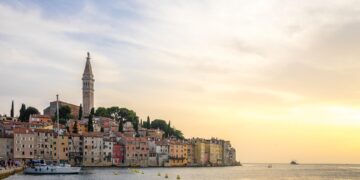
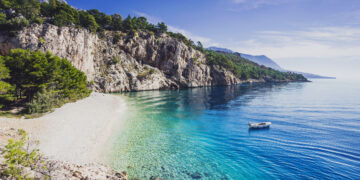
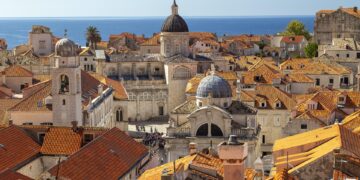







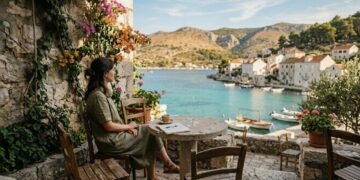


Croatian beaches are about as safe as beaches get. The sea is clean, most days it’s flat, there are no sharks worth the word and no rip-tide reputation to speak of. The real hazards are duller and manageable: too much sun, slippery rock and scalding-hot pebbles underfoot, an opportunist taking your phone while you swim, and small children near water with no lifeguard. That’s Croatia beach safety in a paragraph. Save one number, 112, and the rest is just knowing what’s worth a second thought.
Is it safe to go to the beach in Croatia?
Yes, comfortably so. Violent crime is very low, the water is among the cleanest in Europe, and the coast’s natural hazards are mild next to an ocean beach. One old worry you can retire: as of 2026 Croatia is officially mine-free, and the former minefields were always inland war-era front lines, never the coast or islands. What sends tourists to a pharmacy or a police station here is sunburn, cut feet and a lifted wallet, all preventable.
The sun and heat are the real hazard
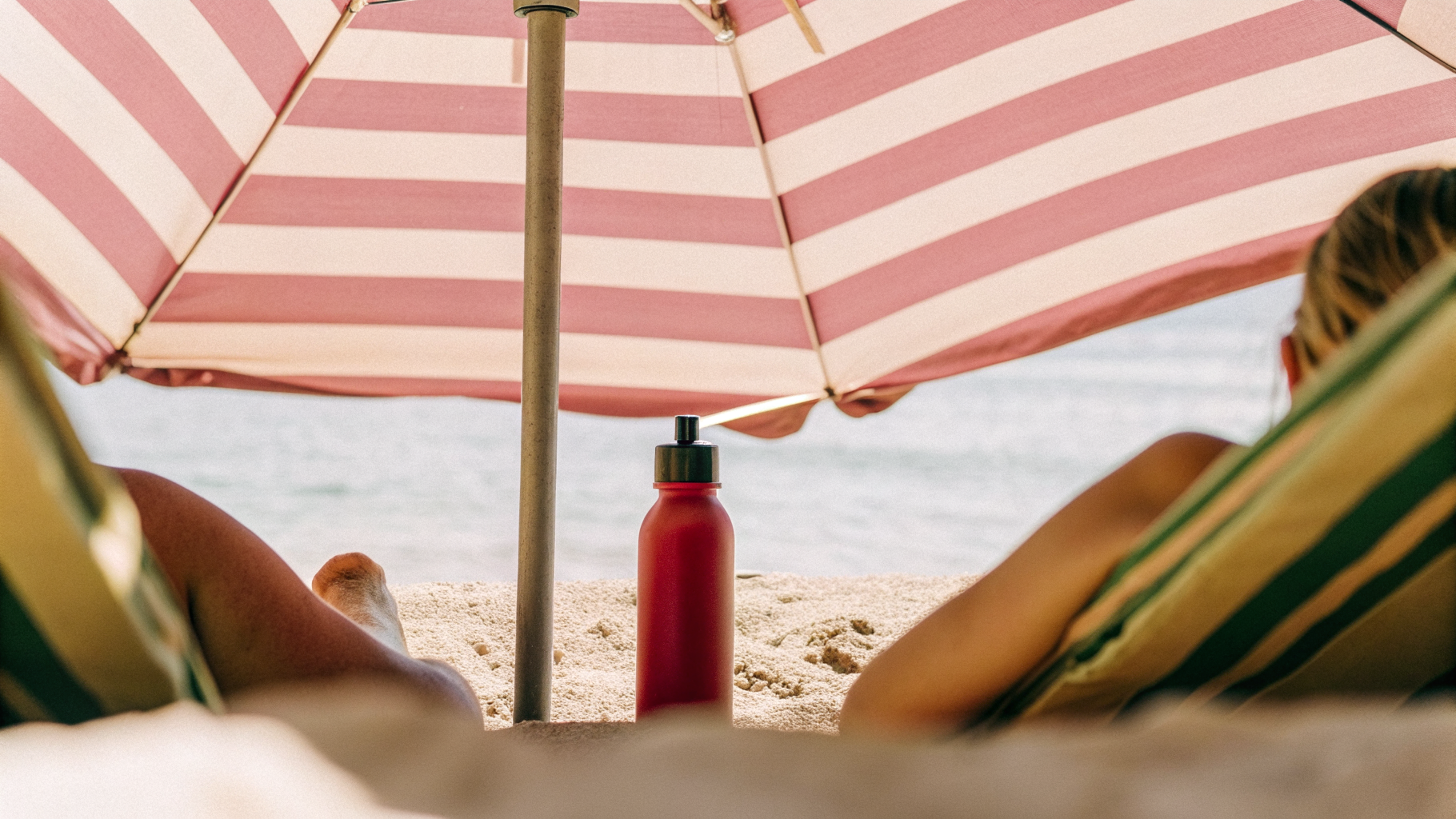
This is the risk people underestimate most. Croatian summers are dry and hot, and by July and August the coast bakes; DHMZ (the national weather service) issues heat warnings through Meteoalarm, and red-level heat alerts on the coast, days pushing 38–40°C, have become normal in recent summers. Heatstroke and serious sunburn ruin more holidays here than anything in the water.
The fix is unglamorous and it works. Stay out of direct sun in the worst of it, roughly 11am to 5pm, and swim either side. Bring proper shade. Most beaches have little natural cover. Drink far more water than feels necessary, and go easy on the midday beer: alcohol plus heat plus a long swim is a bad trio. Wear SPF 30 or higher and reapply after every dip; a reef-safe one is kinder to the same clear water you came for.
Croatian beaches are pebble and rock — wear water shoes
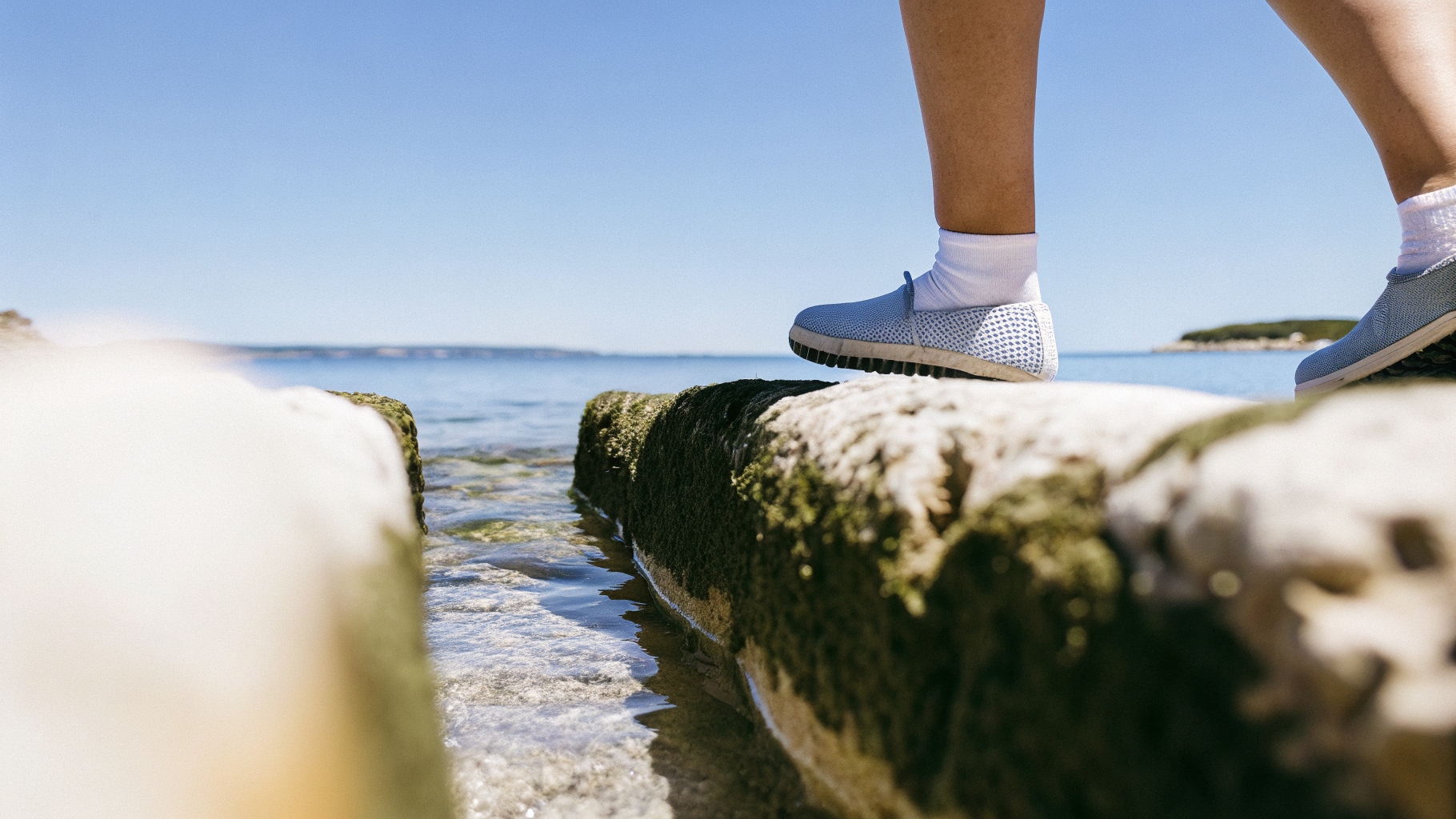
If you’re picturing soft sand, adjust: the great majority of Croatian beaches are pebble, shingle, flat rock or concrete bathing platforms. From the famous white shingle of Zlatni Rat near Bol to the coves around Zadar and up in Kvarner, it’s the same story. That’s part of why the water is so clear, but it changes what you pack. A cheap pair of water shoes is the single best thing you can bring. They save your soles from pebbles that turn griddle-hot by midday, from slick rock at the waterline, and from sea urchins, whose spines sit on submerged rocks right where you brace a foot getting in.
Take the same care on the ladders and concrete steps that stand in for a sandy entry at many spots. Wet stone and metal are slippery, and a fall on rock is the classic Croatian beach injury. If you do pick up an urchin spine or a sting despite the shoes, the first aid is in our companion guide, Stay Safe While Swimming in Croatia.
Lifeguards are rare, so watch the kids yourself
Here’s the one that catches families out: lifeguards on Croatian beaches are the exception, not the rule. Even busy, popular beaches in Split, Dubrovnik or on Hvar and Brač often have nobody on duty. A handful of managed and Blue Flag beaches post a lifeguard in peak season, but plan as if the water is your own responsibility.
For adults that’s fine. For children it means active, eyes-on supervision every minute they’re near the water. The rocky entries and quick drop-offs give less warning than a shallow sandy shore. A calm, gently-shelving family beach beats a dramatic rocky cove for young swimmers. There’s more on kids, sun and sea in Stay Safe While Traveling with Kids in Croatia.
Keep an eye on your valuables
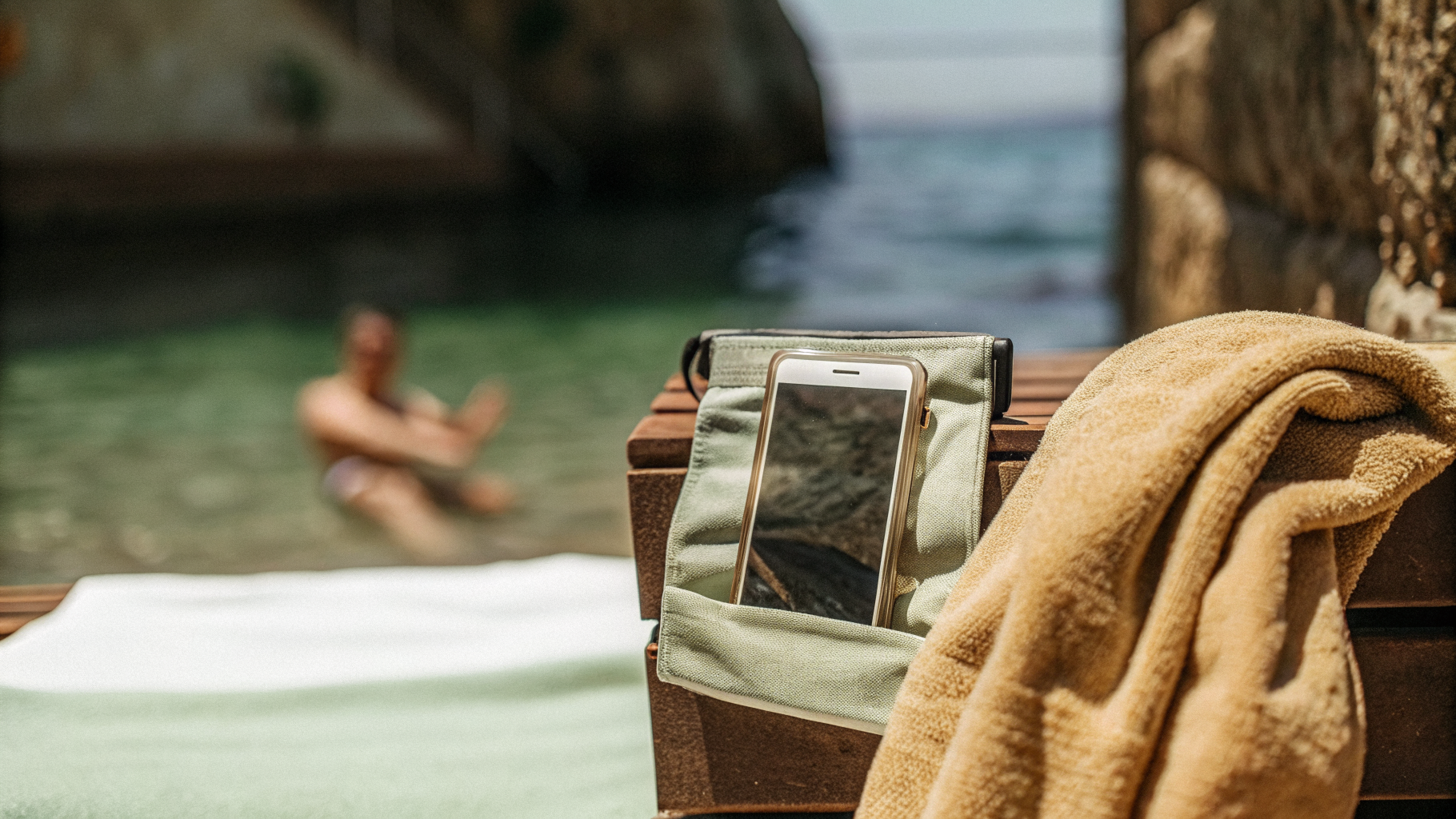
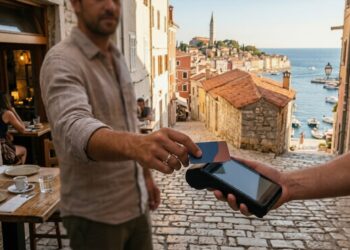
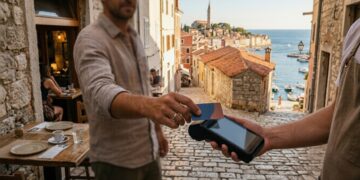
The realistic crime risk at a Croatian beach isn’t violence. It’s the opportunist who lifts a phone or bag left on a towel while everyone’s in the sea. It’s the busiest beaches in high season, the same crowds a pickpocket works in an old town. Take only what you need, leave documents and cash at your accommodation, and take turns swimming or use a small waterproof pouch. Don’t leave a packed beach bag unwatched for half an hour.
Wind, flags and when to get out
Most days the Adriatic is calm. The exception is wind: the bura (a cold, gusty north-easterly) and the jugo (a southerly that builds a swell) can turn a mirror-flat bay choppy within an hour and set up a drift that pushes a lilo, or a tired swimmer, out from shore. Where a beach flies flags, treat a red one as a straight no. Where it doesn’t, use common sense: if the sea turns rough or you feel it pulling, get out, and don’t trust an inflatable in a breeze. The detailed in-water stuff (currents, cold shock, what actually stings) is in the swimming guide.
Blue Flag and water quality: what they actually tell you
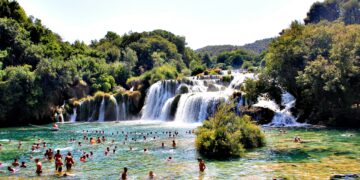
Croatia’s sea is genuinely clean. The Croatian Institute of Public Health (HZJZ) samples bathing sites all season, and in the latest results around 97% rated “excellent,” with almost all the rest merely “good”. Croatia consistently ranks at or near the top of Europe’s bathing-water tables. You can check any specific beach on the official national bathing-water portal before you go. Freshwater park swims like Krka follow their own rules. Those are in Stay Safe While Visiting Croatia’s National Parks.
A Blue Flag is a separate international eco-label (run in Croatia by the Lijepa Naša association) that a beach earns for water quality plus things that matter for safety: first-aid provision, safety equipment, clean facilities and clear information. Over a hundred Croatian beaches and marinas fly one, but don’t read the absence of one as a warning. Most lovely Croatian beaches simply never applied, and the water off a quiet Šolta or Korčula cove is as clean as anywhere.
Naturist beaches, nudity and drones
Croatia has one of Europe’s oldest naturist traditions, and designated naturist (FKK) beaches are common, legal and clearly signed, a normal, well-established part of the coast. Topless sunbathing is widely accepted on ordinary beaches too. The etiquette: full nudity belongs on the marked FKK beaches, not a family beach where it can draw a fine or a complaint.
One modern rule trips people up: drones. Croatia follows EU/EASA rules, so most camera drones must be registered to an operator and need airspace authorisation. You can’t just launch over a packed beach, and flying near airports or over crowds is out. If aerial shots matter to you, check the Croatian Civil Aviation Agency (CCAA) rules before you travel rather than risking a fine on the sand.
Frequently asked questions
Are Croatian beaches sandy?
Mostly no: pebble, shingle, smooth rock or concrete. Pack water shoes; they make a rocky entry painless and guard against sea urchins and hot stones.
Do Croatian beaches have lifeguards?
Rarely. A few managed and Blue Flag beaches staff one in peak season; most (even busy ones in Split, Dubrovnik or on Hvar) have none. Supervise children closely.
Is the sea clean and safe to swim in?
Yes, among the cleanest in Europe, with about 97% of sampled sites rated excellent by HZJZ. Check any beach on the official bathing-water portal.
How do I keep my things safe on the beach?
Bring little, leave passports and spare cash at your accommodation, and never leave a phone on the towel while you swim. Take turns watching the bag or use a waterproof pouch.
Can you sunbathe topless or nude in Croatia?
Topless is widely accepted on regular beaches. Full nudity is for the designated naturist (FKK) beaches, which are common and clearly signed.
Can I fly a drone over the beach?
Not freely. Most camera drones need operator registration and airspace authorisation under EU/EASA rules, and flying over crowds is banned. Check the CCAA rules first.
The short version
Croatian beaches are safe, clean and low-drama. Respect the sun far more than the sea: shade in the middle of the day, drink plenty, and reapply sunscreen. Wear water shoes for the rocks and urchins, watch children yourself because a lifeguard usually isn’t there, and don’t leave your valuables on a towel. Skip the water when the wind’s up, and keep nudity and drones to where they’re allowed. Do that and the only thing you’ll bring home is a tan.
The practical bit
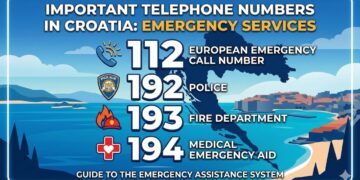
In an emergency, call 112, the single European emergency number, with English-speaking operators, which dispatches ambulance, fire and police as well as sea rescue. Worth knowing on the coast: 194 ambulance/EMS, 193 fire (the number for a summer wildfire near a beach), and 195 for the national sea search & rescue service (MRCC Rijeka), though 112 reaches them all. Save 112 in your phone on day one. (Emergency numbers current as of August 2026.)
Travel insurance: get a policy that covers you for what you’ll actually do, and read the water-sports and exclusions section. An EHIC/GHIC card is EU-only and no use to US travellers, who need private cover for anything from a cut foot to a heat-related hospital visit.
Current conditions: before a beach day, glance at the DHMZ heat warnings (meteo.hr) and check your specific beach on Croatia’s official bathing-water portal. Both are updated through the season.
For the whole-trip picture (crime, scams, pharmacies and insurance) start with How to Stay Safe in Croatia.
General guidance, not medical or legal advice. Conditions, rules and figures change. Verify locally and follow the instructions of lifeguards, beach operators and Croatian authorities. Current as of August 2026.