












Emergency Numbers in Croatia for Tourists
Phone Numbers, Embassy Contacts, and Travel Safety When Visiting Croatia
Most important number to save before you travel: 112 — the European emergency contact number. It is free of charge from any telephone device, works without a SIM card, and operators speak English.
Croatia is located on the eastern Adriatic coast and has been a full EU member state since 2013 — it also joined the Schengen Area in 2023, meaning most EU citizens can enter Croatia without border checks. For tourists from the US, UK, Australia, and other non-EU countries, Croatia is a safe and well-organised destination. That said, knowing the right phone numbers and contacts before you need them is simply sensible preparation when traveling to Croatia.
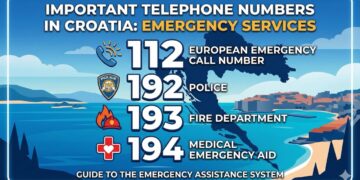
Croatia Emergency Phone Numbers: Quick Reference
|
Service |
Number |
When to use |
|
General Emergency (EU) |
112 |
Any serious emergency. Free of charge, works without SIM or credit. |
|
Police |
192 |
Crime, theft, accidents, lost documents. |
|
Ambulance |
194 |
Medical emergencies requiring urgent care. |
|
Fire Service |
193 |
Fires, gas leaks, rescue situations. |
|
Coast Guard / Maritime |
9155 |
Emergencies at sea, on lakes or rivers. |
|
Mountain Rescue (HGSS) |
112 |
Ask for HGSS. Covers all Croatian mountain areas. |
|
Croatian Automobile Club |
1987 |
Roadside assistance for vehicle breakdowns. |
All numbers in the table are free of charge from any Croatian mobile or landline. Number 112 is the European emergency contact that works across all EU member states — it functions even from a telephone device with no SIM card or no remaining credit.
112 — The European Emergency Number in the Republic of Croatia
Dialing 112 connects you to a central dispatch service that can reach police, ambulance, fire, coast guard, and mountain rescue across the Republic of Croatia. Describe your situation and the operator will connect you to the right service. It works identically to 112 in any other EU country — the same number, the same system, free of charge.
When you call, provide: your precise location (street address, GPS coordinates from your phone, or a nearby landmark), the nature of the situation, and your contact number. Stay on the line — the operator will guide you until help arrives. English-speaking operators are available on this line.
When to Call Each Service: Police, Medical, and More
Police — 192: For theft, assault, traffic accidents, or any situation requiring law enforcement. For non-urgent matters, visit the nearest local police station. Officers in tourist areas generally have basic English and are accustomed to dealing with visitors.
Ambulance — 194: For any situation requiring urgent medical care. Croatia’s medical service is well-equipped, with hospitals in Zagreb, Split, Rijeka, Dubrovnik, Zadar, and Pula. EU citizens with a valid European Health Insurance Card receive treatment at public hospitals on the same basis as Croatian citizens.
Coast Guard — 9155: For any situation at sea or on inland waters. Croatia’s Adriatic coastline means maritime incidents are a specific concern for tourists on sailing trips, boat tours, or kayaking excursions. If you are on a vessel with a VHF radio, channel 16 is the international maritime distress frequency.
Croatian Automobile Club (HAK) — 1987: For vehicle breakdowns on Croatian roads. The HAK provides roadside assistance and can arrange towing. If you enter Croatia with a rental car, check your rental agreement for their specific breakdown contact.
Embassy and Consular Contacts for Tourists in Croatia
If you lose your passport, face arrest, or need consular assistance as a foreign national in Croatia, contact your country’s diplomatic mission. Key contacts for English-speaking tourists:
• United States: +385 1 661 2200 — usembassy.gov/croatia (24-hour duty officer available)
• United Kingdom: +385 1 600 9100 — gov.uk/world/croatia
• Australia (accredited from Vienna): +43 1 506 740
• Canada (accredited from Vienna): +43 1 531 383 000
The country code for Croatia is +385. When dialing Croatian numbers from abroad, replace the leading 0 with +385. US citizens are encouraged to enrol in the Smart Traveler Enrollment Program (STEP) at step.state.gov before traveling — it enables your consular office to reach you in a crisis and assists with updates and alerts about conditions in Croatia.
Cases of international parental child abduction involving Croatia should be reported immediately to your country’s consular service and to local authorities. Croatia is a signatory to the Hague Convention on this matter.
Travel Insurance, Medical Evacuation, and Health Precautions
Non-EU tourists traveling to Croatia should carry comprehensive travel insurance that covers medical treatment, medical evacuation, and repatriation. Without insurance, treatment at Croatian hospitals is charged at full private rates. Medical evacuation — transport to a specialist facility or back to your home country — can be extremely costly without cover.
If you take prescription medication, bring sufficient supply for your entire stay plus a few extra days, along with appropriate medical documentation and a prescription for the medicine from your doctor. Some medications that are available over the counter in other countries may be classified differently under Croatian law — if in doubt, carry the original packaging and documentation.
The U.S. Centers for Disease Control and Prevention (CDC) advises tourists to ensure routine vaccinations are up to date before any international travel. No specific vaccinations are required to enter Croatia. Tap water is safe to drink throughout the country.
A few important local laws to be aware of: Croatia has zero tolerance for driving while intoxicated — the legal blood alcohol limit is 0.05% for most drivers and 0.00% for drivers under 24. Possession of narcotic substances is a criminal offence under Croatian law and can result in arrest and prosecution. Local authorities enforce these laws strictly, particularly in tourist areas during summer.
Specific Hazards: Earthquakes, Landmines, and Natural Risks
Croatia is located in a seismically active zone. Earthquakes do occur — Zagreb experienced a significant earthquake in 2020 — and tourists should be aware of standard earthquake safety procedures: take cover under a sturdy table, move away from windows, and follow instructions from local authorities.
Landmines remain a residual hazard in some remote parts of Croatia, particularly in border areas with Bosnia and Herzegovina and some inland rural regions, as a legacy of the 1990s conflict. Tourists are not at risk on marked trails and in tourist areas, but should never leave marked paths in remote border regions. Warning signs are posted in affected areas.
Frequently Asked Questions
What is the main emergency number in Croatia?
112 is the European emergency number that works across all EU member states including Croatia. It is free of charge, available from any telephone device even without a SIM card, and connects to police, ambulance, fire, and coast guard services. English-speaking operators are available.
Does number 112 work in Croatia from a foreign mobile?
Yes. Number 112 works in Croatia from any foreign mobile while roaming, free of charge. It also works from phones with no SIM card or no credit. Dialing 112 in Croatia connects to Croatian dispatch services in exactly the same way as any other Schengen Area or EU member state.
Do I need travel insurance for Croatia?
EU citizens with a valid European Health Insurance Card can access Croatian public healthcare on the same terms as locals. Non-EU tourists — including Americans, British, and Australians — should carry travel insurance that includes medical cover, medical evacuation, and repatriation, as private treatment costs can be significant. Some policies also cover medical evacuation by air, which may be necessary in remote parts of Croatia.
What should I say when I call Croatian emergency services?
Give your location first — a street address, GPS coordinates from your phone, or a clear landmark. Then describe the situation briefly and clearly. Provide your contact telephone number so operators can call you back if the line drops. Stay on the line and follow the operator’s instructions. For 112, English-speaking operators are available.
How do I contact the local police station in Croatia?
For non-urgent matters, visit or call the nearest local police station directly. In an urgent situation, dial 192 (police) or 112. The Croatian Ministry of Interior website (mup.gov.hr) lists police station contacts throughout Croatia. Tourist police offices operate in major coastal cities during the summer season.
Save These Contacts Before You Travel to Croatia
A quick-reference list to save on your phone or print before you go:
• General / European emergency: 112 (free of charge, any telephone device)
• Police: 192
• Ambulance: 194
• Fire: 193
• Coast Guard: 9155
• Mountain Rescue: 112 — ask for HGSS
• Croatian Automobile Club (HAK): 1987
• Country code for Croatia: +385
• US Embassy Zagreb: +385 1 661 2200
• British Embassy Zagreb: +385 1 600 9100
Have a safe and enjoyable visit to Croatia.