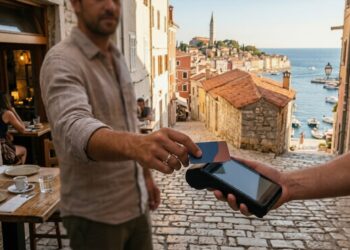



















Here’s the short answer: nothing about your right to visit Croatia has changed. US citizens still don’t need a visa. A valid passport gets you up to 90 days within any 180-day period, same as before. What changed is the mechanics. Since the EU’s Entry/Exit System (EES) became fully operational on 10 April 2026, Croatia no longer stamps your passport; instead, on your first entry you’re registered digitally with your passport details, fingerprints and a facial image. And ETIAS, the €20 travel authorization you may have read about, still doesn’t exist. Anyone charging you for one today is selling you nothing.
What is the EES, and what do you actually need?
The EES is an automated EU border system that registers non-EU nationals — Americans included — every time they cross an external Schengen border for a short stay, recording travel document data, biometrics (fingerprints and facial image), and entry/exit dates. It went live on 12 October 2025 and has been fully operational since 10 April 2026 across 29 European countries, replacing passport stamps.
Croatia is fully in: it joined Schengen on 1 January 2023, the same day it adopted the euro, so its airports, seaports and land borders with Bosnia and Herzegovina, Montenegro and Serbia all run EES checks now. For a tourist trip, the requirements are short: a valid passport (three months’ validity beyond your Schengen departure date, six recommended by the US Embassy in Zagreb), no visa for stays up to 90 days within any 180-day period, no ETIAS (not yet), and EES registration at the border, done for you at no cost.
What actually happens at passport control

On your first entry since October 2025, you’re registered at one of Croatia’s six international airports: Zagreb, Split, Dubrovnik, Zadar, Pula and Rijeka, where self-service kiosks scan your passport and take your photo and fingerprints (under-12s skip fingerprints). A border officer verifies everything and creates your EES file, kept for three years from your last exit.
That three-year file is the good news: registration is a first-time thing. On later trips, the camera confirms your face against the stored record and you’re through. A quick verification, not a fresh one. The first pass adds a few minutes per person; carry your passport near any border, and expect no ink.
Do Americans need ETIAS for Croatia? Not yet.
ETIAS, the European Travel Information and Authorisation System, is separate from the EES and is not in operation. When it launches, visa-exempt travellers will apply online before travelling: a €20 fee, valid for three years or until your passport expires. It’s a pre-screening, not a visa.
The launch keeps slipping. The EU’s earlier “late 2026” target has quietly disappeared from official pages, which now say only that a start date will be announced months in advance. Since no announcement has been made, that rules out 2026 and puts 2027 as the earliest realistic window, though the EU has not named an official date. No applications are being collected, so any website charging for an “ETIAS application” today is a scam. When it does go live, apply only via travel-europe.europa.eu.
Day trips to Mostar and Kotor

Bosnia and Herzegovina and Montenegro aren’t in the EU or Schengen, so a day trip from Dubrovnik to Mostar or Kotor means a full EES exit check leaving Croatia and an entry check coming back, plus each country’s own border control on its side. Both are visa-free for short US tourist visits, up to 90 days within a 180-day period.
Because you’re already registered, these are quick verifications, not fresh registrations, but four checks in a day is still four queues, and summer weekends can back the land crossings up badly. Cross early, or book an organized tour like the Montenegro Day Trip from Dubrovnik and let the driver queue instead.
The trip barely costs you Schengen days: only the days you cross out and back in count toward your 90. One more note: driving Split–Dubrovnik, skip the old coastal road through Neum, Bosnia’s short strip of coastline, and take the Pelješac Bridge instead, open since 2022.
The practical bit
- Passport: three months’ validity beyond departure is the legal minimum; six months is the safe play.
- EES is free. ETIAS doesn’t exist yet, but will cost €20 when it eventually launches.
- Day trips: bring your passport for Bosnia and Montenegro; the crossing days count as Schengen days.
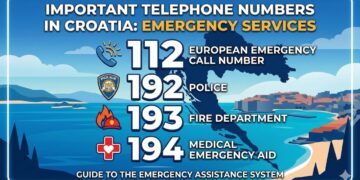
- Money: Croatia uses the euro. Emergency number: 112.
Frequently asked questions
Do US citizens need a visa to travel to Croatia? No. A valid passport gets you up to 90 days within any 180-day period across the whole Schengen area, Croatia included. The EES registers your entry and exit; it is not a visa and costs nothing.
Do Americans need ETIAS for Croatia in 2026? No. ETIAS is not in operation and no applications are being collected. When it launches, no earlier than 2027, though the EU has not named an official date, it will cost €20 and be applied for only via the official EU website. Anyone selling ETIAS today is a scam.
Do I have to do the biometric registration on every trip? No. Your EES file is kept for three years from your last exit, so repeat entries are a quick facial-image verification rather than a fresh registration with fingerprints.