









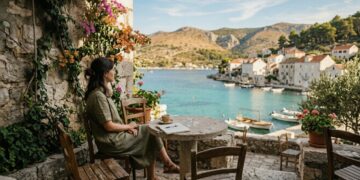


Quiet Islands in Croatia: Breathtaking Beaches on the Dalmatian Coast
Breathtaking Beaches and Secluded Coves on the Dalmatian Coast
There’s a version of Croatia you’ve probably seen: Hvar’s glittering harbour full of superyachts, Dubrovnik’s city walls swarming with selfie sticks in July, Split’s Riva heaving with tourist season crowds. These are popular spots like any in the Mediterranean — worth visiting, but increasingly hard to enjoy at a slower pace. That Croatia is real, and parts of it are wonderful. But there’s another Croatian coast — one that most visitors never find — where the ferry docks at a stone jetty with no one waiting, where the konoba has six tables and the owner grew the tomatoes herself, where you can swim in a hidden cove and hear nothing but water and wind.
That’s the Croatia I want to tell you about. Croatia is known for its stunning Adriatic coastline, and rightly so — the country has many islands to explore, over 1,200 in total, but the best ones for couples aren’t always the famous ones. If your priority is peace over party, intimacy over Instagram, this guide will take you off the beaten path to the quietest, most romantic spots to explore on the Dalmatian coast and beyond.
Why Croatia Beats Popular Destinations for a Romantic Escape
Croatia has over 1,200 islands strung along the Adriatic Sea, but most tourists concentrate on fewer than ten of them. That leaves a vast, largely unspoiled archipelago that rewards anyone willing to look a little further. The coastline here is rugged and scenic in equal measure — dramatic limestone cliffs dropping into turquoise water, pine forests running to the shore, small port towns with cobblestone streets where the pace of life hasn’t changed in generations. Comparable in beauty to the Italian coast but far less crowded and considerably more affordable, the Croatian Adriatic remains one of Europe’s great travel secrets.
The food is extraordinary: fresh seafood pulled from the Adriatic that morning, olive oil from groves that have been tended for centuries, local wines from varieties you’ve never heard of and won’t easily forget. Visiting Croatia in the shoulder seasons — May, early June, or September — means you get all of this without the tourist season crush. Spend even one night on one of the islands further from the mainland and you’ll understand immediately why people return year after year. The Dalmatian coast in September, when the sea is at its warmest and the light turns golden, genuinely looks like a postcard.
For couples, the particular appeal of the lesser-known Croatian islands is the slower pace of life they offer — a real taste of island life that cities like Split and Dubrovnik, wonderful as they are, can no longer quite provide. These are places where the escape from the hustle is total.
The Best Quiet Croatian Islands for Couples: Dalmatian Coast and Beyond
Vis — the Island That Time Forgot (Dalmatian Coast)
Vis is one of the best islands in Croatia that most people have never considered. An island near Split on the outer reaches of the Dalmatian coast, it was closed to foreign visitors until 1989 because of its Yugoslav military base — and that delay turned out to be its greatest gift. No decades of resort development. No sprawl. Just a picturesque island of deep bays, old fishing villages, and vineyards tended by the same families for generations.
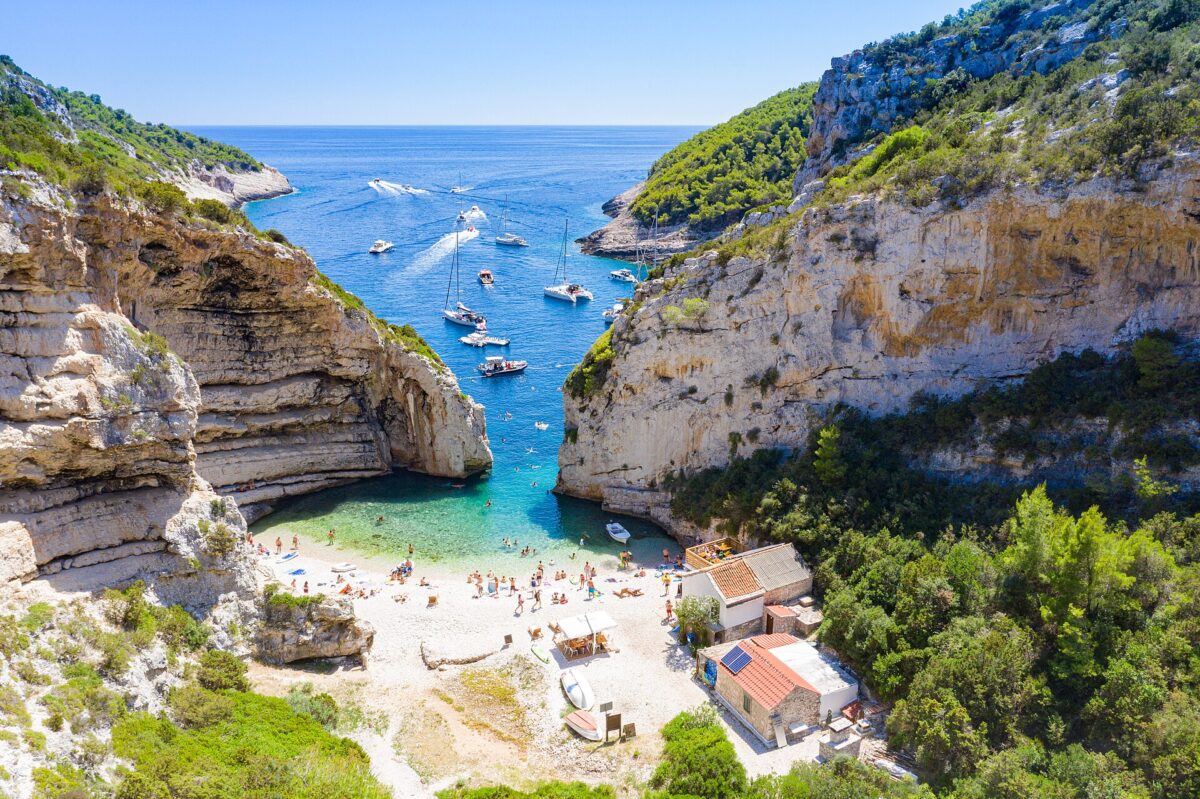
The beaches here are stunning. Stiniva Cove — hidden behind high cliffs on the island’s southern coast and accessible by a narrow footpath or small boat — is one of the most breathtaking spots I’ve ever swum, its turquoise water enclosed by towering limestone on three sides. The village of Komiža, with its harbour-front restaurants and wine bars built into stone walls, is perfect for a slow romantic evening. And just off Vis, the island of Biševo offers the famous Blue Cave (Modra špilja): a sea cave where light filters through a submerged opening and turns the Adriatic an otherworldly electric blue. Vis is one of the best swimming spots in the whole region — snorkel the clear water around its outer islands and you’ll understand immediately why Croatia is famous for its sea.
Practical tip: Jadrolinija runs a year-round catamaran from Split to Vis Town — the crossing takes about two hours. Private transfers are also available from Split marina for more flexibility. Vis is a classic island near Split and the easiest of the outer islands to reach independently.
Dugi Otok — the Long Island of Northern Croatia
Located in the northern part of the Croatian archipelago near Zadar, Dugi Otok — which simply means ‘Long Island’ — is one of the most overlooked travel destinations on the entire Adriatic. It stretches 45 kilometres along the coast but is rarely more than five kilometres wide, giving it a distinctly rugged, end-of-the-world quality that feels far removed from the popular spots of the Dalmatian coast further south.
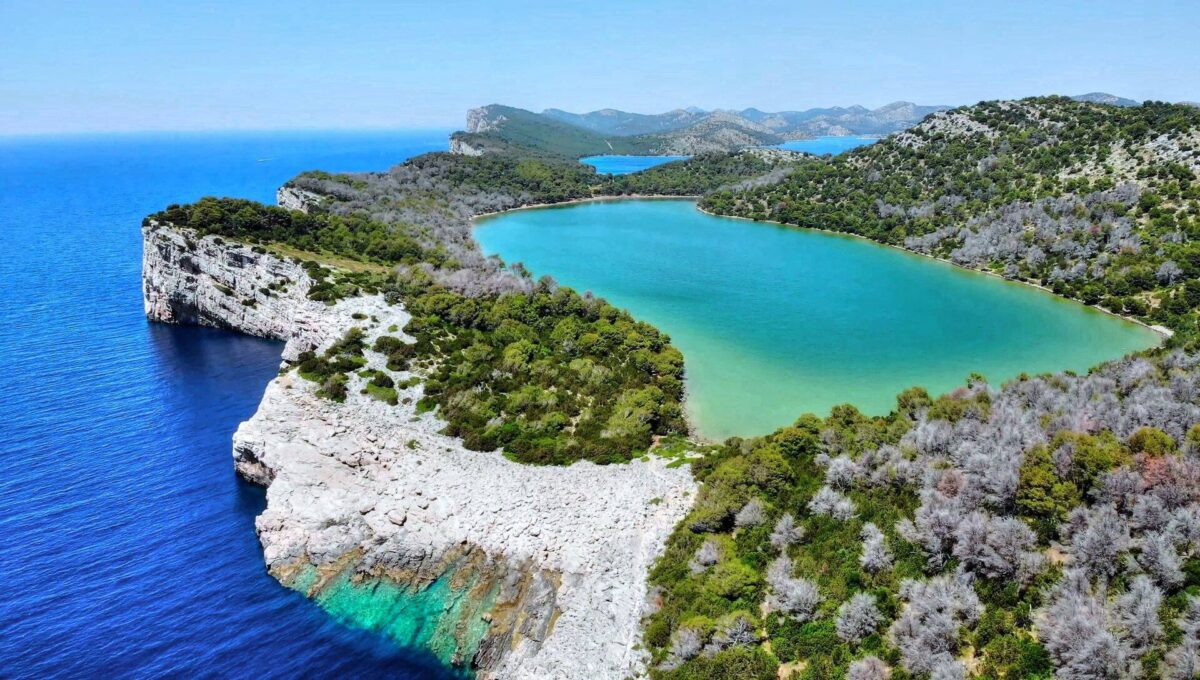
The island’s crown jewel is Telašćica Nature Park at its southern tip, where dramatic cliffs drop 160 metres to the sea and a large saltwater lake called Mir sits just inland — its waters are warmer than the sea and said to have therapeutic properties. On the island’s western coast, the beach at Sakarun is widely considered one of the best beaches in Croatia: a long, sandy arc of turquoise water so clear you can see the bottom at three metres depth, and it stays remarkably uncrowded even in summer because reaching it requires effort. The natural beauty here is simply exceptional — unspoiled, rugged, and scenic in a way that makes nearby islands feel manicured by comparison.
Practical tip: Jadrolinija runs ferries from Zadar to Brbinj on Dugi Otok — the crossing takes around 1.5 hours. The island is located in northern Croatia and makes an excellent base for island-hopping along the Zadar archipelago, including nearby islands Iž, Ugljan, and the Kornati Islands.
Cres — Wild, Forested, and Easy to Reach from Pula
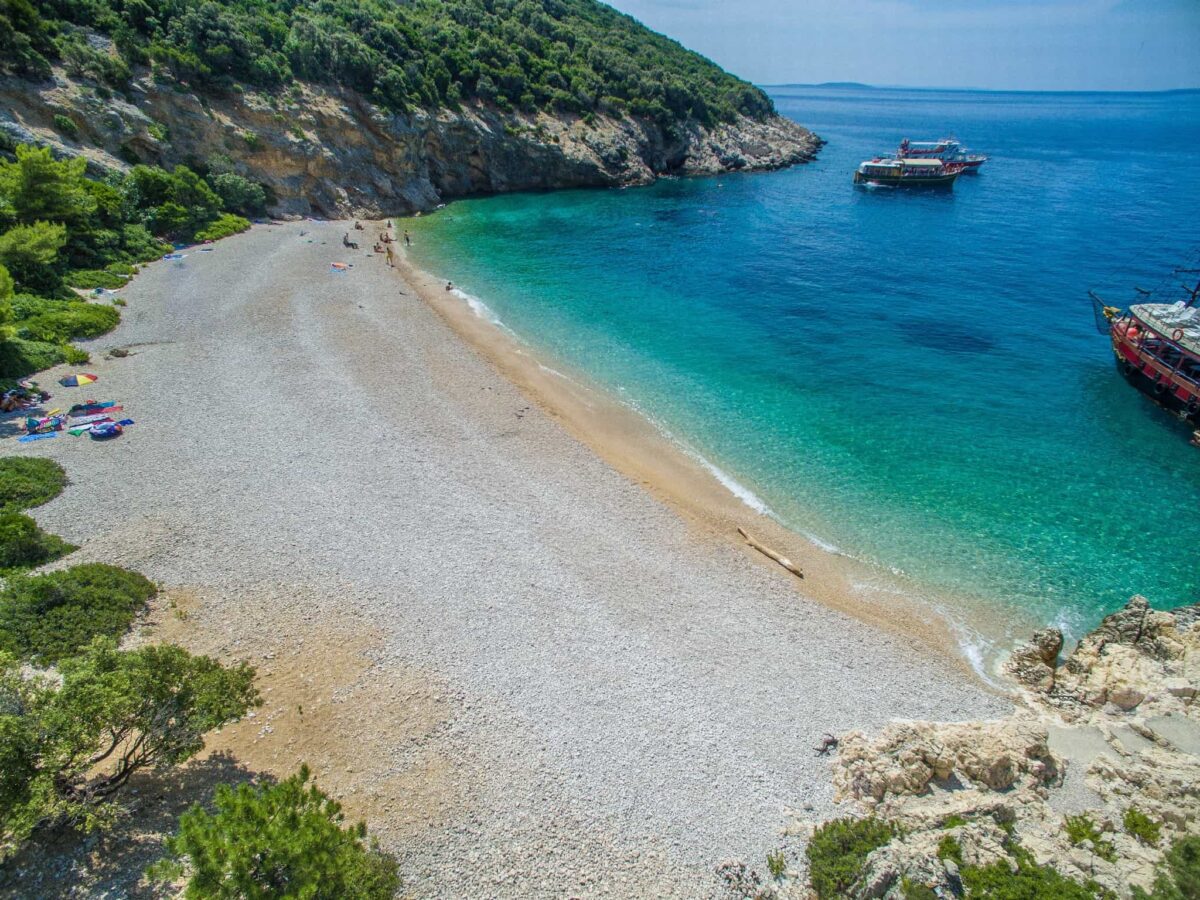
Cres is one of the largest Croatian islands but also one of the least touristy — a combination that makes it exceptional for couples seeking genuine solitude. Located in the northern Kvarner Gulf, Cres is known for its stunning mix of dense Mediterranean forest, dramatic limestone terrain, and a coastline of hidden coves and turquoise water that stretches for kilometres without a sunbed or beach bar in sight.
The island is home to the last colony of griffon vultures in Croatia, which nest on the cliffs above the sea and can often be seen circling overhead — one of those unexpected wildlife encounters that makes a place feel truly wild. The town of Cres, the island’s main settlement, is a small, charming port town with Venetian-era architecture, a compact old town of narrow stone streets, and waterfront restaurants serving fresh fish pulled from the Kvarner that morning. For couples who want to see the sights without crowds, and explore spots that feel genuinely off the beaten path, Cres rewards slow, unhurried travel. It’s one of the great hidden gems of northern Croatia — less visited than the Dalmatian islands, and all the better for it.
Practical tip: Cres is reached by ferry from Brestova on the Istrian coast (near Pula) or from Valbiska on Krk — both crossings take around 20 minutes. It can also be accessed by catamaran from Rijeka. The island is located in the northern Kvarner region and pairs well with nearby islands Lošinj and Krk for a longer island-hopping itinerary away from the Dalmatian coast crowds.
Lastovo — Dark Skies and Total Silence
Lastovo is the island I recommend to people who want to truly disappear. Sitting on the outer edges of the Dalmatian coast far from cities like Split and Dubrovnik, it is one of Croatia’s most remote inhabited islands — and one of its most rewarding. Almost 70 percent of the island is forested, making it one of the most forested islands in the entire Mediterranean, and the whole archipelago is a Nature Park. Light pollution is minimal to nonexistent. On a clear night, the stars above Lastovo are extraordinary.
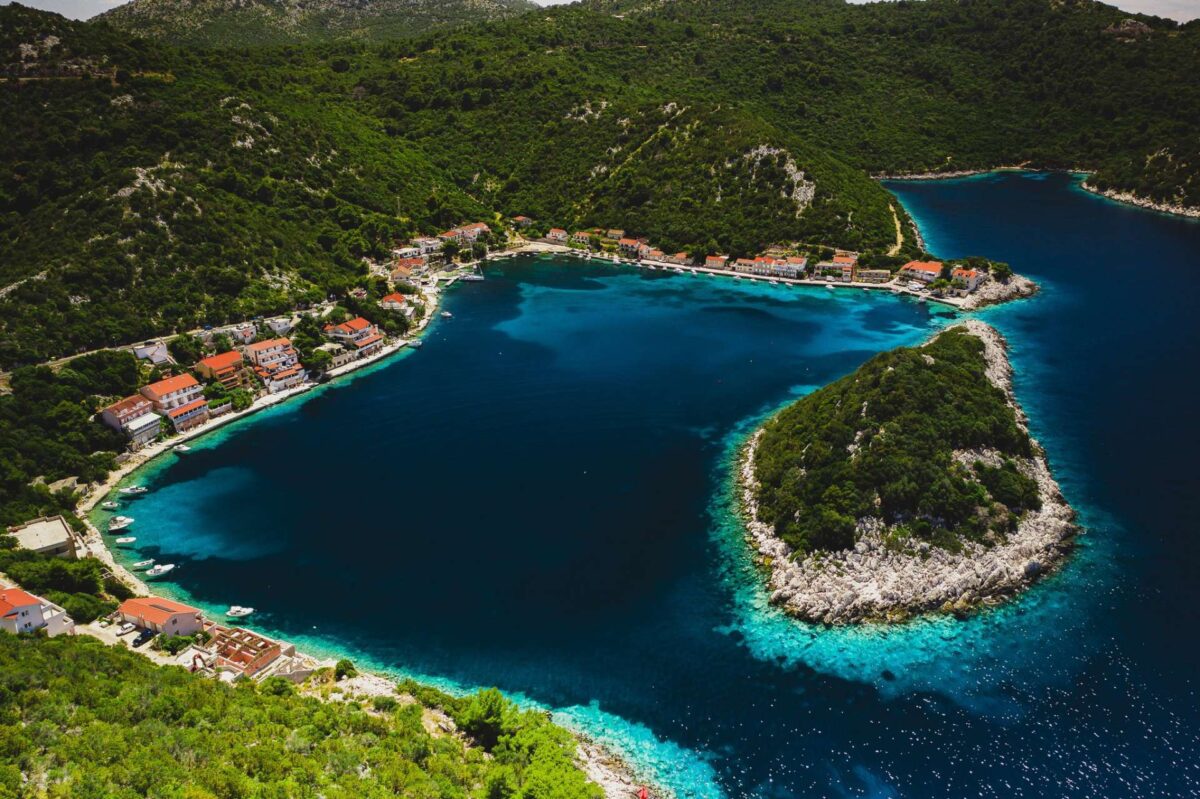
The island’s architecture surprises: Venetian-era stone houses in the village of Lastovo Town, built into a hillside away from the sea in the traditional style meant to deter pirates, their cobblestone streets leading up through terraced gardens. There’s a quiet pride here, a sense of a community that has lived along the coast on its own terms for centuries. For couples who want to kayak, hike, watch the sunset from a clifftop with a glass of wine and feel genuinely off the beaten path, Lastovo delivers. Rich history, natural beauty, and total peace — it’s one of the great hidden gems of the Adriatic.
Practical tip: Jadrolinija operates ferry route 604 from Split via Vela Luka on Korčula to Ubli on Lastovo. The full journey takes around four hours — plan for an overnight stay at minimum. Lastovo is one of the outer islands that genuinely rewards the extra travel time.
Mljet — National Park, Saltwater Lakes, and Olive Groves
Legend has it that Odysseus was stranded on Mljet for seven years, bewitched by the nymph Calypso. I believe it. The island’s western third is a UNESCO-protected National Park built around two saltwater lakes, Veliko and Malo Jezero, and in the middle of the larger lake sits a small islet with a 12th-century Benedictine monastery — one of the most picturesque spots on the entire Croatian coast. You reach it by boat. It’s the kind of place that makes you feel briefly untethered from ordinary life.
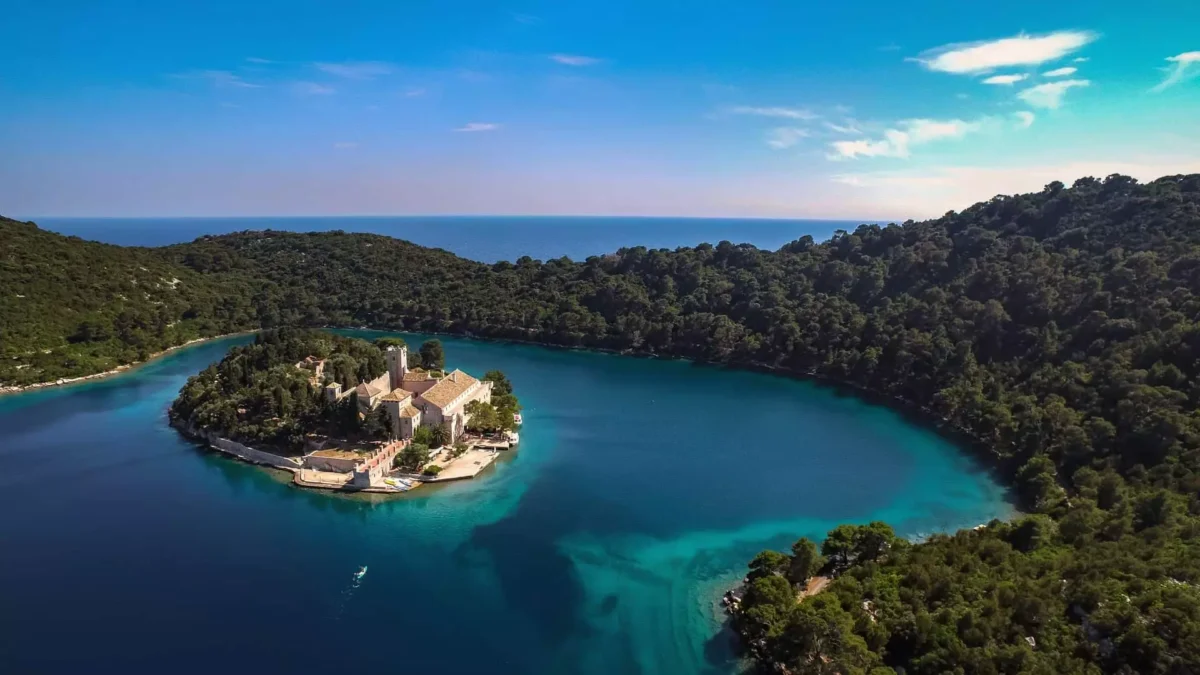
Mljet is lush and green in a way that surprises people who expect Dalmatian islands to be rocky and arid. Olive groves run down to the shoreline, the cycling paths through the national park are shaded by dense pine forest, and the secluded bays on the island’s south coast — Saplunara Beach in particular, a sandy stretch surrounded by forest — are among the best swimming spots I know. If you’re the kind of traveller who visits Zlatni Rat on Brač and thinks ‘beautiful, but too many people,’ Mljet is your answer: equally stunning, a fraction of the crowds, and richer in atmosphere. For dinner, Marijina Konoba in Babino Polje is the kind of family-run restaurant that reminds you why you travel.
Practical tip: Jadrolinija’s Split–Hvar–Korčula–Dubrovnik catamaran stops at Mljet’s Polače harbour in summer. A ferry also runs from Prapratno on the Pelješac peninsula — a shorter crossing and a good option if you’re visiting Croatia by car.
Silba — No Cars, No Hotels, No Hurry (Northern Croatia)
Silba, located in northern Croatia between Zadar and the Kvarner Gulf, is known among Croatians as the ‘island of pedestrians’ — and that tells you almost everything. No cars. No hotels. Not even bicycles are allowed during peak season. The island has a permanent population of just a few hundred people, and even in August it never feels crowded the way popular destinations do.
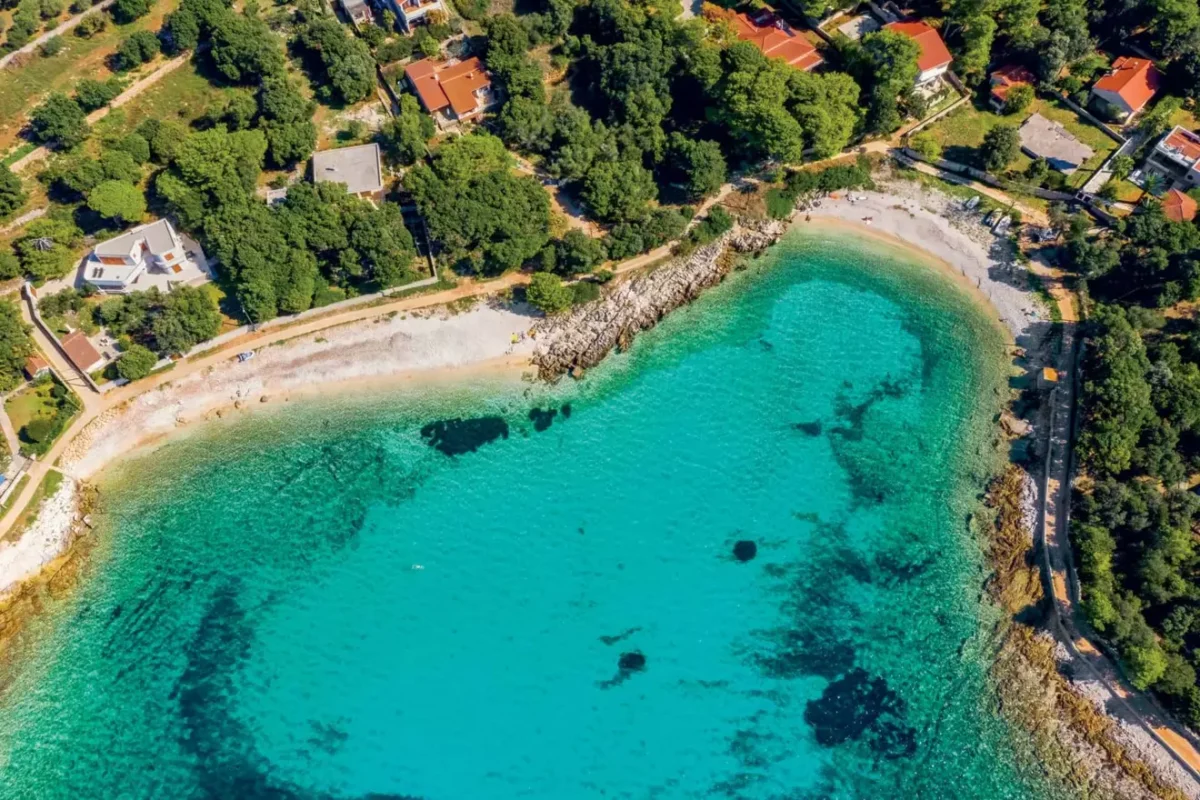
What Silba offers instead of infrastructure is simplicity: coastal footpaths winding between pine trees and aromatic Mediterranean herbs, small coves with pebbled beaches and turquoise water, a handful of cafes and restaurants where the pace is set by whoever showed up to cook that morning. At the centre of the island stands the Toreta, a cylindrical stone tower with a scenic panoramic view over the Adriatic Sea. Climb it at dusk and the light is remarkable. Accommodation is entirely in private rooms and apartments booked directly with local families — less touristy than anywhere else on this list, and genuinely special for it.
Practical tip: Jadrolinija route 322 connects Zadar to Silba year-round. The crossing takes around two hours. Pack light — you’ll carry everything yourself from the jetty, as there are no taxis or transfers on this car-free island.
The Elafiti Islands — Car-Free Coastal Villages Near Dubrovnik
If you’re based in Dubrovnik and want a day — or several days — of complete contrast, the Elafiti Islands are 15 minutes away by ferry and feel like a different century. The three main inhabited islands — Koločep, Lopud, and Šipan — are all car-free, small enough to walk across in an afternoon, and genuinely picturesque. Šipan is the largest and most romantic: ancient olive groves, abandoned noble summer houses from the Ragusan republic era, a harbour village called Šipanska Luka with excellent seafood restaurants and almost no tourist infrastructure.
Lopud has the archipelago’s only sandy beach, Šunj, a fifteen-minute walk from the ferry dock along a coastal path — rarely crowded outside peak July and August. Koločep, the closest to Dubrovnik, is an easy half-day trip when you need to be back in the city by evening. For couples visiting Croatia who are based along the Dalmatian coast in Dubrovnik, this is the simplest escape from the hustle — and one of the most rewarding day trips in the region.
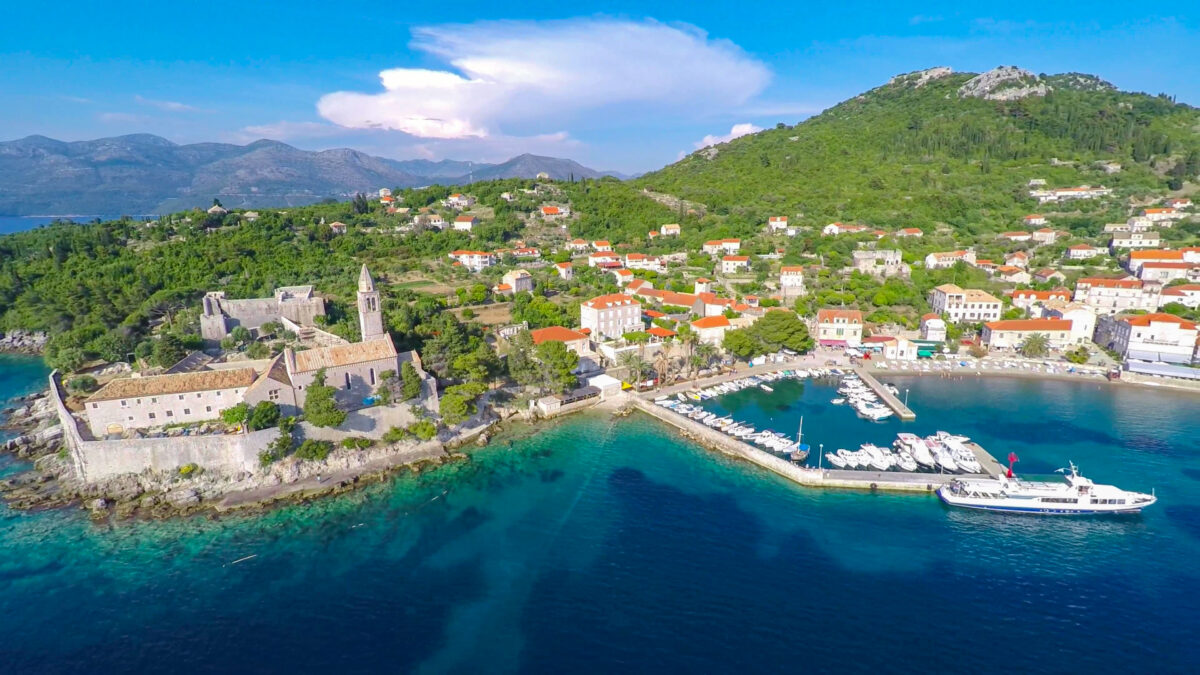
Practical tip: Jadrolinija runs regular ferries from Dubrovnik’s Gruž harbour to all three Elafiti islands year-round. New electric passenger vessels are planned for the route by late 2026 as part of Jadrolinija’s green fleet expansion.
How to Avoid Crowds: Travel Tips for Couples
The single most effective strategy is to avoid tourist season entirely: travel in May, June, or September. Even popular destinations on the Croatian coast thin out dramatically in shoulder season, and the islands on this list — already less touristy than Hvar or Korčula — become genuinely private. The Adriatic Sea in September is at its warmest after a full summer, the light along the coast is extraordinary, and accommodation prices drop noticeably.
On any island, the most crowded spots are always the main port town and the most accessible beaches. Walk fifteen minutes from any harbour and the crowds disappear. Stay overnight rather than arriving as a day tripper — by late afternoon, when the day boats leave, even busy islands revert to their quieter selves. Eat dinner late, in the Croatian style: 8pm or after, when you’re never competing for tables.
For island-hopping away from the crowds, consider hiring a small boat with a local skipper for a day. They’ll take you to hidden coves and best swimming spots that don’t appear on any map and that no scheduled ferry will ever reach. Along the coast near Vis, Dugi Otok, Cres, and the outer islands of the Dalmatian archipelago in particular, this makes an enormous difference to your experience.
A Five-Day Itinerary: Split, Hvar, and the Quiet Islands
Day 1 — Arrive Split. Spend the evening in Diocletian’s Palace — the old town is a maze of Roman stonework and candlelit restaurants — and stay the night in the city.
Day 2 — Morning ferry to Vis (2 hours from Split). Afternoon: walk down to Stiniva Cove or explore the seaside village of Komiža. Evening: dinner at a harbour-front restaurant with local Vugava white wine.
Day 3 — Full day on Vis. Morning boat trip to the Blue Cave on Biševo. Afternoon: snorkel in turquoise water near the island’s outer coves, then rest. Sunset from the island’s hilltop fortifications with views over the Adriatic Sea.
Day 4 — Ferry to Hvar Town (a short hop along the Dalmatian coast), then a connecting catamaran to Mljet. Afternoon: rent bicycles and cycle through the national park to Malo Jezero. Swim in the saltwater lake. Dinner at Marijina Konoba.
Day 5 — Morning in Mljet National Park, walking the coastal trails through the olive groves and pine forest. Afternoon ferry back toward Dubrovnik via Korčula — either spend the night in Korčula Town (worth it: a UNESCO World Heritage site with a beautiful old town) or continue to Dubrovnik for your flight home.
Practical tip: Always check current schedules at jadrolinija.hr before booking accommodation. Ferry timetables change seasonally, and connections that work in summer may not run in spring or autumn.
Frequently Asked Questions
How do I reach quiet Croatian islands from Split and Dubrovnik?
From Split, the best nearby islands for couples avoiding crowds are Vis (2 hours by catamaran) and Lastovo (4 hours via Korčula). Dugi Otok is best reached from Zadar (1.5 hours by ferry) and is ideal for exploring northern Croatia. Cres is accessible by ferry from Brestova near Pula (20 minutes) or from Valbiska on Krk. From Dubrovnik, the Elafiti Islands (Koločep, Lopud, Šipan) are the easiest option — ferries from Gruž harbour run daily year-round and take 30–75 minutes. Mljet is accessible from both cities via catamaran or the Pelješac peninsula ferry.
What are the best swimming spots on quiet Croatian islands?
Stiniva Cove on Vis is one of the most breathtaking swimming spots in all of Croatia — a secluded cove of turquoise water enclosed by dramatic cliffs, accessible by footpath or boat. Sakarun Beach on Dugi Otok is the best sandy beach in northern Croatia. Saplunara on Mljet, Šunj on Lopud, and the many hidden coves accessible by private boat around Lastovo and Cres are all exceptional. For snorkelling, the crystal-clear water around Vis and Dugi Otok is particularly rich.
Are there medical facilities on small Croatian islands?
Vis, Mljet, Cres, and Lastovo have basic medical facilities and pharmacies, though serious emergencies require evacuation to the mainland. Silba and the smaller Elafiti islands have very limited or no medical facilities. Travel insurance with medical evacuation coverage is strongly recommended for visiting Croatia’s outer islands.
Is English widely spoken on the quieter Croatian islands?
English is spoken in restaurants, accommodation, and by younger islanders across Croatia. On very small islands like Silba, you may encounter older locals who speak only Croatian — a few words (hvala for thank you, molim for please) go a long way and are always appreciated.
What’s the best time to visit Croatian islands to avoid crowds?
September is the best month for most couples visiting Croatia — warm sea, beautiful light along the coast, and dramatically fewer tourists than July and August. Early June is a strong second choice. Both shoulder seasons offer the full range of ferry connections and accommodation without the tourist season pressure.
Can you island-hop without a tour in Croatia?
Yes — Jadrolinija’s public ferry network connects all the islands on this list from Split, Zadar, Pula, and Dubrovnik. The main ferry routes run year-round; additional summer catamarans make island-hopping faster and more flexible between May and October. For the most flexibility along the Dalmatian coast, consider renting a small boat for a day or two to reach the outer islands and hidden coves that scheduled ferries don’t serve.
The Croatian Coast Is Waiting
Croatia is famous for its Adriatic islands — and rightly so. But the ones that will stay with you longest are rarely the popular spots. They’re the islands where the ferry was half-empty, where you found a hidden cove of turquoise water that looked like a postcard but had no one else in it, where the woman who runs the apartment also poured your morning coffee and told you which beach to visit before the day trippers arrive.
Those places exist on the Dalmatian coast and in northern Croatia both — on one of the islands of the Elafiti chain near Dubrovnik, on the rugged shores of Cres and Dugi Otok in the north, in the silence of Lastovo far out to sea. They’re unspoiled, picturesque, and still genuinely quiet. You just have to want them more than you want convenience — and be willing to take the slower ferry, savor the simple pleasures, and let the Adriatic Sea do the rest.