






Most Romantic Istrian Towns for an Unforgettable Weekend Getaway in Istria, Croatia
From Picturesque Rovinj to Hidden Hilltop Villages — a Romantic Getaway Like No Other
There’s a peninsula on the northern tip of Croatia that most people discover by accident — and immediately start planning to return to. Istria is that place. Shaped like a heart pointing into the Adriatic Sea, it manages to feel simultaneously Italian and Croatian, ancient and alive, rustic and quietly sophisticated. For couples, a romantic getaway in Istria might be the most unforgettable weekend in Europe that nobody is talking about loudly enough.
I’ve spent time in Rovinj at sunset when the whole picturesque harbour turns gold, wandered the silent cobbled streets of Grožnjan on a warm June evening, and eaten truffle pasta in Motovun while the Mirna Valley stretched out below me in the fading light. Every one of the Istrian towns in this guide seems to have been arranged specifically for romance. This covers the best of them — coastal and inland, well-known and wonderfully obscure — and everything you need to plan an unforgettable romantic getaway in Istria Croatia.
Why Istria Croatia Is the Best Croatia Travel Destination for a Romantic Weekend
Istria occupies a unique position in Europe’s travel landscape. It’s close enough to Italy — just across the Adriatic — to share its food culture, wine traditions, and architectural elegance, yet it remains distinctly Croatian in character: warmer, less formal, and considerably more affordable than many Balkan and Mediterranean alternatives. The peninsula is compact enough to drive across in under two hours, which means a weekend getaway in Istria can combine coastal towns, hilltop villages, vineyards, and olive groves without anyone feeling rushed.
What makes Istria particularly suited to couples is its immunity to mass tourism in a way that Croatia’s more famous destinations are not. While Dubrovnik and Split manage their visitor numbers by the million, the small towns of inland Istria remain genuinely quiet. You can wander around the area between Motovun, Grožnjan, and Hum on a summer afternoon and meet more locals than tourists. The best towns in Istria reward slow travel — long lunches, afternoon wine, no particular agenda.
The best time to visit Istria for a romantic weekend is May, June, or September. The light is extraordinary, the crowds are manageable, local cuisine is at its best, and the olive groves and vineyards are either in full green bloom or heading into harvest. July and August are busy along the coast, though the inland hilltop towns remain relatively calm even in peak season.
The Best Istrian Towns for Couples: Rovinj, Motovun, Poreč and More
Rovinj — the Most Picturesque Town in Istria
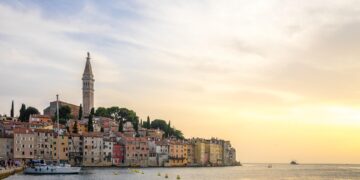
If there is one town in Istria that earns the word romantic without any qualification, it is Rovinj. Built on a small peninsula jutting into the Adriatic, its old town rises in tiers of pastel-coloured Venetian buildings above a harbour busy with fishing boats and wooden sailing vessels. Narrow streets wind upward through limestone archways toward the Church of St. Euphemia, whose bell tower — a near-replica of St. Mark’s Campanile in Venice — can be climbed for €4 and offers one of the most breathtaking views in all of Croatia: terracotta rooftops falling away to a glittering sea, with the Brijuni islands visible on the horizon.
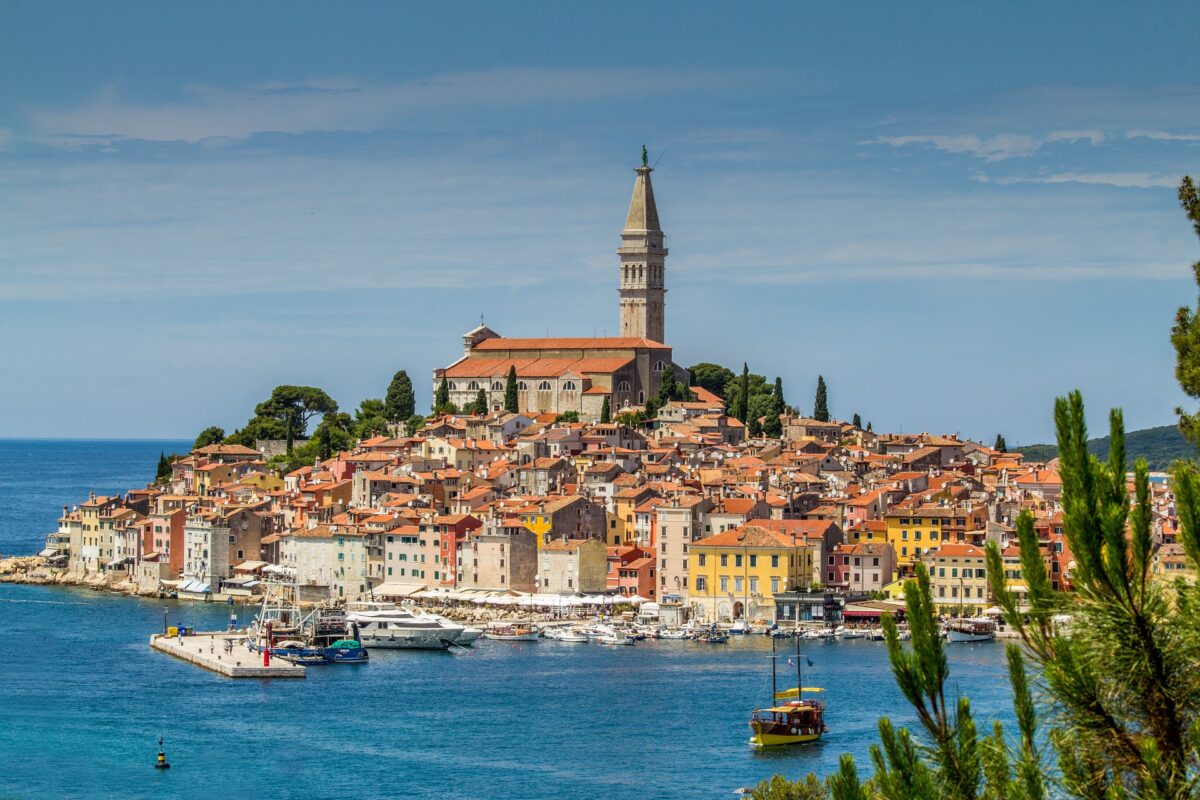
Rovinj’s old town is a maze of cobblestone lanes, art galleries, and super cute restaurants tucked into unexpected courtyards — the kind of setting that provides the perfect backdrop for a romantic evening. Sunset here is the main event: sit at any harbour-front terrace as the light turns the water copper and amber, order a glass of local Malvazija white wine, and watch the fishing boats come in. For the most secluded romantic experience, walk south from the old town to Punta Corrente — a forested nature reserve of Venetian-planted cypresses, rocky coves, and total silence just ten minutes from the centre.
Getting there: Rovinj is 90 minutes from Pula airport by car and about 2.5 hours from Trieste. It makes the ideal home base for a coastal Istrian weekend — stay two nights and use it as a base to explore the coast and nearby inland towns around the area.
Motovun — Truffles, Vineyard Views, and Medieval Walls
Motovun is what people mean when they describe Istria as looking like Tuscany. A medieval hilltop town rising 277 metres above the Mirna Valley, it sits at the centre of Istria’s truffle country — the Motovun Forest below is one of the richest truffle-producing areas in Europe, yielding both black summer truffles and the rarer white truffle in autumn. The best time for truffle hunting in the Motovun forest is September through January.
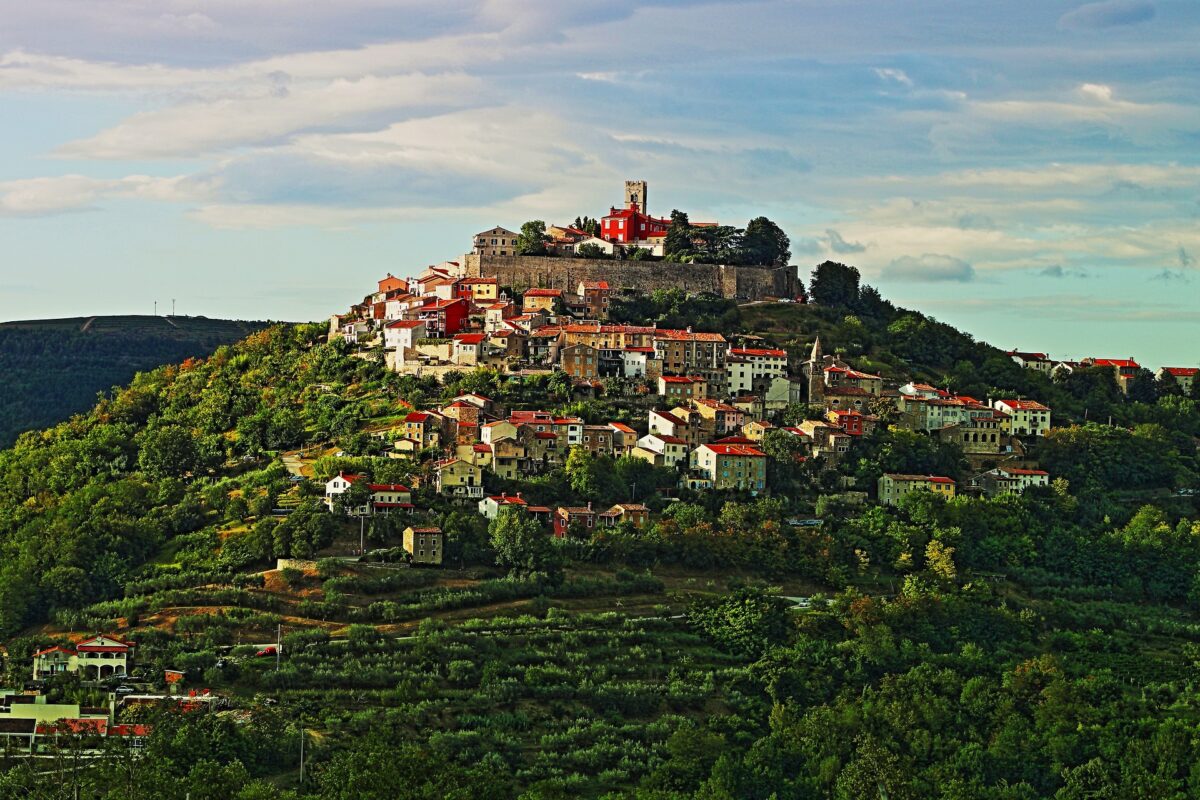
Walk the medieval town walls and look out over rolling vineyard after vineyard stretching to the horizon — panoramic views that make every other hilltop in Istria seem like a warm-up act. Have dinner at Konoba Mondo, where truffle-based dishes are prepared with quiet confidence. The ambiance — a shaded stone terrace, local wine, the scent of truffles — is as romantic as a meal can be. Anthony Bourdain ate here. The New York Times called it what eating in the Old World should feel like.
Getting there: Motovun is 45 minutes from Rovinj and 30 minutes from Poreč. Park at the base of the hill — cars are not permitted in the old town. Pick up your car at Pula airport for the most flexible Istrian road trip.
Grožnjan (Gročnjan) — the Tiny Village of Artists and Arts and Music
Grožnjan is Motovun without the crowds, and all the better for it. A tiny village perched on a ridge above vineyards in northwestern Istria, it was nearly abandoned in the 1960s before the Croatian government invited artists to take over the empty stone buildings. The result is a place where arts and music fill the narrow lanes in summer — every street leads to a painter’s studio, a sculptor’s workshop, or a jazz musician’s rehearsal space. In summer, the village hosts the International Youth Music Festival, bringing young classical and jazz musicians from across Europe into what is otherwise a village of a few dozen permanent residents.
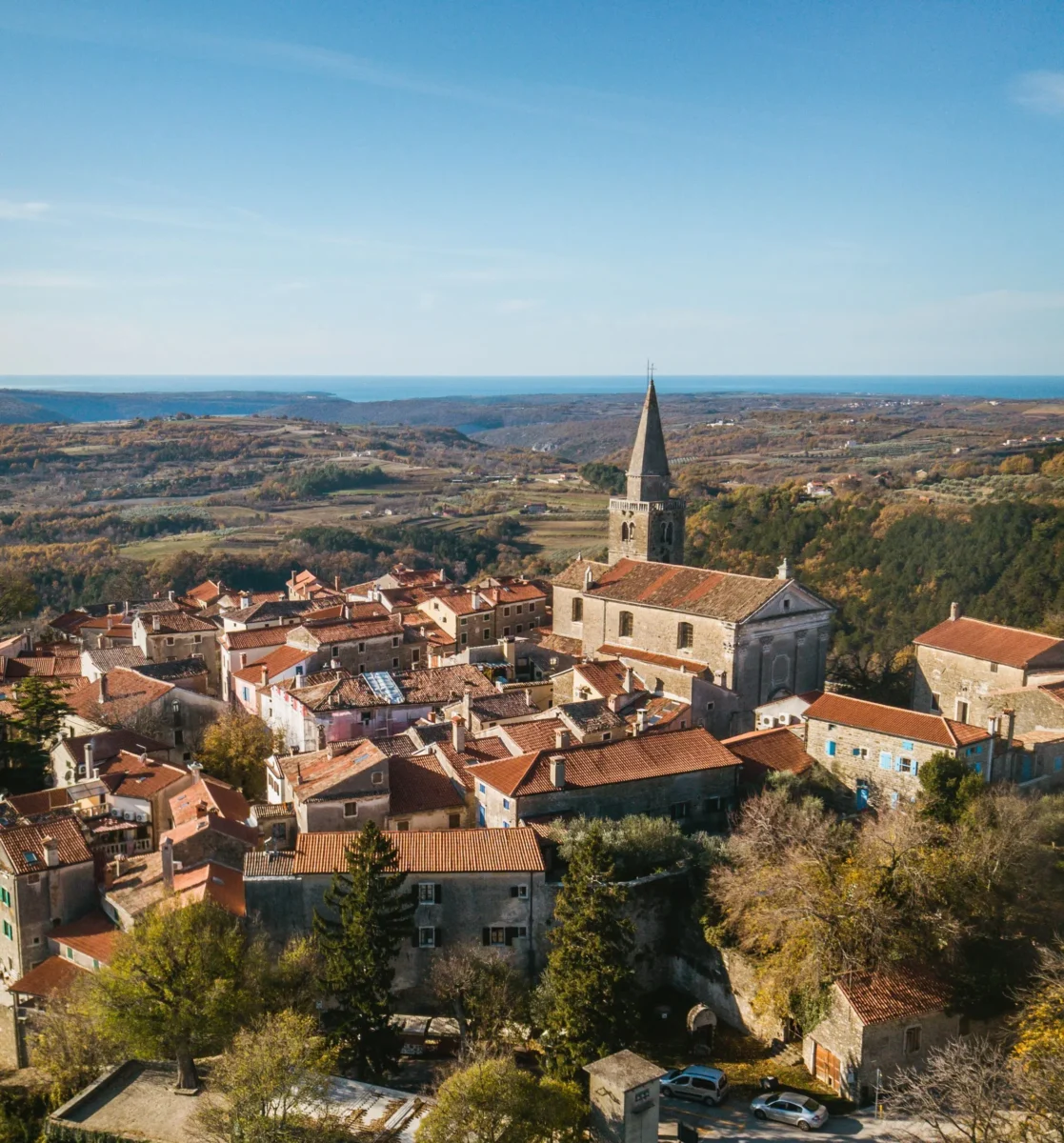
Walking through Grožnjan feels like traveling back in time — the limestone architecture is largely unchanged since the Venetian period, the streets are steep and cobbled, and the pace of life is as slow as anywhere in Croatia. The Aura Distillery sells local brandy, olive oil, and Istrian specialties. A B&B run by a local artist couple makes an extraordinary place to stay.
Getting there: Grožnjan is 40 minutes from Rovinj and 20 minutes from the coast at Novigrad. It pairs perfectly with Motovun for an inland Istria day — lunch at Motovun, late afternoon wine and galleries in Grožnjan.
Poreč — Euphrasian Basilica, Seafood, and Venetian Old Town
Poreč is the most historically significant town in Istria. At its heart is the Euphrasian Basilica, a UNESCO World Heritage Site and one of the finest examples of early Byzantine architecture in the Mediterranean, whose golden mosaics have been drawing pilgrims and art lovers since the 6th century. The bell tower beside it offers sweeping views over Poreč’s perfectly preserved Roman street grid — the town’s ancient layout is still visible from above, a reminder that this was a significant Roman settlement long before Venice claimed it.
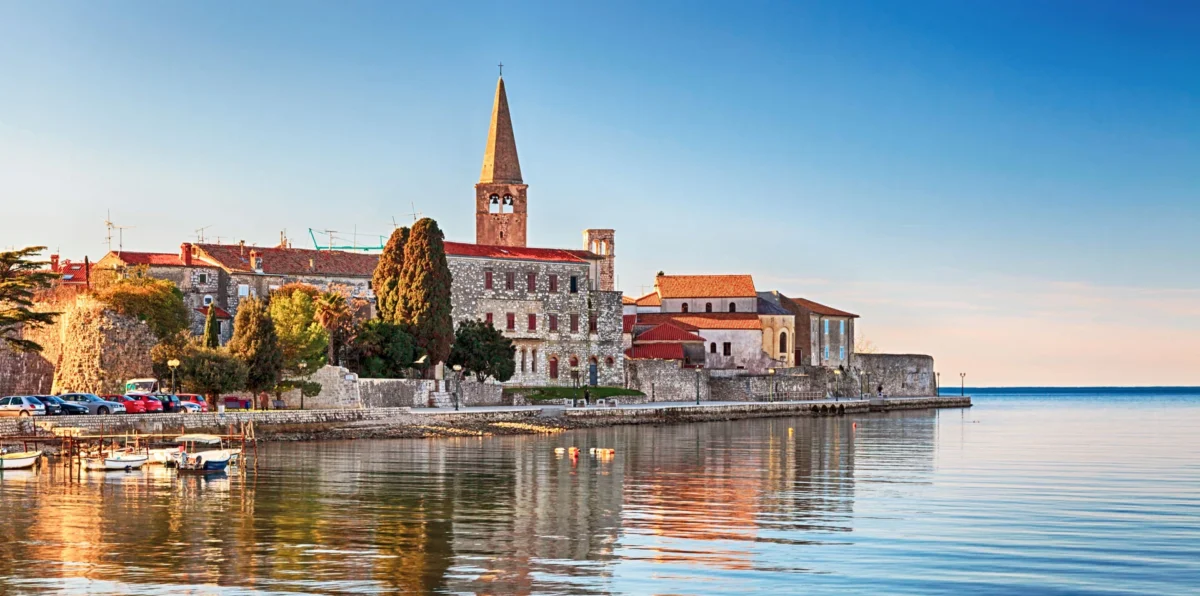
Away from the basilica, Poreč offers long seaside promenades, excellent restaurants serving fresh Adriatic seafood, and easy ferry access to Brijuni National Park. Rovinj and Poreč together make the ideal coastal Istrian weekend — different in character but perfectly complementary. The nearby Lim Fjord, a dramatic 12-kilometre marine channel cutting inland through forest, is one of Istria’s most unexpected landscapes and a wonderful spot for oysters fresh from the water.
Getting there: Poreč (sometimes spelled Porec in English) is 30 minutes north of Rovinj by car. Ferry connections run to Trieste and Venice in Italy — a useful entry point if you’re travelling from the Italian coast.
Vrsar — Casanova’s Seaside Town on the Lim Fjord
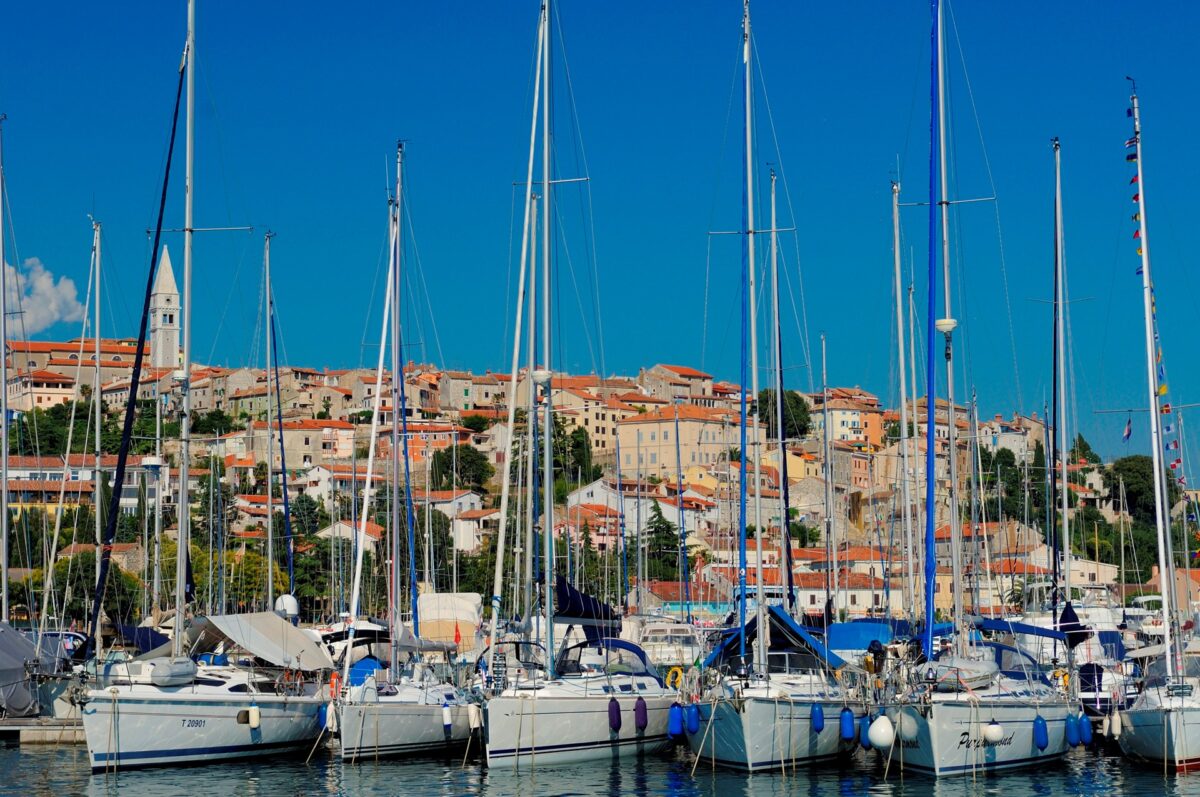
Vrsar is one of those small Istrian coastal towns that most visitors drive past on the way to somewhere more famous — which is precisely what makes it so good for couples. A small seaside town of old stone houses clustered around a harbour on the edge of the Lim Fjord, Vrsar has a romantic past that is distinguished: Giacomo Casanova, the 18th-century Venetian adventurer, is said to have visited and written warmly about the town. Every June, Vrsar celebrates this with the Casanova Fest — an evening of period costumes, music, and theatrical romance.
Beyond its famous connection, Vrsar is simply beautiful: a little town of narrow streets, a Romanesque church tower visible for miles, and a harbour where oysters from the Lim Fjord are served with white wine at outdoor tables. The Lim Fjord itself — one of Istria’s most scenic natural features — offers boat tours from the harbour that take about an hour.
Getting there: Vrsar is 10 minutes south of Poreč and 25 minutes north of Rovinj — a natural stop on any coastal Istrian drive.
Bale — Vineyard Wines and Medieval Calm
The town of Bale sits on a small hill in the centre of Istria, surrounded by vineyards and olive groves, and is almost entirely unknown to visitors who don’t make the effort to find it. That effort — a short detour off the main Rovinj-Pula road — is repaid immediately. Bale is a medieval town of remarkable integrity: defensive walls, a Venetian Gothic castle, Romanesque churches, and a main square where almost nothing has changed in centuries. It’s the kind of place where you feel you’ve genuinely stepped off the tourist trail.
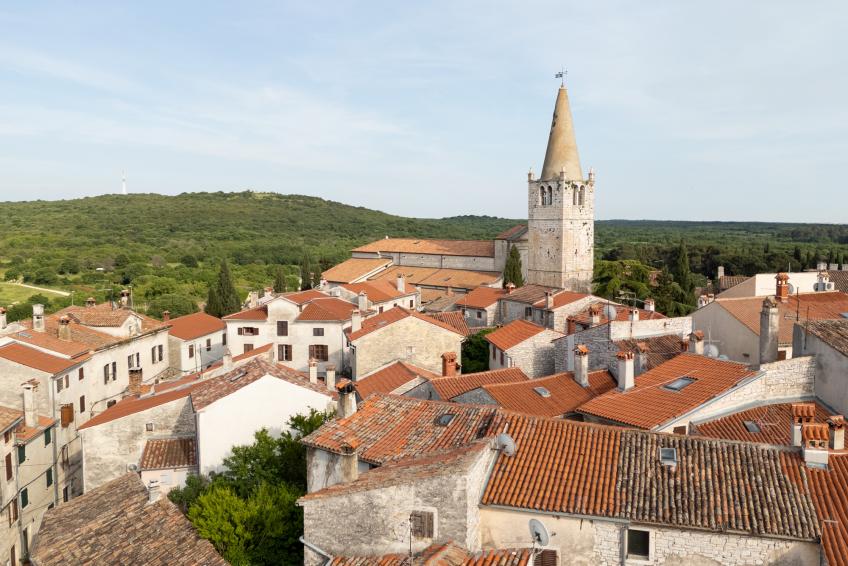
The best reason to visit the town of Bale as a couple is the Meneghetti Wine Hotel and Winery just outside — one of only four Relais & Châteaux properties in Croatia and a world-class wine destination. Surrounded by Teran and Malvazija vines, the Meneghetti produces exceptional wine and offers tastings alongside farm-to-table dining in a setting of quiet, unhurried elegance.
Getting there: Bale is 15 minutes from Rovinj and 20 minutes from Pula — easy to combine as a half-day excursion. Meneghetti winery requires advance booking for tastings.
Vodnjan — Baroque Churches and Local Cuisine Off the Beaten Path
Vodnjan is one of Istria’s most underrated towns and one that most Croatia travel guides overlook entirely. Located between Rovinj and Pula, it sits on a low hill surrounded by olive groves and is known for two things: the tallest bell tower in Istria — a full metre taller than the one in Venice — and the extraordinary mummified relics displayed in the Church of St. Blaise, which has been drawing curious visitors since the Middle Ages. It’s one of those genuinely peculiar places that stays with you.
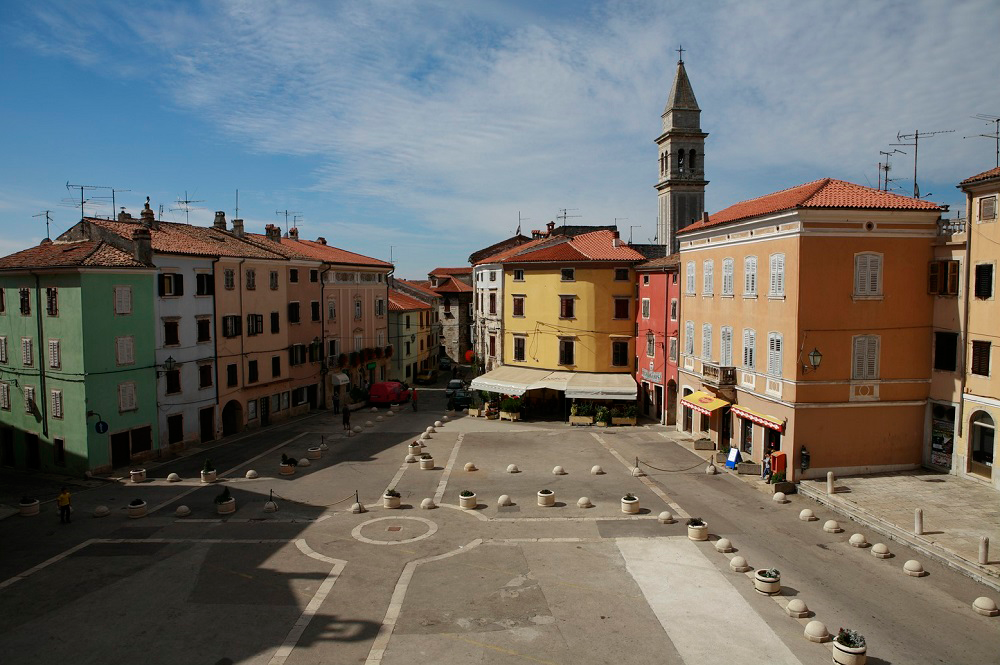
Beyond its singular attractions, Vodnjan is simply a lovely Istrian town to wander. The streets are quiet, tourism here is minimal, and the local cuisine — heavy on truffles, excellent prosciutto, fresh pasta, and local wine — is served in small family konobas that feel entirely unaffected by the Balkan tourism boom of recent years. If you want to eat the way Istrians eat, rather than the way visitors are expected to eat, Vodnjan is the place to do it.
Getting there: Vodnjan is 20 minutes from Rovinj and 10 minutes from Pula — easy to add as a lunch stop on any southern Istrian drive. Park outside the old town and walk up into the centre.
Svetvinčenat — a Fairytale Castle Square in Inland Istria
Svetvinčenat is arguably the most picturesque inland town in Istria that nobody has heard of. Centred on a Renaissance castle and a perfectly proportioned main square — described by many visitors as the most beautiful square in all of Istria — it is the kind of inland discovery that makes you feel you’ve genuinely found something. The castle, built by the Grimani family of Venice in the 16th century, is in remarkable condition and provides the perfect backdrop for photographs at any time of day.
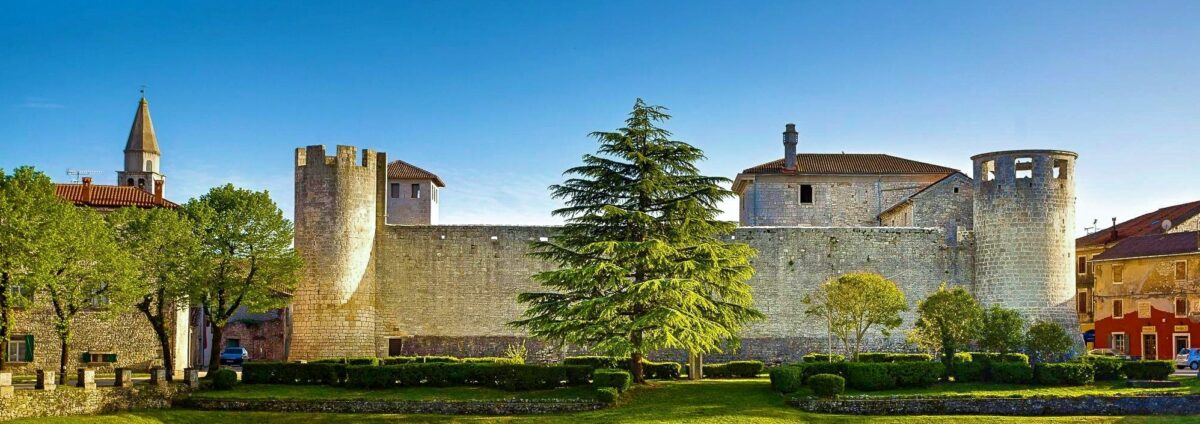
The town square of Svetvinčenat hosts one of Istria’s most atmospheric summer festivals — the Spectaculum Mundi medieval festival in late July — which transforms the cobbled piazza into a scene of fire-jugglers, musicians, and performers that feels genuinely magical after dark. Outside festival season, Svetvinčenat is a quietly beautiful inland Istrian village where the pace of life has barely changed in a century. Come for the castle, stay for the local wine and the silence.
Getting there: Svetvinčenat is 30 minutes from Rovinj and 20 minutes from Pula — a natural pair with Vodnjan or Bale for a full southern Istria inland day.
Labin — Hilltop Views over the Adriatic Sea
Labin is the least-visited town on this list and, for certain kinds of traveller, the most rewarding. A medieval hilltop town on Istria’s eastern coast, it rises above the seaside resort of Rabac and looks out over the Kvarner Gulf toward the Croatian islands. The old town of Labin — a compact maze of Baroque and Venetian limestone architecture, steep lanes, and unexpected viewpoints — has been slowly revived by artists and craftspeople drawn to its atmosphere and panoramic views.
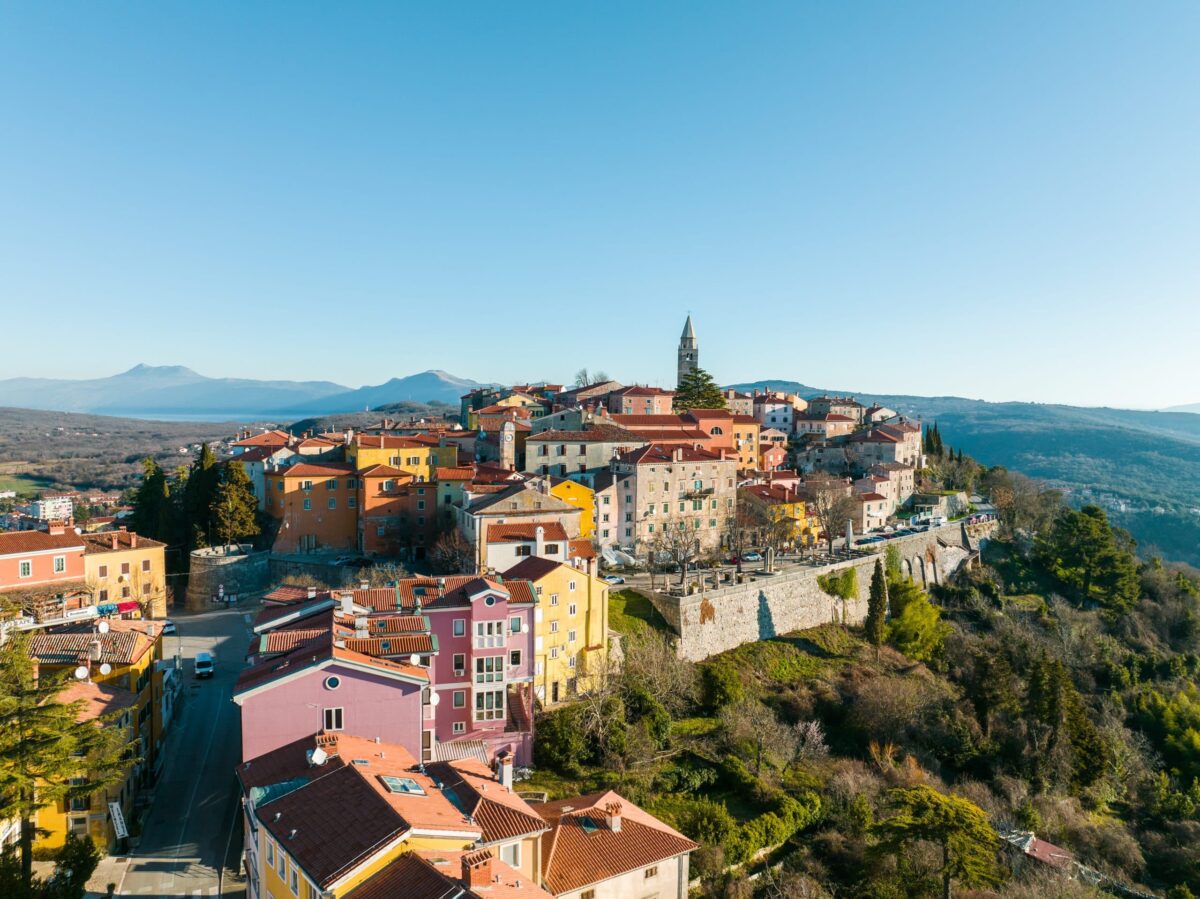
The art galleries here are serious and unpretentious. The local cuisine leans on inland Istrian traditions — good wine, excellent prosciutto, truffles in season. And the view from the town’s fortress over the Adriatic and the islands beyond is one of the most breathtaking in all of Istria, best seen at dusk when the light turns the sea silver.
Getting there: Labin is 45 minutes from Pula by car on Istria’s eastern coast. It pairs well with a night in Rabac below for a mix of seaside and hilltop on the same trip.
Hum — the World’s Smallest Town
Hum holds an unusual distinction: with a permanent population of around 20 people, it claims to be the smallest town in the world. Also one of the most atmospheric places in Istria. Perched on a hilltop in the Mirna Valley not far from Motovun, Hum is enclosed by medieval defensive walls and consists of a single street, a Romanesque church, a bell tower, and a handful of stone houses. Walking through it takes perhaps ten minutes — but those ten minutes feel genuinely medieval.
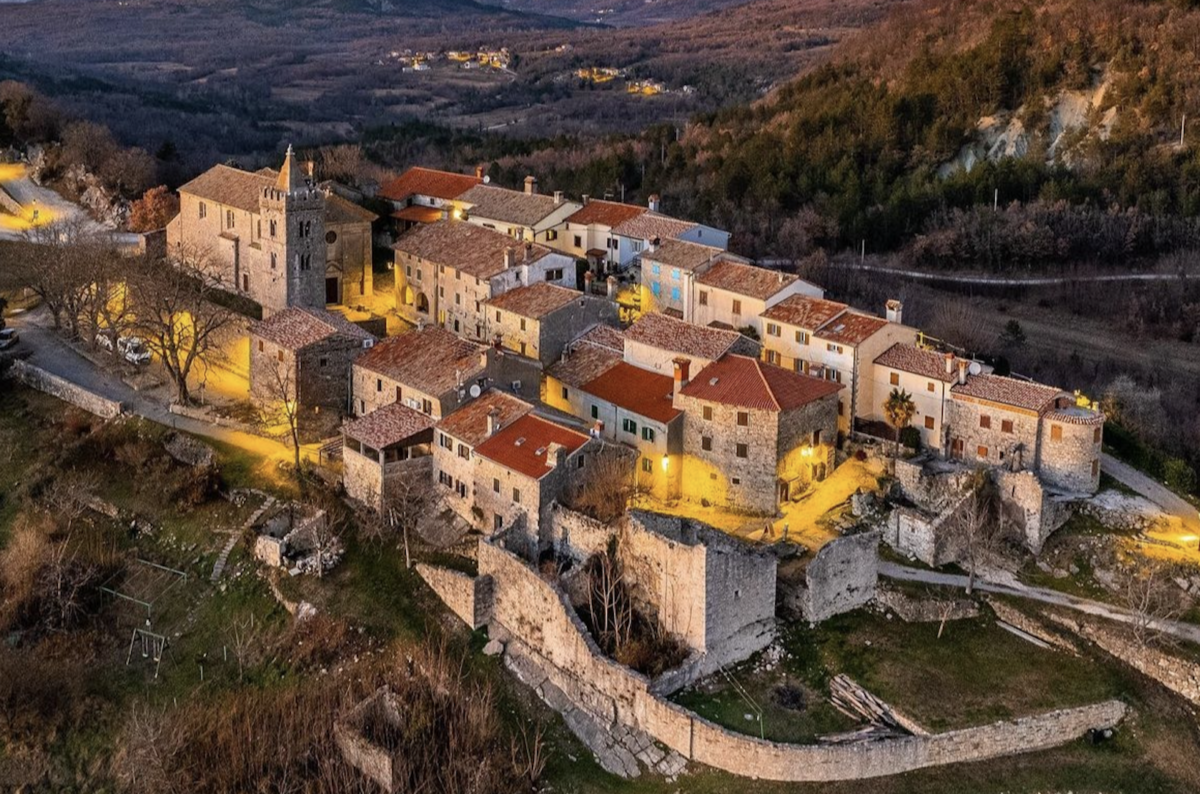
The main reason to visit Hum, beyond its extraordinary atmosphere, is biska — a local brandy made from mistletoe that has been produced here for centuries. It’s the kind of local drink that only exists in one place on earth. Couples who enjoy the genuinely obscure will find Hum unforgettable. It pairs naturally with Motovun and Grožnjan for a full inland Istria day.
Getting there: Hum is 20 minutes from Motovun and 50 minutes from Rovinj. The road between Roč and Hum — the Glagolitic Alley — is one of Istria’s loveliest scenic drives.
48-Hour Romantic Getaway Itineraries: Coastal, Inland, and Mixed
Itinerary A — The Coastal Weekend (Rovinj home base)
Day 1: Arrive in Rovinj. Check into a boutique hotel in the old town. Afternoon: walk the old town streets, climb the Church of St. Euphemia bell tower for sunset views, then dinner at a harbour terrace with fresh Adriatic seafood and local wine. Day 2: Morning walk to Punta Corrente nature reserve. Afternoon: drive to Vrsar (25 mins) for a Lim Fjord boat tour and oysters at the harbour. Return to Rovinj for a final sunset. Optional stop in Bale for wine tasting at Meneghetti.
Itinerary B — The Inland Weekend (Motovun or Grožnjan base)
Day 1: Arrive in Motovun. Check into a vineyard B&B. Afternoon: walk the medieval town walls, admire the Motovun Forest viewpoint. Evening: truffle dinner at Konoba Mondo. Day 2: Morning drive to Grožnjan — coffee in the village square, browse the art galleries, pick up local brandy from the Aura Distillery. Afternoon: drive to Hum (20 mins) for a glimpse of the world’s smallest town and a glass of biska. Return via the scenic Glagolitic Alley road.
Itinerary C — The Mixed Weekend (coastal and inland Istria)
Day 1: Arrive in Poreč. Visit the Euphrasian Basilica, lunch at a seaside restaurant, afternoon boat to Brijuni National Park. Dinner in Poreč. Day 2: Drive inland to Motovun (30 mins) for the walls and a truffle lunch. Continue to Grožnjan for afternoon wine and galleries. Drive to Svetvinčenat (45 mins) for a look at the castle square before returning to Pula airport.
Getting to Istria: Pula, Inland Roads, and Croatia Travel Tips
The easiest gateway to Istria is Pula airport, which receives direct flights from the UK, Germany, Austria, and several other European countries in summer. From Pula you can pick up your car — essential for exploring Istria properly, as public transport doesn’t connect the inland hilltop towns — and be in Rovinj in 40 minutes or Motovun in an hour.
Alternatively, fly into Trieste or Venice in Italy and drive across — the border crossing is seamless. Ferry connections run from Ancona, Venice, and Trieste to Poreč, Rovinj, and Pula in summer if you’d prefer to arrive by sea.
Once in Istria, a car is essential. The distances are short, the roads are quiet and scenic, and the freedom to stop at a vineyard, a hilltop village, or an olive oil producer along the way is what separates a genuinely unforgettable Istrian weekend from a merely pleasant one. Pick up your car at Pula and the whole peninsula — coast and inland both — becomes accessible within an hour in any direction.
Local Cuisine, Olive Groves, and Practical Tips for Your Istrian Getaway
Istrian local cuisine is one of the best reasons to visit and one of the most underrated food cultures in Europe. Truffles — both white and black — appear on menus from September through January and are used with a generosity that would be unthinkable in a French restaurant. Local pasta (fuži, pljukanci) is handmade and served with truffle, seafood, or game. Istrian prosciutto is cured differently from Italian prosciutto — milder, more delicate — and is typically served with sheep’s cheese and a glass of Malvazija white wine.
The olive groves of Istria produce some of the finest olive oil in the world — Istrian extra virgin olive oil has won more international awards per capita than almost any other region. Buy a bottle from a local producer rather than a supermarket; the difference is significant. For wine, look for Malvazija Istarska (white, aromatic, slightly mineral) and Teran (red, earthy, excellent with meat and truffle dishes). Many vineyards around the area welcome visitors for tastings without appointment in the shoulder seasons.
Book accommodation early for Rovinj and Poreč in summer — the best boutique hotels fill quickly. For inland towns like Motovun, Grožnjan, and Svetvinčenat, availability is less pressured but options are more limited, so plan ahead. A good B&B in a hilltop village will consistently outperform a larger coastal hotel for a romantic weekend in terms of atmosphere and personal service.
Frequently Asked Questions About a Romantic Istria Weekend Getaway
Which Istrian towns are best for couples?
Rovinj is the undisputed romantic highlight of any visit to Istria — its picturesque Venetian old town, harbour sunsets, and excellent restaurants make it the best single base for a couple’s weekend. For inland romance, Motovun and Grožnjan are exceptional: hilltop medieval towns surrounded by vineyards and truffle forest. Vrsar, Bale, Svetvinčenat, and Hum are ideal for couples who want somewhere genuinely off the beaten path.
How many days do you need to explore Istria romantically?
A weekend — two full days and two nights — is enough to experience one coastal and one inland town properly. Five days is ideal if you want to cover the full range of places in Istria: the coast from Poreč to Rovinj, the hilltop towns of Motovun, Grožnjan, and Hum, the hidden inland gems of Vodnjan and Svetvinčenat, and the southern tip at Pula with its Roman ruins and Brijuni National Park.
What are the most romantic activities in Istria?
Sunset at Rovinj harbour, a truffle dinner in Motovun, a boat tour of the Lim Fjord from Vrsar, wine tasting at a family vineyard in the Mirna Valley, wandering the art galleries of Grožnjan, and watching the light change over the Adriatic from Labin’s hilltop fortress. The Casanova Fest in Vrsar in June is a uniquely romantic evening out. And for something truly memorable, a stay at the Meneghetti Wine Hotel near Bale combines vineyard, excellent cuisine, and complete peace in a way that’s hard to match anywhere in Croatia.
When is the best time for a romantic weekend in Istria?
May, June, and September are the best months. September is particularly special — the olive harvest begins, the white truffle season opens in the Motovun forest, and the Istrian countryside turns golden. The arts and music festivals that fill Grožnjan and other inland towns through summer wind down, leaving a quieter, more intimate atmosphere. July and August are busier along the Istrian coast but the inland hilltop towns remain peaceful.
Do I need a car to visit Istria?
For coastal towns like Rovinj and Poreč you can manage without one. But to visit Istria properly — to reach Motovun, Grožnjan, Hum, Bale, Svetvinčenat, Vodnjan, and the vineyard roads between them — a car is essential. Pick up your car at Pula airport and the whole peninsula becomes accessible.
Is Pazin worth visiting on a romantic weekend in Istria?
Pazin is Istria’s administrative capital and sits at the geographic centre of the peninsula, built around a dramatic gorge and a medieval castle that inspired Jules Verne. It’s not the most romantic town in Istria — it functions as a working town rather than a tourist destination — but the castle and gorge are genuinely impressive and worth a 90-minute stop if you’re driving between the coast and inland towns. It makes a good practical base for exploring central Istria if the better-known towns are fully booked.
Your Unforgettable Istrian Romantic Getaway Awaits
Istria is one of those rare places that exceeds expectations rather than meeting them. You arrive for a weekend getaway in Istria expecting pretty coastal towns and you find Rovinj — one of the most picturesque places in Europe. You follow the road inland expecting countryside and you find Motovun on its hilltop, with truffles and medieval walls and vineyard views that stop you mid-sentence. You take a wrong turn and find Hum, a tiny village of twenty people enclosed by stone walls, where time has simply stopped.
For couples seeking a romantic getaway, Istria Croatia delivers: small Istrian towns that feel entirely their own, a local cuisine built on truffles and wine and olive oil, and a landscape that manages to be both dramatic and deeply peaceful. Visit once and you will spend the rest of the year planning to come back.